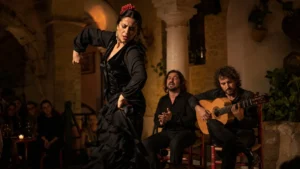
Flamenco Biennial

Flamenco dance at the 2026 Biennial: from the great figures to the new generation

Flamenco dance at the 2026 Biennial: from the great figures to the new generation

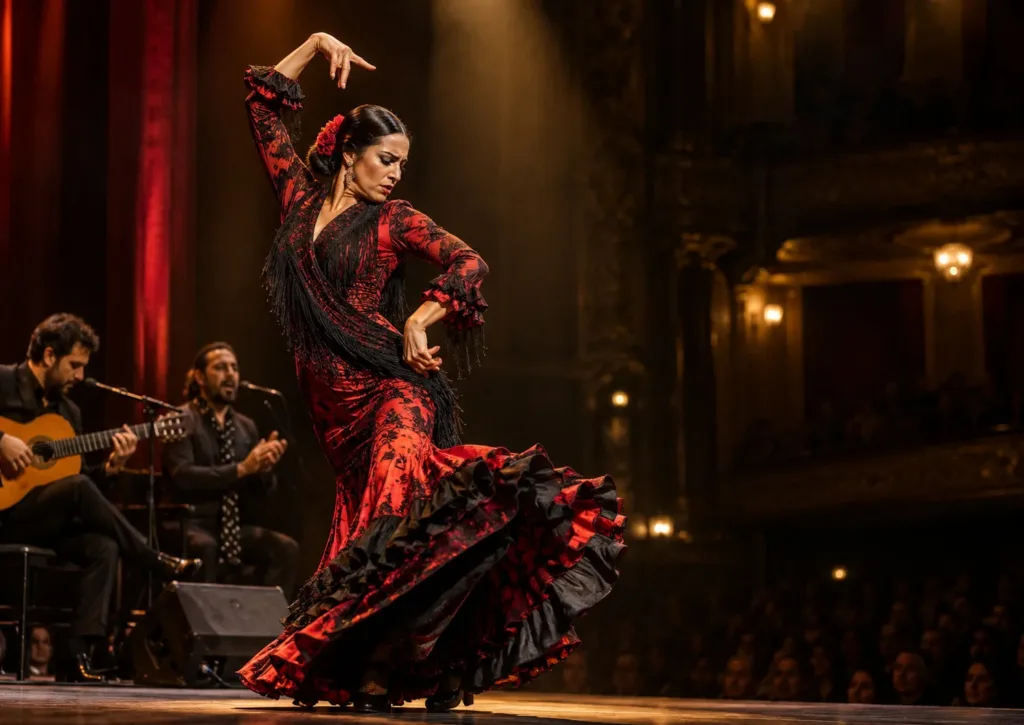
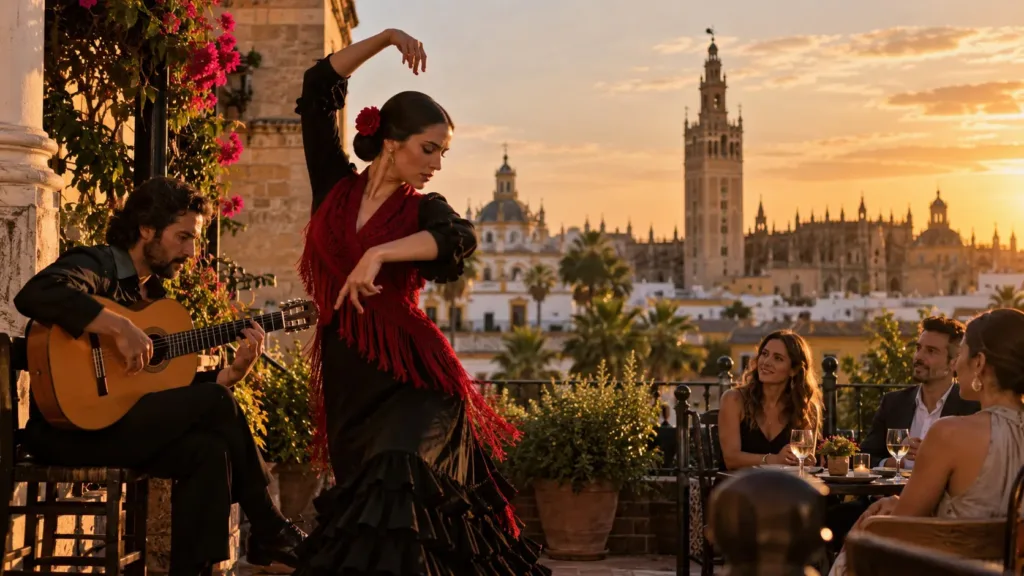
The 24th Seville Flamenco Biennial makes dance one of the main threads running through its programme. Between September 9 and October 3, 2026, the city will bring together more than one hundred dancers in an edition that covers almost the entire current map of flamenco dance: major companies, dance recitals, auteur creators, research-based works, tributes, ensemble pieces and young artists beginning to take centre stage.

The line-up is especially broad. Sara Baras, Israel Galván, Manuel Liñán, Farruquito, Andrés Marín, Olga Pericet, Ana Morales, Pastora Galván, David Coria, Alfonso Losa, Isabel Bayón, Patricia Guerrero, Rafaela Carrasco and María Moreno share the programme with names such as Juan Tomás de la Molía, Águeda Saavedra and Sara Jiménez, three clear examples of a generation that no longer appears only in supporting roles, but at the head of its own creations.

This guide organises the programme to understand which major figures define this edition, where new languages emerge and which events reveal the generation coming next.

An edition shaped by movement

  • More than 100 flamenco dancers across the programme.
  • Major figures and National Dance Award winners.
  • World premieres in dance and stage creation.
  • Traditional recitals alongside contemporary languages.
  • Companies, soloists and dance ensembles.
  • Debuts and original projects from a new generation.

Key idea: the 2026 Biennial does not offer a single definition of flamenco dance. It presents it as a language capable of preserving a school, revisiting its own history and opening itself at the same time to new stage forms.

Quick answer: if you want to follow dance at the Seville Flamenco Biennial 2026, the major dates include Sara Baras with Infinita, Manuel Liñán with Bailaor@, Olga Pericet with Perspectivas sobre un baile sonoro, Andrés Marín with Desierto, Israel Galván with Bolero de blanco y negro, Pastora Galván with TRIBUsssh!, Farruquito with Serás Farruquito: el musical, David Coria with Babel. Torre viva and Alfonso Losa with Gesto mínimo.

The new generation also takes centre stage

This edition gives its own space to Juan Tomás de la Molía and Águeda Saavedra with Te atrevo, and to Sara Jiménez with La compañía. The generational handover does not appear as an appendix to the programme, but as one of its main lines of interpretation.

Last updated: September 3, 2026. Programme details, times and ticket availability may change. Always check the official event page before planning your visit.

Complete guide to the 2026 Biennial · Major premieres · Official programme

How to read the programme

It is not useful to divide dance in 2026 simply between “tradition” and “avant-garde”. The Biennial mixes schools, formats and generations. In the same week you may move from a major company to an almost stripped-back recital, from collective choreography to a research-based work, or from a tribute to a master to a solo debut.

That is why this guide groups the shows by artistic position rather than by date alone: major figures, established authors, new creators, premieres and venues.

The 2026 Biennial as a map of contemporary flamenco dance

One of the best ways to understand the 2026 programme is to see it as a map of artistic positions. The Biennial itself describes a journey that goes from essential, stripped-back dance to large dance ensembles, from the bata de cola to new stage codes and from school tradition to contemporary creation.

This approach avoids reducing the programme to a simple split between “traditional” and “avant-garde”. In fact, many works combine both worlds.

Tradition, authorship and experimentation

Manuel Liñán returns to the recital format to speak about identity; Olga Pericet revisits the recital from a contemporary perspective; Israel Galván enters into dialogue with Ravel; Farruquito turns his own biography and family heritage into a musical; Ana Morales uses the body to explore an imagined underground Seville; and Alfonso Losa proposes a work whose very title, Gesto mínimo, points towards refinement.

The central question is how dance can evolve while still being recognised as flamenco. Each artist answers from a different position.

The major figures: from Sara Baras to Farruquito

Sara Baras: the major return

Sara Baras returns to the Biennial after fourteen years with the world premiere of Infinita, scheduled for September 11, 12 and 13 at the Teatro de la Maestranza. The work is built around eight female perspectives and an idea of Andalusian identity expressed through dance.

It represents the major-company format and an established international career, while also arriving with a new work created for this edition. You can find more information in our guide to Sara Baras in Seville 2026.

Manuel Liñán: recital and identity

On September 22, Manuel Liñán presents at the Teatro de la Maestranza Bailaor@. Recital de baile. The proposal returns to something apparently simple: dancing. But that simplicity contains a clear statement about identity, gender and artistic construction.

Israel Galván: Ravel through the flamenco body

On September 26, Israel Galván premieres at the Teatro de la Maestranza Bolero de blanco y negro. The work begins with Maurice Ravel and adds two pianos, flamenco singing, percussion and voice. The interest lies in how Galván dismantles the material, searches for its rhythmic machinery and turns it into his own choreographic terrain.

Farruquito: heritage, biography and large-scale staging

On September 28, Farruquito premieres Serás Farruquito: el musical at the Teatro de la Maestranza. The show follows his life through five acts —blood, learning, the world, shadow and legacy— and turns his biography into stage material.

The production includes an ensemble and a broad narrative, but keeps as its central axis family transmission: an inherited school transformed into a personal language and projected towards the future.

Other established perspectives

Ana Morales

winner of the 2022 National Dance Award, presents on September 13 and 14 at the Royal Artillery Factory the world premiere of Rapsodia. Fantasía subterránea. The work imagines a descent into an underground Seville and uses the body to explore the telluric, the jondo and the creative process.

Olga Pericet

winner of the 2018 National Dance Award, premieres on September 21 at Teatro Central Perspectivas sobre un baile sonoro. After thirty-five years of career, she revisits the recital format through the memory of the body and its creative present.

Andrés Marín

Premieres Desierto on September 25 at Teatro Central. It approaches the memory of the Alameda de Hércules through poetic truth and a reflection on solitude, traces and what remains.

Pastora Galván

On September 26 at Teatro Alameda she presents the world premiere of TRIBUsssh!, with artistic direction and curation by Israel Galván. The piece brings her dance together with two drum kits and other sounds without losing its flamenco pulse.

David Coria

On September 29 brings to the Teatro Lope de Vega Babel. Torre viva, the Spanish premiere of a work about difference, power, fragmentation and the possibility of building something common. The collective body becomes stage architecture.

Isabel Bayón, María Moreno and Alfonso Losa

This map also includes Isabel Bayón, honoured on September 15; María Moreno, featured in Trilogía. Al baile on September 23 at the Artillery Factory; and Alfonso Losa, who will premiere Gesto mínimo on October 2 at the Teatro Lope de Vega.

The new generation is no longer just a promise

One of the most important developments in this Biennial is that several young artists now appear at the head of their own projects. They are not only members of an ensemble or guest artists: they hold titles, directing roles and spaces of creation.

Juan Tomás de la Molía and Águeda Saavedra: Te atrevo

On September 23, Teatro Central hosts the world premiere of Te atrevo, by Juan Tomás de la Molía and Águeda Saavedra, directed by Manuel Liñán.

The pairing is significant: two emerging performers work under the eye of a creator who has spent years expanding the limits of contemporary flamenco dance. The Biennial presents them as an example of a generation with technique, personality and the ability to sustain an original work.

Sara Jiménez: company, creation and authorship

On September 29, also at Teatro Central, Sara Jiménez premieres La compañía. She signs the original concept, direction and choreography and shares the stage with Julio Ruiz and Mariana Collado.

The new generation is defined not only by age, but by the capacity to assume authorship, discourse, direction and stage responsibility.

Águeda Saavedra, also with Alfonso Losa

Águeda Saavedra appears again on October 2 in Gesto mínimo by Alfonso Losa, alongside Karen Lugo and Yoel Vargas. This double presence shows how young artists move between their own projects and work with established creators.

The new generation does not replace the figures before it: it coexists with them. That crossover is one of the keys to 2026.

Premieres make dance one of the creative engines of 2026

The importance of dance is especially visible in the premieres. Sara Baras, Ana Morales, Olga Pericet, Andrés Marín, Israel Galván, Pastora Galván, Farruquito, Sara Jiménez and Alfonso Losa present new works or versions created specifically for this edition. Juan Tomás de la Molía and Águeda Saavedra make their joint debut with Te atrevo and María Moreno takes part in the premiere of Trilogía. Al baile.

Many of these works will be born in Seville and may later tour other theatres and festivals. Attending a premiere means seeing a work before criticism, touring and time itself have fully fixed its interpretation.

Especially notable premieres

  • Sara Baras · Infinita
  • Ana Morales · Rapsodia. Fantasía subterránea
  • Olga Pericet · Perspectivas sobre un baile sonoro
  • Juan Tomás de la Molía and Águeda Saavedra · Te atrevo
  • Andrés Marín · Desierto
  • Israel Galván · Bolero de blanco y negro
  • Pastora Galván · TRIBUsssh!
  • Farruquito · Serás Farruquito: el musical
  • Sara Jiménez · La compañía
  • Alfonso Losa · Gesto mínimo

For more on this part of the programme, see the major premieres of the 2026 Biennial.

Key dance dates at the 2026 Biennial

Date Artist / show Venue Key point
September 10 Ballet Flamenco de Andalucía with Patricia Guerrero · El mundo por montera Real Maestranza Gala and large-scale format
September 11–13 Sara Baras · Infinita Teatro de la Maestranza World premiere
September 13–14 Ana Morales · Rapsodia. Fantasía subterránea Royal Artillery Factory World premiere
September 15 Tribute to Isabel Bayón · Epílogo de un cante que se hizo baile Teatro Central Memory and career
September 21 Olga Pericet · Perspectivas sobre un baile sonoro Teatro Central World premiere
September 22 Manuel Liñán · Bailaor@ Teatro de la Maestranza Unique Night
September 23 Juan Tomás de la Molía & Águeda Saavedra · Te atrevo Teatro Central New generation
September 23 María Moreno · Trilogía. Al baile Royal Artillery Factory World premiere
September 25 Andrés Marín · Desierto Teatro Central World premiere
September 26 Israel Galván · Bolero de blanco y negro Teatro de la Maestranza World premiere
September 26 Pastora Galván · TRIBUsssh! Teatro Alameda World premiere
September 28 Farruquito · Serás Farruquito: el musical Teatro de la Maestranza World premiere
September 29 David Coria · Babel. Torre viva Teatro Lope de Vega Spanish premiere
September 29 Sara Jiménez · La compañía Teatro Central New generation
October 2 Alfonso Losa · Gesto mínimo Teatro Lope de Vega World premiere
October 3 Rafaela Carrasco in Perlas a millares Teatro de la Maestranza Closing event

A selected list of especially relevant events for following dance. Other Biennial productions also include dance within galas, encounters and mixed-format shows.

The venues change the way dance is seen

Dance is probably the discipline in which the relationship between body and space is most visible at the Biennial. A large company at the Teatro de la Maestranza is not the same experience as a research-based work at Teatro Central or a piece inside the industrial architecture of the Royal Artillery Factory.

The Teatro de la Maestranza concentrates several major productions: Sara Baras, Manuel Liñán, Israel Galván and Farruquito.

A route through four venues

The Teatro Central acts as a laboratory for Olga Pericet, Juan Tomás de la Molía and Águeda Saavedra, Andrés Marín and Sara Jiménez. The Royal Artillery Factory offers a distinctive setting for Ana Morales and María Moreno, while the Teatro Lope de Vega hosts David Coria and Alfonso Losa.

This distribution makes it possible to build a dance route without repeating the same stage experience. You can compare the venues in the most spectacular venues of the 2026 Biennial.

Which show to choose depending on the kind of dance you want

If you want a major production

Start with Sara Baras or Farruquito. Both work with large formats, dramaturgy, scenography and a language designed for major theatres. The Ballet Flamenco de Andalucía in El mundo por montera also offers the chance to see an institutional dance ensemble in an exceptional production.

If you are looking for auteur dance

Israel Galván, Andrés Marín, Ana Morales, Olga Pericet and David Coria offer five very different ways to see how flamenco enters into dialogue with other music, dramaturgy, concepts and physical languages.

If you prefer recital and a direct relationship with flamenco

Manuel Liñán makes the recital itself the centre of his proposal. Alfonso Losa may also be especially interesting for those seeking choreographic refinement and attention to gesture.

If you want to discover the new generation

Make room for Juan Tomás de la Molía and Águeda Saavedra and for Sara Jiménez.

If you want a balanced Biennial

Combine at least three profiles: a major figure, an auteur creator and a young proposal. For example: Sara Baras or Farruquito; Israel Galván, Ana Morales or Olga Pericet; and Te atrevo or La compañía.

Tickets, prices and discounts · Flamenco singing at the 2026 Biennial · The guitar at the 2026 Biennial

Frequently asked questions about dance at the 2026 Biennial

The organisers refer to more than one hundred dancers across the edition. The figure includes soloists, companies, ensembles and artists taking part in galas and mixed-format shows.

Among the leading names are Sara Baras, Israel Galván, Manuel Liñán, Farruquito, Andrés Marín, Olga Pericet, Ana Morales, Pastora Galván, David Coria, Alfonso Losa, Isabel Bayón, Patricia Guerrero, Rafaela Carrasco and María Moreno.

The Biennial particularly highlights Juan Tomás de la Molía, Águeda Saavedra and Sara Jiménez, who take on their own leading roles in the programme. Young performers also appear in companies and projects by established artists.

Sara Baras presents Infinita at the Teatro de la Maestranza on September 11, 12 and 13, 2026. It is a world premiere and marks her return to the Biennial after fourteen years.

Israel Galván premieres Bolero de blanco y negro on September 26 at the Teatro de la Maestranza. The work enters into dialogue with Maurice Ravel’s music and other boleros through his choreographic language.

Teatro Central brings together several of the works most focused on research and contemporary creation, with Olga Pericet, Juan Tomás de la Molía and Águeda Saavedra, Andrés Marín and Sara Jiménez, among others.

Yes. Ana Morales premieres there Rapsodia. Fantasía subterránea on September 13 and 14, and María Moreno takes part on September 23 in Trilogía. Al baile with Pablo Martín Caminero.

Te atrevo, by Juan Tomás de la Molía and Águeda Saavedra on September 23, and La compañía, by Sara Jiménez on September 29, are two of the clearest events for following new creators.

Tickets are sold through the official channels listed on each Biennial event page. You can also consult our guide to tickets, prices and discounts for the 2026 Biennial.

From legacy to the future: a Biennial explained through dance

Dance at the 2026 Biennial does not function as an isolated block within the festival. It is connected to singing, guitar playing, memory, venues and the evolution of flamenco itself as a performing art.

The major figures show how far a mature career can go. Established creators demonstrate that there are many ways to investigate without breaking with the roots. And the younger generation is beginning to occupy a space in which good execution is no longer enough: you have to propose, direct, sign and build your own perspective.

A physical reading of generational change

This dialogue between authority and renewal makes dance one of the best ways into understanding the 24th Seville Flamenco Biennial.

If singing lets us hear transmission and guitar lets us observe how playing changes, dance makes that transition physically visible: past, present and future sharing the same stage.

Sources and updates

Information checked against the official programme of the 24th Seville Flamenco Biennial, the individual show pages and the official information published by the Biennial on dance and choreographic creation in 2026.

Data reviewed on September 3, 2026. The organisers may change times, availability, casts or production details.

Book online: the key to securing your seat

In many cities, flamenco tablaos sell out easily, especially on weekends and during peak season. That’s why, if your dates are set, the most important thing is to book online.

Direct recommendation: book online through our website to guarantee your seat and arrive with everything confirmed. If you already have your destination, go straight to your city to see available options and clear recommendations.

Flamenco Sevilla | Tablaos Flamencos

Seville

Flamenco Madrid | Tablaos Flamencos

Madrid

Flamenco Barcelona | Tablaos Flamencos

Barcelona

Flamenco Granada | Tablaos Flamencos

Granada

Flamenco Córdoba | Tablaos Flamencos

Cordoba

Flamenco Málaga | Tablaos Flamencos

Malaga

Flamenco Valencia | Tablaos Flamencos

Valencia

Flamenco Jerez | Tablaos Flamencos

Jerez

Find out more about this with your favorite AI:

Did you like this article? Share it!:

Tags: agenda flamenca, Bienal 2026, Bienal de Flamenco, festivales flamencos, flamenco dance, flamenco en Sevilla, sevilla, things to do in Seville, what to see in Seville

Article published by:

Related articles

Flamenco in Seville during the Biennial: where to see shows beyond the official programme
Flamenco after the Biennial: where to keep seeing flamenco in Seville