Flamenco by cityNews / Updates

Seville Flamenco Biennial 2026: Programme, dates, venues and complete guide

Seville Flamenco Biennial 2026: the world’s major flamenco event

The Seville Flamenco Biennial 2026 will once again turn the Andalusian capital into one of the world’s leading centres for flamenco. From 9 September to 3 October 2026, Seville will host an extensive programme of singing, dance, guitar, world premieres, parallel activities, exhibitions and stage productions across some of the city’s most emblematic venues.

For aficionados, cultural travellers, industry professionals and anyone wishing to experience a major flamenco event for the first time, the Biennial offers an exceptional opportunity. It not only brings together leading artists and new productions, but also reveals how tradition, contemporary creation and flamenco’s theatrical dimension coexist.

This guide explains what the Biennial is, why it matters, what to expect from the 2026 edition, which venues are taking part, how to organise your visit and how to complement the experience with some of the best flamenco shows in Seville.

Bienal de Flamenco de Sevilla 2026: programación, fechas, espacios y guía completa

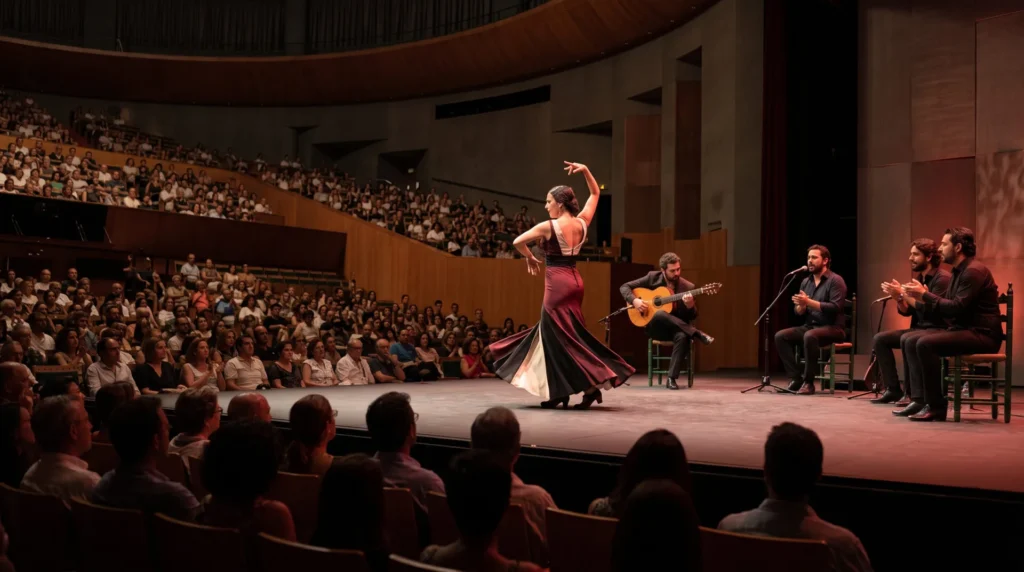
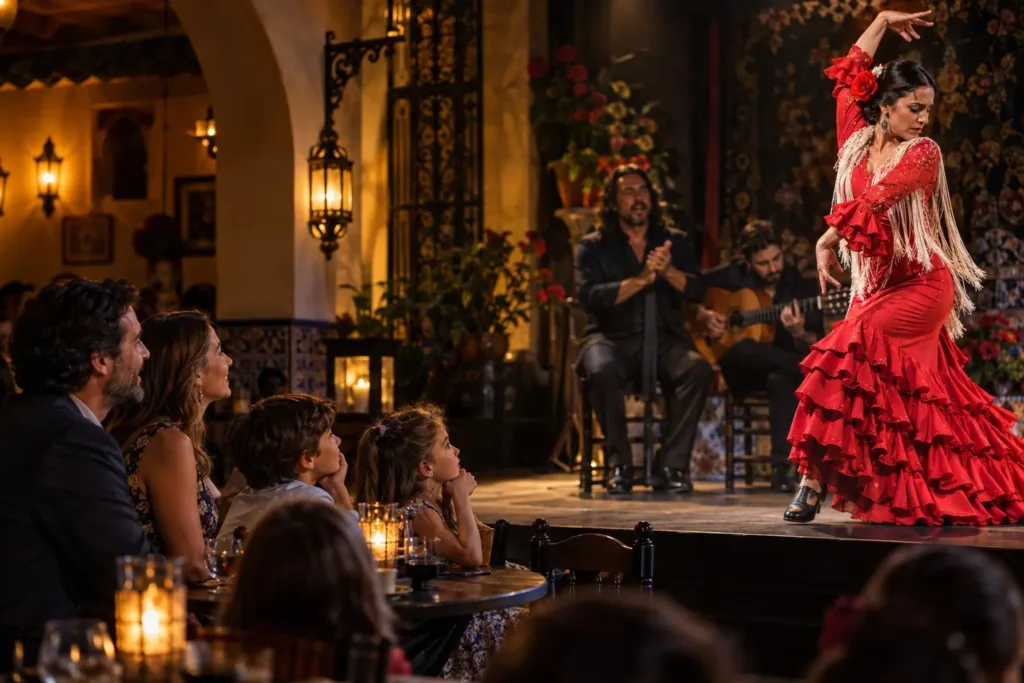
The Seville Flamenco Biennial brings together major artists, premieres and unique performance venues.

Quick answer: the 24th Seville Flamenco Biennial will take place from 9 September to 3 October 2026. This edition will feature 72 performances, 52 new productions, 22 world premieres, 24 one-off nights and 6 unique matinées across 11 venues in the city. If you are visiting Seville during these dates, you can also complete the experience by booking a flamenco tablao in the city.

What is the Seville Flamenco Biennial?

The Seville Flamenco Biennial is one of the world’s most important flamenco festivals. Held every two years, it turns the city into a major stage where singing recitals, dance productions, guitar concerts, theatrical works, world premieres and cultural activities related to flamenco all come together.

What distinguishes the Biennial from other festivals is its ability to produce and present unique shows. Many productions premiere in Seville and are created specifically for this setting. Others bring together leading artists in encounters that may never be repeated.

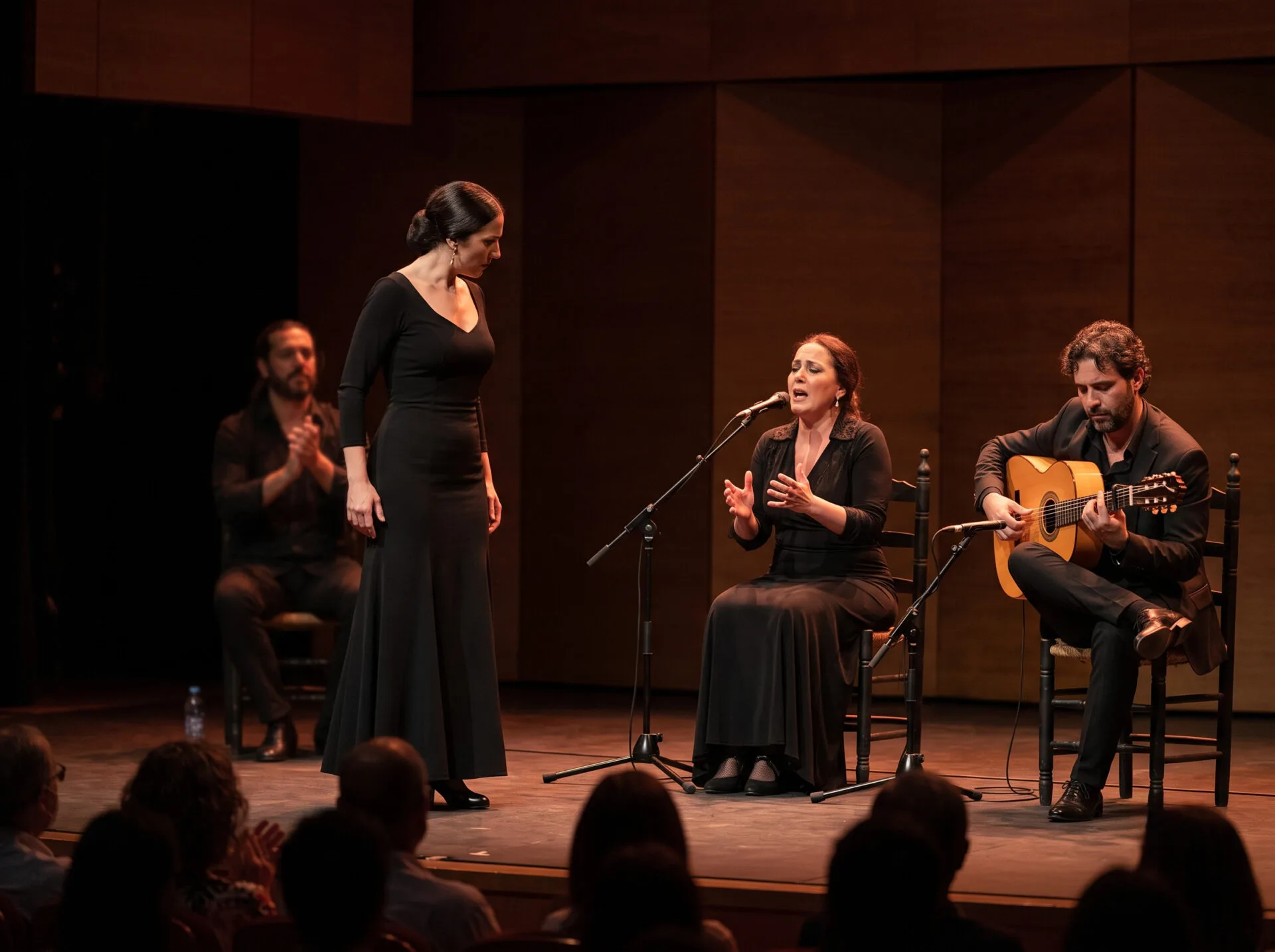
The Biennial also serves as a place from which to observe flamenco today. Deeply traditional artists, major companies, concert guitarists, contemporary creators and emerging voices all share the programme. Attending the Biennial is therefore not simply about watching a show: it means engaging directly with flamenco’s current creative moment.

Bienal de Flamenco de Sevilla 2026: programación, fechas, espacios y guía completa

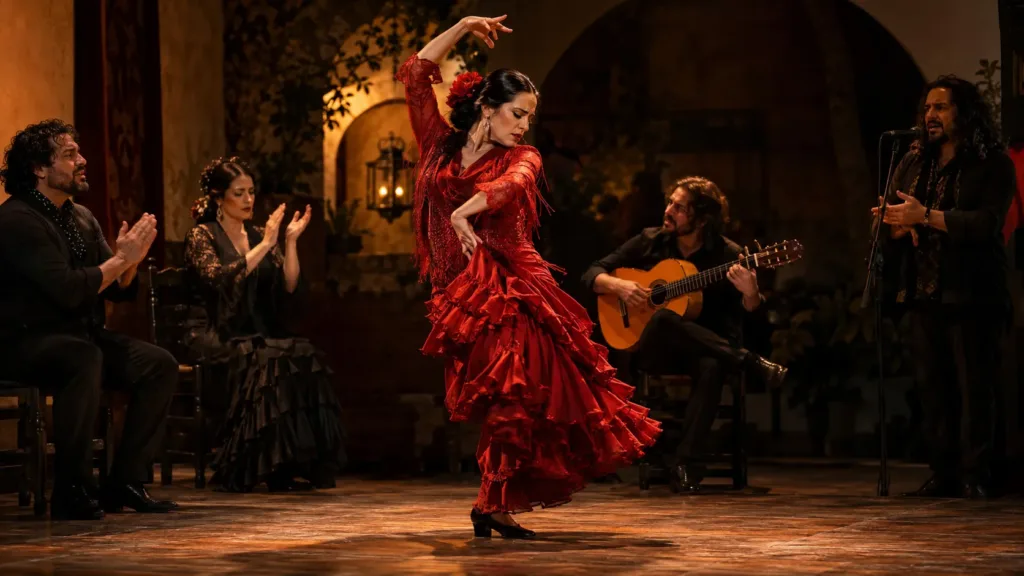
The Biennial offers the opportunity to discover flamenco through a wide range of artistic languages and stage formats.

History and importance of the Biennial

The first Seville Flamenco Biennial was held in 1980. Since then, the festival has grown into an international reference point for artists, programmers, journalists, researchers, aficionados and the wider public.

Throughout its history, the Biennial has welcomed essential figures such as Camarón de la Isla, Paco de Lucía, Cristina Hoyos, Mario Maya, José Menese, Matilde Coral, Farruco, Fernanda and Bernarda de Utrera, Manolo Sanlúcar, El Lebrijano and many other major names in flamenco.

Over the decades, the Biennial has not only preserved its prestige but strengthened its role as a platform for premieres, reflection and international projection. Many productions first created or consolidated here later continue their journey through theatres and festivals in other countries.

Its importance rests on several factors:

  • It brings together major artists within a concentrated period.
  • It generates premieres and new productions.
  • It showcases the diversity of flamenco today.
  • It connects heritage, city and stage.
  • It positions Seville as one of the world’s leading flamenco centres.

Seville Flamenco Biennial 2026 in figures

72

Performances

Almost four weeks of programming.

52

New productions

Creations joining the programme for this edition.

22

World premieres

Works presented to the public for the first time.

24

One-off nights

Encounters conceived for a single occasion.

11

Venues

Performance spaces across Seville.

These figures represent far more than quantity. The 2026 Biennial has been conceived as an ambitious edition, with a strong emphasis on new creation and a wide variety of formats. There will be large-scale theatrical productions, singing recitals, guitar concerts, evenings in heritage venues, street activities and parallel events for different audiences.

The opening of the 2026 Biennial

The Seville Flamenco Biennial 2026 will begin with two particularly symbolic events.

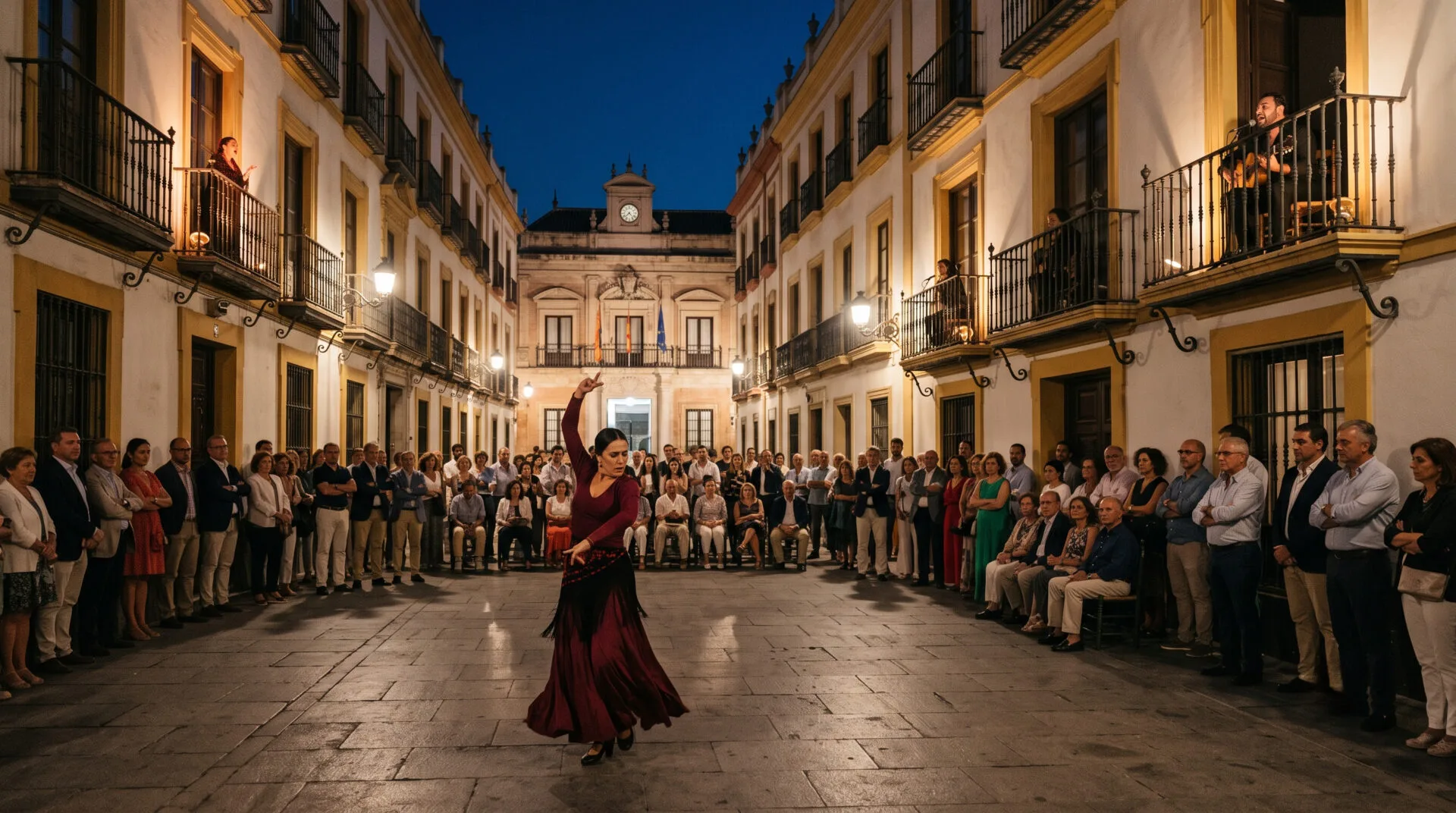
On 9 September, Plaza de San Francisco will host the sung proclamation Ecos Primitivos. Cante en Altura · Danza en Tierra, a production conceived for the urban setting, with voices distributed across the balconies and dance occupying the centre of the scene.

On 10 September, the opening gala El mundo por montera will take place at the Real Maestranza Bullring. The production will enter into dialogue with the year 1926 and a decisive moment in flamenco’s wider dissemination, incorporating references to Ópera Flamenca, Manuel Vallejo and the expansion of electrical sound recording.

From the very beginning, the opening makes the Biennial’s purpose clear: to connect memory, city, heritage and creation.

Bienal de Flamenco de Sevilla 2026: programación, fechas, espacios y guía completa

The Biennial also transforms squares, monuments and heritage spaces into flamenco stages.

Programme and featured artists

The Biennial programme is extensive and highly diverse. Announced artists include Sara Baras, José Mercé, Carmen Linares, Israel Galván, Farruquito, Manuel Liñán, Arcángel, Mayte Martín, Marina Heredia, La Tremendita, Rafael Riqueni, Antonio Rey, Cañizares, Israel Fernández, Patricia Guerrero, María Terremoto, Remedios Amaya and Esperanza Fernández, among many others.

One of the major highlights will be the return of Sara Baras to the Biennial with the world premiere of Infinita at Teatro de la Maestranza. Large-scale productions at the Maestranza, contemporary work at Teatro Central, the return of Teatro Lope de Vega and the guitar programme at Espacio Turina will also play a prominent role.

The 2026 edition will be particularly appealing to:

  • Those looking for large-scale dance productions.
  • Those who want to hear top-level flamenco singing.
  • Those who appreciate flamenco concert guitar.
  • Those interested in new work and contemporary artistic languages.

Rather than trying to see everything, it is better to choose a balanced combination: for example, a major theatrical production, a singing recital and a guitar or contemporary creation programme.

The Biennial’s most important venues

Teatro de la Maestranza

Large-scale productions, major dance works and symphonic performances.

Teatro Lope de Vega

One of the Biennial’s historic stages, returning for this edition.

Teatro Central

Contemporary creation, stage research and new artistic languages.

Espacio Turina

A key venue for guitar and concert programmes.

Real Alcázar

A unique heritage setting for special evenings.

Hotel Triana

Late-night performances and deeply rooted projects in a venue with a strong personality.

San Luis de los Franceses

Matinées and productions enhanced by extraordinary architecture.

The distribution of the programme across different spaces is part of the experience. The Biennial feels very different in a major theatre, a monumental courtyard, a Baroque church or a historic communal courtyard. This diversity also helps reveal the festival’s richness.

Parallel activities: much more than performances

The Biennial extends beyond its main performances. Its parallel programme broadens the experience through exhibitions, cinema, family activities, encounters and performances in public spaces.

One of the most notable proposals will be the exhibition La noche azul. Ópera flamenca en la colección de Carlos Martín Ballester, which will be installed at the Real Fábrica de Artillería and bring together around 150 items connected with the historical dissemination of flamenco.

There will also be activities for families, street flamenco programmes and other initiatives that offer ways of approaching flamenco through documentation, education and shared experience.

This makes the Biennial appealing even to visitors who do not wish to focus their entire trip exclusively on ticketed performances.

Tickets and practical recommendations

Tickets for the Biennial went on sale on 11 February 2026. Prices depend on the venue, seating category and type of performance.

As a general reference, some venues offer more affordable seats, while major productions—particularly the most sought-after shows—have higher ticket prices.

Tips for buying tickets

  • Prioritise world premieres and one-off nights.
  • Do not leave the best-known artists until the last minute.
  • Always check the venue and starting time.
  • Leave enough time between performances.
  • Check whether there are free activities or events with limited capacity.
  • Review the programme again before travelling in case of changes.

How should you decide what to see?

If you visit Seville during the Biennial, there is no need to try to attend everything. In fact, choosing carefully is usually the better approach.

A good formula for a first visit could be:

  • a major dance production,
  • a flamenco singing recital,
  • a guitar concert or contemporary production.

This allows you to discover several dimensions of flamenco without overloading your trip. It is also advisable to leave time to explore Seville, visit some monuments and enjoy the city at a relaxed pace.

If you are staying for several days, you can combine the official programme with more intimate flamenco experiences elsewhere in the city.

Where to see flamenco in Seville during the Biennial

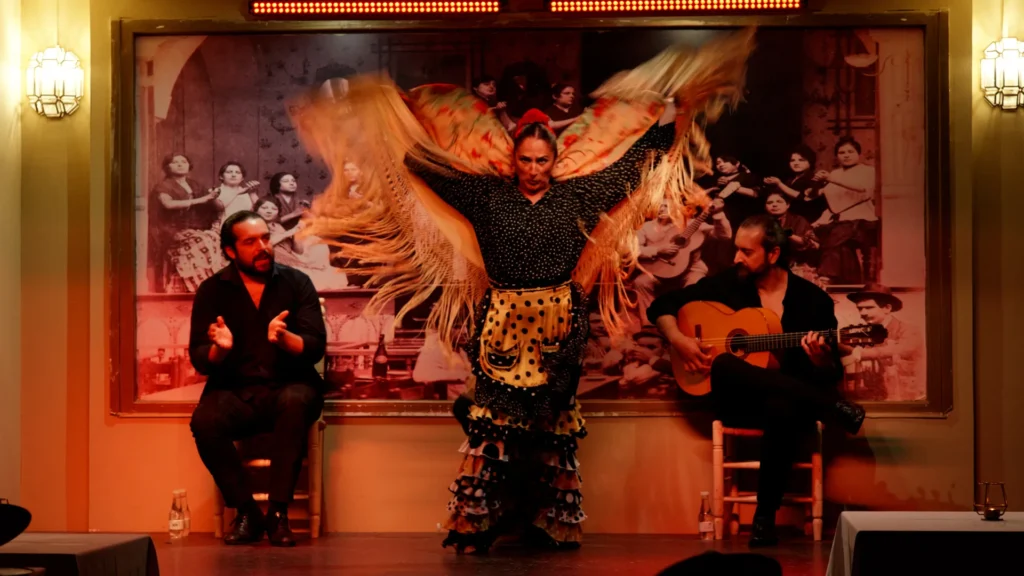
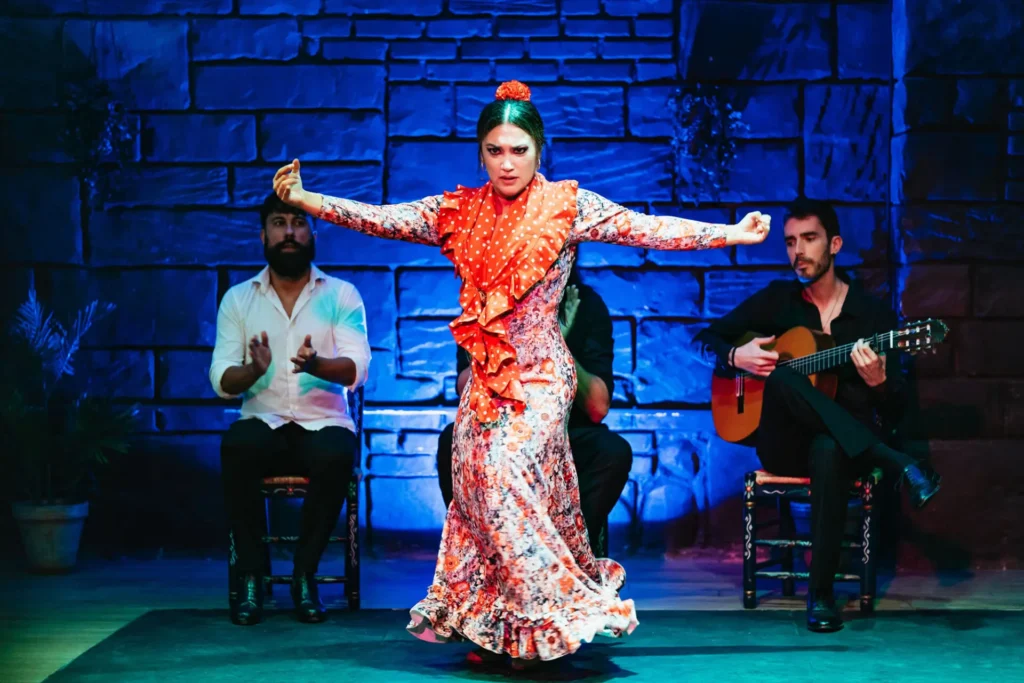
The Biennial and the tablaos do not compete with one another: they complement each other. The Biennial concentrates premieres and large-scale productions, while a tablao offers flamenco in a closer, more direct format that is easy to include in a city visit.

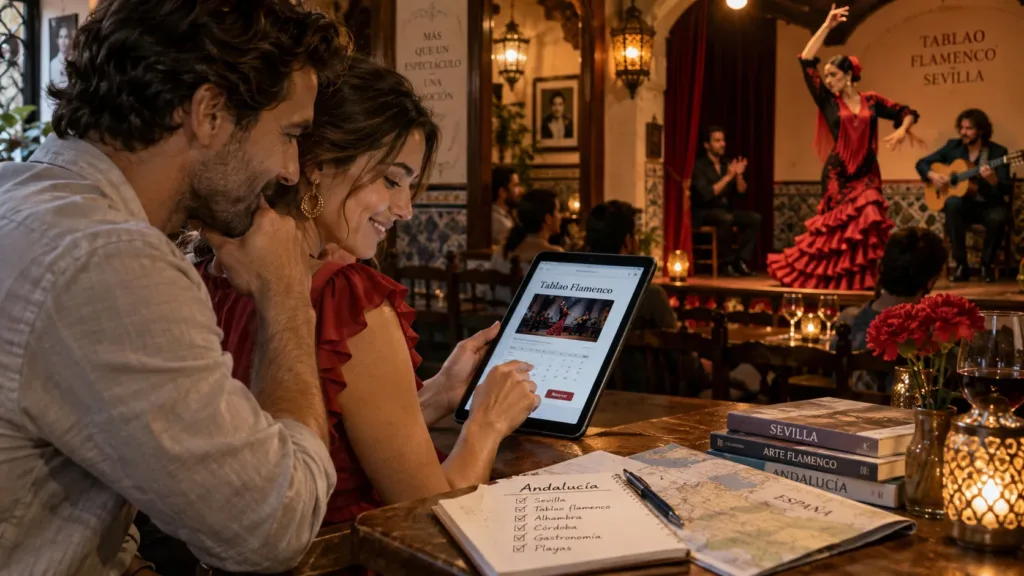
If you travel to Seville during the Biennial, booking a tablao show can be an excellent idea, especially on days when you do not have tickets for the official programme or when you want to compare the theatrical experience with a more intimate setting.

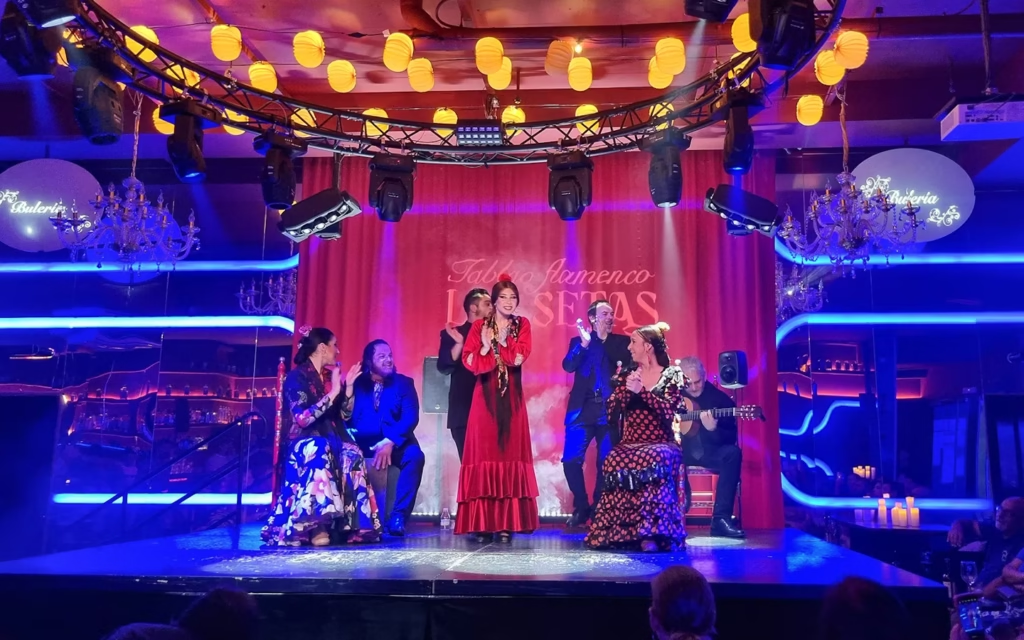
Tablao Flamenco Las Setas | Tablaos Flamencos

Tablao Flamenco Las Setas

A premium option in central Seville.

Ideal for visitors seeking a carefully designed experience in a distinctive setting beside Las Setas, with leading artists and a production conceived to offer comfort and a high artistic standard.

Tablao Flamenco La Cantaora | Tablaos Flamencos

Tablao La Cantaora

Flamenco with dinner in Seville.

A particularly attractive option for anyone wishing to combine dining and a performance in the same evening. It is a good choice for a complete night out in the city centre.

Baraka Sala Flamenca - Baraka Flamenco show | Tablaos Flamencos

Baraka Sala Flamenca

Flamenco in Triana.

Perfect for visitors who want to experience the atmosphere of Triana and enjoy a more intimate format, with the identity of the neighbourhood forming part of the evening itself.

Biennial and tablao: two complementary ways to experience flamenco

The Biennial offers unrepeatable performances, major productions and a panoramic view of contemporary flamenco. A tablao, by contrast, allows you to observe the art from just a few metres away, in a more continuous format closely connected to the immediacy of live performance.

For this reason, a particularly complete visit to Seville during the Biennial might include:

  • an official festival performance,
  • an evening at a tablao in the city centre,
  • or an experience in Triana to add a historical dimension to the trip.

If you would like to compare different options, you can also visit our general flamenco in Seville page, where we bring together a selection of shows available across the city.

How to organise your visit to Seville during the Biennial

If you are visiting for one day

Book one main performance, leave time to walk around the city centre and, if you cannot secure tickets for the Biennial, complete the day with a tablao.

If you are visiting for a weekend

Combine a major Biennial production with a tablao experience. This will allow you to experience two distinct flamenco formats.

If you are staying for several days

Alternate performances, cultural visits and more relaxed evenings. Seville is best enjoyed without turning the trip into a race between venues.

Practical advice

  • Book your accommodation well in advance.
  • Check the exact location of each venue.
  • Arrive at performances with plenty of time.
  • Do not schedule too many performances on the same day.
  • Make time to discover Triana, the historic centre and Seville’s heritage venues.
  • If flamenco is a particular interest, combine the Biennial with at least one tablao.

In September and early October, Seville also offers an excellent opportunity to combine culture, gastronomy and urban life. The Biennial fits naturally into a wider visit to the city.

Is it worth travelling to Seville for the Biennial?

Yes. The Seville Flamenco Biennial is one of the best possible occasions to experience live flamenco, discover new work and see some of today’s most important artists gathered in the city over just a few weeks.

Seville also allows you to complement the experience with tablaos, neighbourhoods with a strong flamenco identity, monuments, gastronomy and an especially intense cultural atmosphere during these dates.

The key is to organise the visit carefully, choose performances thoughtfully and combine the official programme with other experiences that allow you to encounter flamenco from different perspectives.

Frequently asked questions about the Seville Flamenco Biennial 2026

The 24th Seville Flamenco Biennial will take place from 9 September to 3 October 2026.

The Seville Flamenco Biennial is held every two years.

The official programme announces 72 performances, 52 new productions, 22 world premieres, 24 one-off nights and 6 unique matinées.

Announced artists include Sara Baras, José Mercé, Carmen Linares, Israel Galván, Farruquito, Manuel Liñán, Arcángel, Marina Heredia, Mayte Martín, La Tremendita, Rafael Riqueni, Antonio Rey, Patricia Guerrero and María Terremoto, among others.

The Biennial takes place at different venues across Seville, including Teatro de la Maestranza, Teatro Lope de Vega, Teatro Central, Espacio Turina, the Real Alcázar, Hotel Triana and the Church of San Luis de los Franceses, among others.

Yes. The parallel programme includes free activities or events subject to venue capacity, such as exhibitions, street performances and family activities.

Yes. Seville has flamenco tablaos throughout the year. You can explore the options on our flamenco in Seville page.

For specific options, consider Tablao Flamenco Las Setas for a premium experience, Tablao Flamenco La Cantaora if you want to combine flamenco with dinner, and Baraka Sala Flamenca if you would prefer to experience flamenco in Triana.

They are not mutually exclusive experiences. The Biennial offers major productions and premieres, while a tablao provides intimacy and immediacy. Ideally, combine both if your trip allows.

Yes, especially if you are interested in flamenco. In addition to the official programme, you can complete the experience with Seville’s year-round cultural and flamenco offerings.

Complete your flamenco trip to Seville

During the Biennial, Seville offers much more than the official programme. If you want to continue experiencing flamenco in the city, explore the available tablaos and book online the option that best suits your trip.

Book online: the key to securing your seat

In many cities, flamenco tablaos sell out easily, especially on weekends and during peak season. That’s why, if your dates are set, the most important thing is to book online.

Direct recommendation: book online through our website to guarantee your seat and arrive with everything confirmed. If you already have your destination, go straight to your city to see available options and clear recommendations.

Flamenco Sevilla | Tablaos Flamencos

Seville

Flamenco Madrid | Tablaos Flamencos

Madrid

Flamenco Barcelona | Tablaos Flamencos

Barcelona

Flamenco Granada | Tablaos Flamencos

Granada

Flamenco Córdoba | Tablaos Flamencos

Cordoba

Flamenco Málaga | Tablaos Flamencos

Malaga

Flamenco Valencia | Tablaos Flamencos

Valencia

Flamenco Jerez | Tablaos Flamencos

Jerez

Find out more about this with your favorite AI:

Did you like this article? Share it!:

Tags: Andalusian culture, Bienal de Flamenco, Biennial 2026, flamenco events, flamenco festivals, flamenco in Seville, flamenco shows, seville, Seville Flamenco Biennial, Seville tablaos

Article published by:

Related articles

Flamenco in Triana during the Velá de Santa Ana