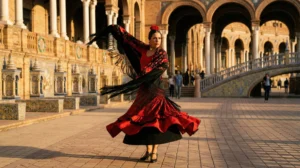
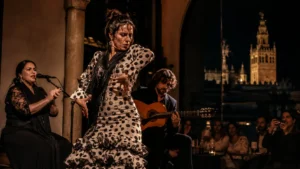
Flamenco Biennial

Flamenco after the Biennial: where to keep seeing flamenco in Seville

Flamenco after the Biennial: where to keep seeing flamenco in Seville

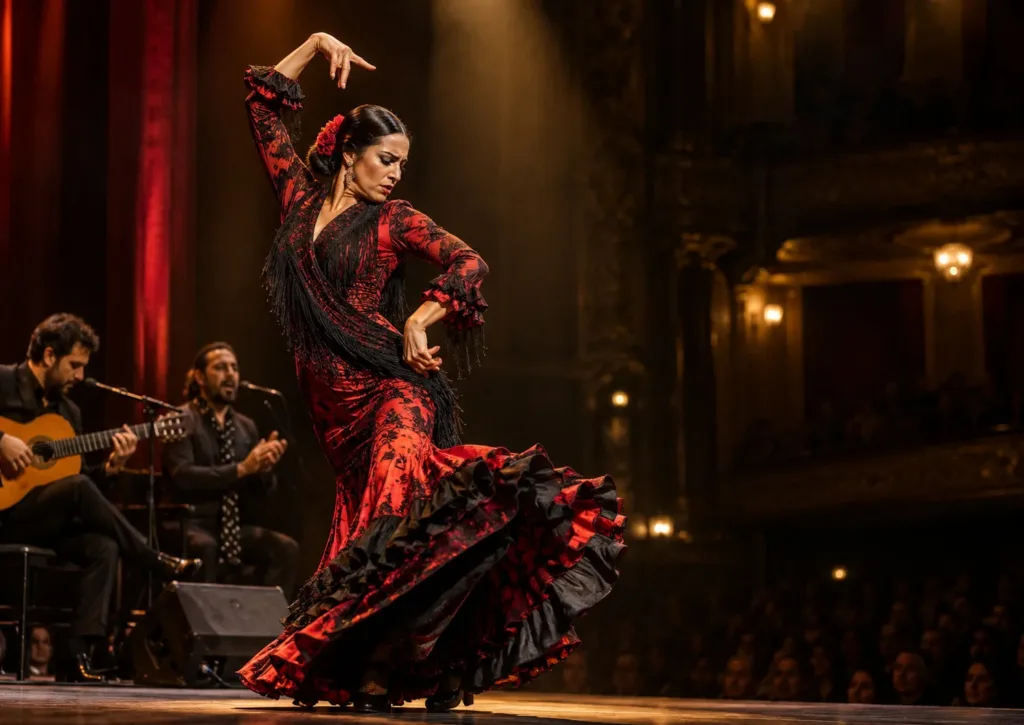
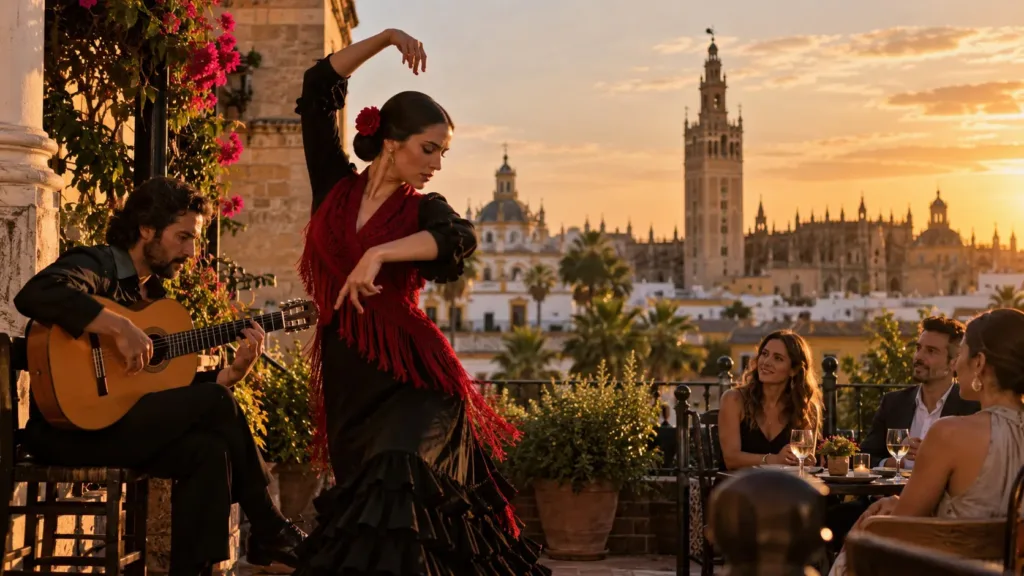
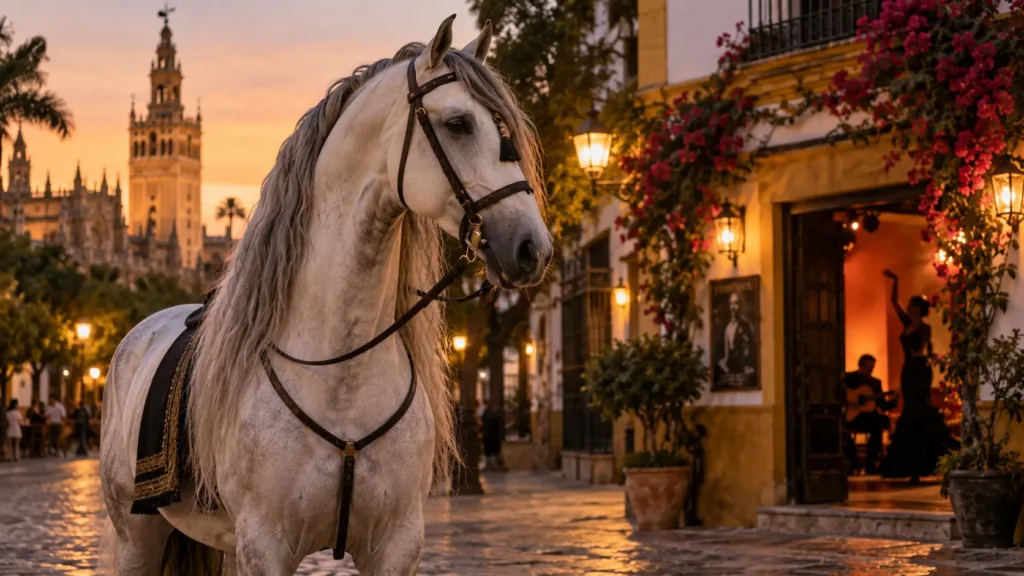
The 2026 Seville Flamenco Biennial ends on 3 October, but that does not mean the city stops offering live flamenco. For several weeks, the Biennial concentrates premieres, major productions, one-off encounters and artists from across Spain; when that extraordinary programme ends, Seville returns to its usual flamenco rhythm, which remains very active throughout the rest of the year.

It is not the end of the flamenco season, but a return to the stable network of venues that operates all year round.

What you will find from 4 October onwards

For anyone visiting the city from 4 October onwards, the main change is not the disappearance of flamenco, but the type of offer available. The major theatres stop operating as a temporary network of festival venues and the spotlight returns to tablaos, cultural venues, flamenco theatres and established shows that programme performances regularly.

In many cases, these venues also feature artists who take part in festivals, Biennials and professional circuits.

This guide is for anyone arriving in Seville after the Biennial and wondering where to keep seeing good flamenco, what kind of show to choose and how to plan a flamenco evening without relying on a major festival.

Quick answer: after the 2026 Flamenco Biennial you can continue seeing flamenco in Seville all year round. The easiest option for a visitor is to book a regular show at a tablao or flamenco theatre. Among the options you can book directly through Tablaos Flamencos are Tablao Flamenco Las Setas, Tablao Flamenco La Cantaora, Casa Duende Tablao, Tablao Flamenco Las Dueñas, Casa Inquieta, Casa Flamenco Azahar and El Jardín de Murillo; in Triana you can book Baraka Sala Flamenca and Tablao Flamenco Triana. Schedules, line-ups and prices may change, so it is advisable to book in advance and check the available session for your specific date.

Last updated: 3 September 2026.

Also see our complete guide to seeing flamenco in Seville and our guide to the 2026 Seville Flamenco Biennial.

What changes in Seville when the Biennial ends

During the Biennial, visitors can find flamenco in spaces that are not normally part of a daily circuit: major theatres, monuments, historic courtyards, former factories, deconsecrated churches or venues created specifically for one edition of the festival. That exceptional character is one of the Biennial’s great strengths, but it can also create the wrong impression: that outside those dates flamenco is reduced to a smaller offer.

In reality, they are two different models. The Biennial is an extraordinary event; tablaos and flamenco venues form the city’s permanent infrastructure.

After 3 October there is no longer any need to build your visit around the festival’s official schedule. Instead, it becomes much easier to plan a flamenco evening freely: choose the area, session, type of venue, proximity to the stage and show format according to the rest of your sightseeing itinerary.

Visitors should also bear in mind that tablao line-ups do not usually work like the fixed cast of a theatre production. Artistic line-ups can vary, and that rotation is part of the professional nature of these venues.

So, when choosing after the Biennial, it is better to focus less on chasing one particular name and more on choosing a venue, experience and format that fit what you are looking for.

Tablaos: the easiest way to keep seeing flamenco

For a visitor who wants to secure a flamenco evening after the Biennial, a tablao is usually the most practical option. Its main advantage is regularity: while a theatre recital, peña or festival depends on a specific date, tablaos maintain stable or very frequent schedules for much of the year.

That does not mean all tablaos are the same. Seville offers everything from historic venues with decades of history to contemporary rooms, small cultural spaces and theatres specifically devoted to flamenco.

A good flamenco ensemble lets you hear and see the three essential pillars of a live show: singing, dance and guitar. Depending on the venue, palmas, percussion or other elements may be added, but what matters is that the experience is built around real performers and their interaction.

If it is your first time, it is usually better to choose the show for its quality and type of venue rather than for secondary services. Dinner can be a convenient option in some places, but it is not necessary to enjoy flamenco. If the stage is your priority, a good strategy is to book the show and arrange tapas or dinner before or afterwards.

You can see the city’s current selection on our flamenco in Seville page and also learn how the process works in How to book.

Where to keep seeing flamenco in Seville after the Biennial

There is no single “best tablao” for everyone. The choice depends on whether you want tradition, intimacy, a broader visual production, a particular location or an experience combined with other plans. These are some of the venues that form part of Seville’s regular flamenco offer and can serve as a reference when planning your visit:

Venue Area May suit you if you are looking for…
Tablao Flamenco Las Setas Las Setas / Encarnación A central location, polished format and the option to include the show in a route through the city centre.
Tablao Flamenco La Cantaora Plaza Nueva / City centre Combining flamenco and gastronomy in a single booking.
Casa Duende Tablao City centre A small-scale venue with very close proximity to the artists.
Tablao Flamenco Las Dueñas Santa Catalina / Dueñas An intimate format opposite the Palacio de las Dueñas.
Tablao Flamenco Casa Inquieta Calle Zaragoza / City centre A 19th-century mansion with a close-up flamenco ensemble.
Casa Flamenco Azahar Santa Cruz A particularly intimate experience, with a very small capacity and no amplification.
Tablao Flamenco El Jardín de Murillo Santa Cruz / Jardines de Murillo Fitting flamenco in after visiting the Alcázar, Cathedral and Santa Cruz.
Baraka Sala Flamenca Triana Traditional flamenco in Triana with the artists very close to the audience.
Tablao Flamenco Triana Triana Completing an evening in the neighbourhood with singing, guitar and dance near the Guadalquivir.

This list is not intended to cover every option in the city. Seville has other tablaos, rooms and cultural venues, and availability changes depending on the date. The aim is to show that once the Biennial has ended, there are still many very different options.

The most reliable way to choose is to check the sessions available for your specific date and compare location, approximate duration, venue size and type of experience before booking.

Triana after the Biennial: cross the river to keep enjoying flamenco

Triana holds a special place in Seville’s flamenco history and imagination. During the Biennial it may be linked to extraordinary venues and specific projects; outside the festival, the neighbourhood remains one of the most interesting places to build flamenco into a Sevillian evening.

The advantage of choosing Triana is not just the show. It allows you to create a complete walking itinerary: cross the Isabel II Bridge, explore the area around Calle Betis, enter the neighbourhood via San Jacinto or Pureza and finish the evening at a flamenco venue.

Through our portal you can book two regular options in the neighbourhood directly: Baraka Sala Flamenca, on Calle Pureza, and Tablao Flamenco Triana. Both let you plan an evening in Triana around a confirmed performance and complete the experience by walking around the neighbourhood before or afterwards.

If your aim is to book with certainty, it is worth distinguishing between a show with a confirmed session and the more open possibility of finding spontaneous flamenco activity. For a short trip, booking first and leaving the unexpected as an extra is usually the most practical decision.

See our dedicated guide to flamenco in Triana for more ideas for this part of your trip.

If you want an intimate format: less distance, more detail

One of the experiences that most surprises people coming from the Biennial’s major theatres is moving into a small venue. The change of scale completely alters perception: you hear the breathing, the calls between performers, the strike of the foot on the floor and the responses of the ensemble with a proximity that a large stage cannot reproduce in the same way.

Among the options on our portal that best fit this idea are Casa Flamenco Azahar, with a very small maximum capacity and no microphones, and Casa Duende Tablao, also geared towards a very close-up experience. For visitors interested in flamenco singing, guitar or watching how the dance is built at close range, this type of format can be especially rewarding.

Intimacy, however, should not be confused with tourist improvisation. A small venue can offer a highly professional show. What matters is whether there is a defined programme, a suitable stage and a clearly announced artistic ensemble.

There is also a practical consequence: the smaller the capacity, the more important it is to book. In autumn, public holidays, weekends and dates with conferences or major events in Seville can create strong demand even after the Biennial has ended.

If you miss the Biennial’s large-scale format

Anyone who has attended a major Biennial production at the Maestranza, Lope de Vega or Teatro Central should bear in mind that the usual tablao format is different. A tablao does not try to reproduce a festival theatre production: its strength lies in proximity, rotating artists and the direct relationship between singing, guitar and dance.

Even so, our own catalogue includes options with a more structured staging or broader experience. Tablao Flamenco Las Setas combines a contemporary setting with a carefully produced show; and Tablao Flamenco La Cantaora offers options that combine performance and gastronomy.

If you prefer architecture to be part of the plan, Casa Inquieta stages its show in a 19th-century mansion, making the building itself part of the flamenco experience.

There is no automatic hierarchy between large and small venues. They are different experiences. The useful question is: do you want to feel flamenco just a few metres away, or would you prefer a broader, more theatrical production?

How to choose a good show after the Biennial

The enormous quality and diversity of a Biennial can raise expectations considerably. To choose well after the festival, it is useful to change the comparison criterion: do not look for a replica of an extraordinary production, but for a good live flamenco experience.

1. Check that the show includes singing, dance and guitar. For a first introduction, a complete ensemble helps you understand how the three languages interact.

2. Choose the scale of venue you prefer. A small space offers intimacy; a larger room may offer a more spectacular staging.

3. Prioritise the show over dinner if flamenco is your main reason for going. You can have dinner or tapas before or afterwards and devote the performance entirely to watching and listening.

4. Do not base the whole decision on a single artist. Line-ups may vary. In a professional tablao, part of the appeal is precisely discovering different combinations of performers.

5. Consider the location within your itinerary. Santa Cruz, Arenal, Encarnación, the city centre and Triana offer very different experiences before and after the show.

6. Book online. The end of the festival does not mean demand disappears. Seville receives visitors throughout the autumn and certain sessions can sell out.

7. If you are travelling with children, check the venue’s conditions. Many shows welcome families, but minimum ages and conditions can vary from one venue to another.

If you have questions about the process, see how to book and our sales terms before confirming.

A simple plan for a flamenco evening in Seville after 3 October

If you only have one evening, there is no need to overcomplicate the itinerary. An effective approach is to choose the show first and build the rest around it.

Historic centre option: walk around the Cathedral, Santa Cruz or the City Hall area; have tapas before the show; see a performance at a central tablao; then take an evening stroll through the old town.

Arenal option: walk along the Guadalquivir and by the Torre del Oro; have dinner or tapas nearby; see a flamenco show; then walk back towards Puerta Jerez or the centre.

Encarnación option: visit the area around Las Setas; have an early dinner in the centre; see the show; then continue the evening through the streets of the historic centre.

Triana option: cross the Isabel II Bridge at sunset; walk around the neighbourhood; see a flamenco show; finish with a drink or late dinner in Triana.

This approach has one advantage: it avoids relying on finding flamenco spontaneously. First you secure the performance, then you leave room for the city to provide the unexpected.

Beyond the tablao: peñas, theatres and occasional programmes

After the Biennial, flamenco also continues outside venues with daily programming. Seville and its province have flamenco peñas, cultural series, theatres and festivals that organise recitals and activities throughout the year.

For an enthusiast, these events can be extraordinary. However, they do not work in the same way as a tablao. They may take place once a month, be concentrated on certain weekends or have specific access conditions. They are therefore an excellent second layer for anyone with time to research the calendar, but not always the safest option for a visitor who needs flamenco on a specific night.

It is also worth keeping an eye on Seville’s theatre programmes. The end of the Biennial does not mean the Maestranza, Lope de Vega, Central or Alameda stop hosting flamenco; they simply return to their general seasons, where the genre shares space with music, dance and theatre.

The fundamental difference is availability: tablaos provide continuity; cultural programmes provide one-off events. Both can fit perfectly into the same trip.

Are you coming just after the Biennial?

The first days of October can be especially interesting. Seville still retains the atmosphere of the previous weeks, some specialist audiences remain in the city and the autumn tourist season keeps the centre very active.

If your trip begins once the Biennial has ended, there is no reason to change your dates simply because you think you have missed flamenco. The experience will be different, but you will still be able to see professional shows and will also have much more freedom to combine flamenco with monuments, gastronomy and Seville’s neighbourhoods.

If you were looking for alternatives during the Biennial because tickets were unavailable, you can also see our guide Biennial sold out: where to see flamenco in Seville today. Many of the ideas remain useful after the festival because they are based precisely on the city’s permanent flamenco offer.

Frequently asked questions about where to see flamenco after the Biennial

Yes. The Biennial ends on 3 October 2026, but Seville maintains a wide range of tablaos, flamenco theatres and cultural venues with regular programming throughout the rest of the year. What ends is the festival’s extraordinary schedule, not the city’s flamenco activity.

You can book directly through our portal at venues such as Tablao Flamenco Las Setas, La Cantaora, Casa Duende, Las Dueñas, Casa Inquieta, Casa Flamenco Azahar, El Jardín de Murillo, Baraka Sala Flamenca or Tablao Flamenco Triana. Always check availability for your specific date.

Many professional artists alternate throughout their careers between tablaos, companies, festivals, tours and theatres. However, line-ups change and you should not assume that a particular Biennial artist will perform at a tablao on a given date. It is better to check the available programme.

It depends on the experience you want. A small venue offers greater proximity to the singing, guitar and dance. A larger room may offer broader staging. No size is automatically better for everyone.

Yes. Triana is one of the areas most closely linked to Seville’s flamenco history and has a regular performance offer as well as occasional cultural programming. For a visitor, it is advisable to book a confirmed show first and then complete the evening by exploring the neighbourhood.

It is advisable. Although the Biennial has ended, Seville still has strong tourist demand in autumn and smaller venues can sell out certain sessions, especially at weekends, on public holidays and during major events.

No. If flamenco is your priority, you can book just the show whenever the venue offers that option and arrange dinner or tapas before or afterwards. Choosing dinner and a show is a matter of convenience and preference, not a requirement for enjoying a good performance.

Yes. There may be recitals in theatres, peñas, cultural centres, festivals and occasional series. The difference is that these activities are not always daily, so it is worth checking the calendar in advance.

Many venues welcome families, but conditions and minimum ages vary. Before booking, check the specific conditions of the show you choose.

You can visit our flamenco in Sevillepage, where we bring together options so you can compare and organise your booking according to your travel date.

The Biennial ends; Seville’s flamenco continues

The Flamenco Biennial is one of the most intense moments in Seville’s cultural calendar, but it is not the only time to experience flamenco in the city. Its conclusion marks the end of an extraordinary edition, not the end of the flamenco season.

After 3 October, Seville once again shows one of its great strengths: a stable network of tablaos and performance venues capable of offering flamenco to visitors every week of the year. The experience changes in scale, format and rhythm, but still lets you hear singing, watch dance and feel the guitar from very close range.

If you travel after the Biennial, the simplest strategy is to choose the kind of experience you want, compare the flamenco shows available in Seville and book before you arrive. The festival will have said goodbye until its next edition; flamenco will not.

Book online: the key to securing your seat

In many cities, flamenco tablaos sell out easily, especially on weekends and during peak season. That’s why, if your dates are set, the most important thing is to book online.

Direct recommendation: book online through our website to guarantee your seat and arrive with everything confirmed. If you already have your destination, go straight to your city to see available options and clear recommendations.

Flamenco Sevilla | Tablaos Flamencos

Seville

Flamenco Madrid | Tablaos Flamencos

Madrid

Flamenco Barcelona | Tablaos Flamencos

Barcelona

Flamenco Granada | Tablaos Flamencos

Granada

Flamenco Córdoba | Tablaos Flamencos

Cordoba

Flamenco Málaga | Tablaos Flamencos

Malaga

Flamenco Valencia | Tablaos Flamencos

Valencia

Flamenco Jerez | Tablaos Flamencos

Jerez

Find out more about this with your favorite AI:

Did you like this article? Share it!:

Tags: agenda flamenca, Bienal 2026, Bienal de Flamenco, festivales flamencos, flamenco en Sevilla, sevilla

Article published by:

Related articles

Flamenco dance at the 2026 Biennial: from the great figures to the new generation