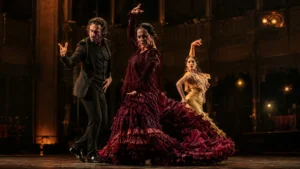
Flamenco Biennial

Flamenco in Seville during the Biennial: where to see shows beyond the official programme

The Biennial is not the only place to see flamenco in Seville

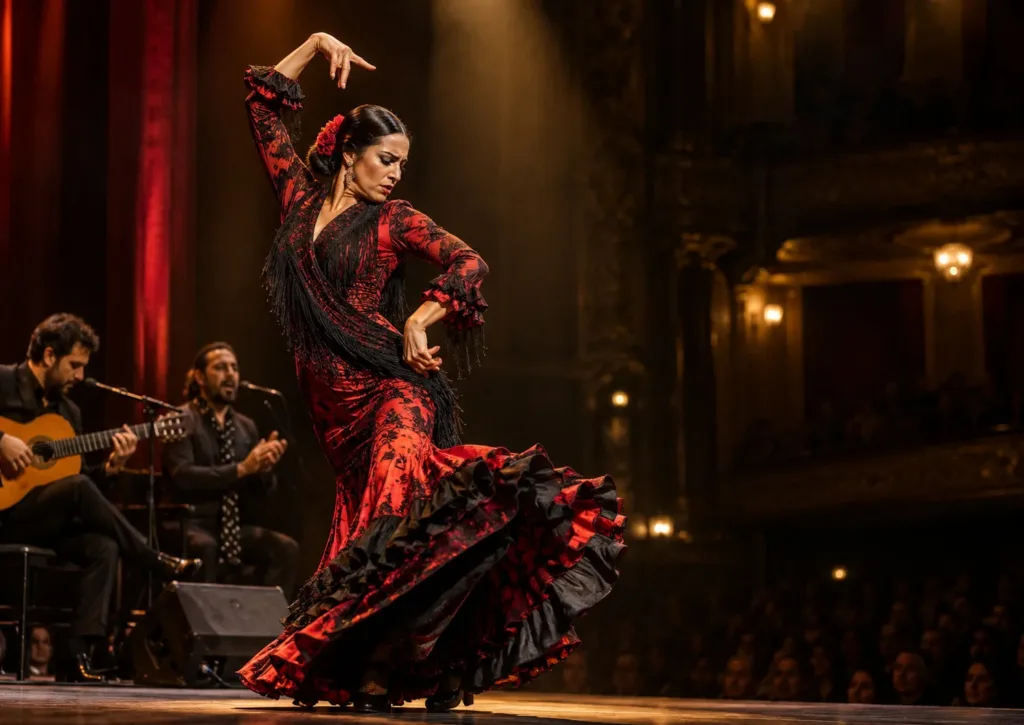
During the 2026 Seville Flamenco Biennial, the city experiences almost four weeks of intense activity: major productions, premieres, recitals, dance shows, guitar concerts and events spread across theatres and heritage venues. But flamenco in Seville neither begins nor ends with the official programme.

While the Biennial runs between 9 September and 3 October 2026, the city’s tablaos continue their usual activity. This creates a particularly interesting opportunity for anyone travelling to Seville during those dates: combine an official performance with a tablao show and discover two very different — and complementary — ways of experiencing flamenco.

Two complementary ways to experience flamenco

The Biennial offers large-scale productions, world premieres and encounters created for a specific occasion. The tablao offers another scale: artists only a few metres away, cante, dance and guitar in direct contact with the audience, formats of around one hour and a programme that is much easier to fit into an afternoon or evening of sightseeing around the city.

The idea of this guide is not to choose between the Biennial and a tablao, but to help you combine both formats during a stay in Seville.

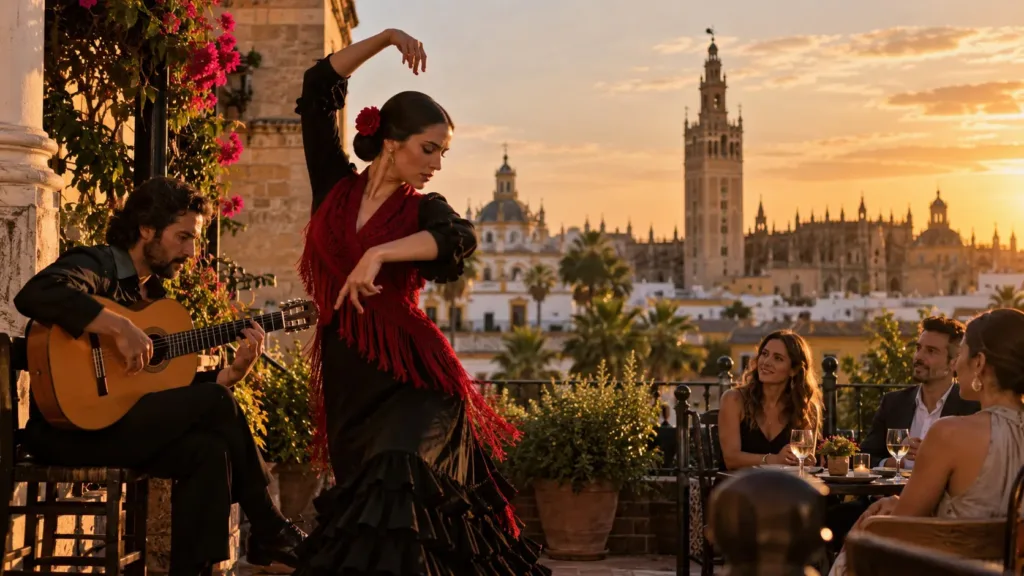
Quick answer: during the 2026 Flamenco Biennial you can still see flamenco outside the official programme at numerous tablaos in Seville. In the centre there are notable options around Las Setas, Plaza Nueva, Santa Cruz, Calle Zaragoza and Corral del Rey; Triana also has regular shows beside the Guadalquivir. If you are staying for several days, one of the best ways to understand flamenco in Seville is to combine at least one major Biennial performance with a night at a tablao.

Last updated: 3 September 2026. Tablao schedules, prices and availability can change depending on the date. Always check actual availability before planning your evening.

The Biennial: large-scale productions, creation and exceptional events

One of the most useful ideas when planning a flamenco trip to Seville is to stop thinking of the Biennial and tablaos as mutually exclusive alternatives. In reality, they show two different dimensions of the same art.

The Biennial brings together creations designed for theatres, large formats, premieres, unique encounters and shows that often will not be presented again in exactly the same way. The experience depends as much on the artist as on the stage project, venue, lighting, dramaturgy and the exceptional nature of the event itself.

The tablao: proximity, live performance and dialogue between artists

The tablao works differently. The focus is on live performance: a group of artists, a smaller scale, minimal physical distance between stage and audience, and a structure that leaves room for dialogue between cante, guitar and dance. Even when there is a defined artistic base, the evening has an immediate quality that changes with the performers and the way they respond to one another.

That is why someone who sees only Biennial productions will discover an extraordinary part of contemporary flamenco; someone who also adds a tablao can observe how the art works at close range, without the mediation of a large theatrical stage.

Where to see flamenco in Seville during the Biennial, beyond the official programme

Seville has a stable network of tablaos throughout the year. During the Biennial that network continues to operate and can be especially useful both for visitors who want to expand their trip and for those who prefer to keep some evenings free of official performances.

We do not present the following selection as a ranking. The best tablao will depend on the area where you are staying, the schedule you need, the size of venue you prefer, whether you want to add food, and above all on the actual availability for your date.

Las Setas: flexibility in the northern city centre

The area around Plaza de la Encarnación is especially convenient if you are exploring the northern city centre, Alameda, Regina, Feria or Santa Catalina. Here you will find Tablao Flamenco Las Setas, one of the city’s most flexible options in terms of schedules.

Its stable programme of performances makes something especially valuable during the Biennial possible: finding a show without having to reorganise the entire day. The format lasts about one hour and brings together cante, guitar and dance in a venue specifically designed for live flamenco.

It may suit you if:

  • you are staying in the northern city centre or near Las Setas;
  • you want several possible showtimes;
  • you are looking for a show lasting about one hour;
  • you prefer to integrate flamenco into a day of sightseeing in the historic centre.

Santa Cruz and the Alcázar area

If your day revolves around the Real Alcázar, the Cathedral, the Giralda or the Santa Cruz neighbourhood, you do not need to travel to the other side of Seville to end the day with flamenco.

Tablao Flamenco El Jardín de Murillo, next to Paseo de Catalina de Ribera, offers a format of around one hour with cante, guitar and dance. Its location is its great strategic advantage during the Biennial: you can move from an afternoon of monuments to a flamenco show without major transfers.

The available options can also include a drink or simple food choices, making it useful both for those who want to focus solely on the show and for those who want to complete the evening.

Historic centre, Plaza Nueva and Arenal: three different ways to experience a tablao

Casa Duende Tablao: small and very close-up

Casa Duende Tablao, on Corral del Rey, works with a small-capacity room and a show lasting around 50–60 minutes. Its proposal combines solos and ensemble moments before reaching a fin de fiesta, and there are options that can add a tasting or table service.

It is especially interesting for anyone looking for an intimate scale and the feeling that the stage is genuinely only a few steps away.

Casa Inquieta: flamenco in a 19th-century palace house

On Calle Zaragoza, Tablao Flamenco Casa Inquieta adds the value of the venue itself to the experience. The show takes place in a 19th-century palace house and brings together a five-artist group for approximately one hour.

It can work very well for anyone who wants to stay right in the city centre, move around Arenal or Plaza Nueva, and choose an experience where architecture, atmosphere and proximity are part of the plan.

La Cantaora: flamenco and food on the same night

Near Plaza Nueva, Tablao Flamenco La Cantaora is especially useful for visitors who want to combine dinner and a show in a single plan. The venue is inspired by the atmosphere of the old cafés cantantes and offers options ranging from a show with a cocktail to tapas or dinner packages.

During a stay focused on the Biennial it can be a good choice for an evening without an official performance, because it turns the whole night into one booking without leaving the historic centre.

Triana: cross the river to complete the experience

A flamenco stay in Seville changes character once you cross the Guadalquivir. Triana forms part of flamenco’s historical memory and remains one of the neighbourhoods where many visitors deliberately look for an experience different from the monumental city centre.

Tablao Flamenco Triana, on Calle Pureza, offers a traditional format with four artists — singer, guitarist, male dancer and female dancer — in a small-scale room. The experience lasts around one hour and can easily be combined with a walk around Altozano, Calle Betis or the riverside beforehand.

There is no need to present Triana as a “more authentic” alternative to the city centre. It is simply another context. For anyone who has already seen a large Biennial production at the Maestranza, Lope de Vega or Teatro Central, ending another evening in a small Triana venue offers flamenco on a completely different scale.

Flamenco options outside the Biennial at a glance

Area Option Approximate format It may suit you if…
Las Setas Tablao Flamenco Las Setas ≈ 60 min · several showtimes You want flexible times and a central location
Santa Cruz El Jardín de Murillo ≈ 60 min · cante, guitar and dance You are coming from the Alcázar, Cathedral or Santa Cruz
City centre Casa Duende Tablao ≈ 50–60 min · small capacity You want maximum proximity and an intimate format
Arenal / Zaragoza Casa Inquieta ≈ 60 min · five artists Historic venues appeal to you
Plaza Nueva La Cantaora ≈ 60 min · food options You want to combine dinner and a show
Triana Tablao Flamenco Triana ≈ 60 min · four artists You want to add an evening on the other side of the river

How to combine the Biennial and a tablao without turning the trip into a race

Option 1: one Biennial night and another night at a tablao

This is the simplest formula and probably the most recommendable. Choose one or two official productions that genuinely interest you and reserve another evening for a tablao. That way you can compare the large-scale stage format with the closeness of live flamenco without rushing.

Option 2: Unique Matinee + tablao in the afternoon or evening

The Unique Matinees at San Luis de los Franceses begin at midday. On those dates, keeping the rest of the day free leaves time to eat, explore the city and book a tablao later without overlapping experiences.

More possible combinations

Option 3: free daytime activity + tablao

The parallel programme includes free activities or events requiring advance booking. Combining an exhibition, workshop or daytime activity with a tablao at night can create a full flamenco day without depending on a major official production.

Option 4: if your official performance is sold out

If the show you wanted to see no longer has tickets, the tablao stops being a complement and can become the main option for that evening. In that case, actual availability should come first: check which venues have seats and then compare location and format.

What to choose depending on the experience you want

  • Schedule flexibility: start by checking options with several daily showtimes in the city centre.
  • An especially small venue: Casa Duende works on a very intimate scale.
  • Architecture and historic atmosphere: Casa Inquieta adds the setting of a 19th-century palace house.
  • Flamenco + food: La Cantaora lets you combine the show with different food or dinner options.
  • A plan after visiting the Alcázar and Santa Cruz: El Jardín de Murillo reduces travel time and keeps the day in the historic centre.
  • An evening in Triana: Tablao Flamenco Triana lets you combine a walk through the neighbourhood with a show in the same area.

The choice should not be based only on which one seems “best”. Demand is very high during the Biennial, so a realistic combination of availability + area + schedule + type of experience usually produces a much more satisfying plan than chasing a single name.

During the Biennial, it is also worth booking tablaos in advance

The concentration of enthusiasts, professionals and visitors in September means Seville experiences much higher flamenco demand than usual. Official performances are not the only things that sell out: the best-known tablaos can also fill certain showtimes, especially at weekends and during prime evening hours.

So if you already know which day you want to keep free for a tablao, there is no need to wait until you are in Seville. Check availability, choose the time and book. This is even more important in small-capacity venues.

It is also wise to leave some margin between plans. If you are coming from a Biennial performance, allow enough time for the journey, leaving the venue and arriving at the tablao comfortably. Arriving 15–20 minutes early is a common recommendation at these venues.

If you still do not know which tablao to choose, the most practical option is to start from the flamenco in Sevillepage, narrow the options mentally by area and open only those that have availability for your date.

The best flamenco visit to Seville does not have to be limited to the official programme

The Flamenco Biennial is exceptional precisely because it concentrates an amount of creative work into a few weeks that is difficult to find at any other time. But at the same time Seville keeps its network of tablaos, venues and regular shows running.

Combining both formats helps you understand the city better: one day you can see a major production conceived for the Maestranza, Lope de Vega or a heritage venue; another night you can sit only a few metres from a singer, a guitar and a dancer without needing a large-scale stage production.

It is not about choosing between the Biennial and a tablao. In September 2026, the most interesting option may be precisely to experience both.

Frequently asked questions about where to see flamenco in Seville during the Biennial

Yes. Seville’s flamenco tablaos keep their regular programmes during the Biennial. You can book cante, guitar and dance shows in the city centre, Santa Cruz, Arenal, Plaza Nueva, Triana and other areas of the city.

They are different experiences. The Biennial stands out for large productions, premieres and projects created for specific venues; the tablao offers proximity, a smaller format and a more direct relationship between artists and audience. If your trip allows it, combining both gives the most complete experience.

El Jardín de Murillo is next to Paseo de Catalina de Ribera and very close to the Santa Cruz neighbourhood, Alcázar, Cathedral and Giralda, making it especially convenient if you want to keep the whole day within the historic centre.

Triana has a stable flamenco offering. Tablao Flamenco Triana, on Calle Pureza, is one of the available options, and our flamenco in Triana page brings together alternatives to compare depending on the date.

Yes. Some options include tapas, tastings, drinks or a full dinner. La Cantaora, for example, offers packages that let you combine the show and food in the same booking.

Many of the shows included in this guide last approximately 50 to 60 minutes. The exact duration depends on the tablao and the option booked, so always check the listing before purchasing.

Yes. First check whether there is another official performance with tickets available. If none fits, a tablao with availability that night is an immediate alternative and, above all, a different way of experiencing flamenco rather than a reduced copy of the show you missed.

Yes. September brings exceptional flamenco demand to Seville and smaller venues can fill certain showtimes. If you already know the date, it is advisable to check availability and book.

Yes. The Unique Matinees take place at midday, leaving time to eat, explore the city and attend a tablao later. It is one of the easiest combinations for dedicating a full day to flamenco without stringing together two evening performances.

On Tablaos Flamencos’ Flamenco in Seville page you can see the options available in the city, open each venue listing and compare format, location and availability before booking.

Book online: the key to securing your seat

In many cities, flamenco tablaos sell out easily, especially on weekends and during peak season. That’s why, if your dates are set, the most important thing is to book online.

Direct recommendation: book online through our website to guarantee your seat and arrive with everything confirmed. If you already have your destination, go straight to your city to see available options and clear recommendations.

Flamenco Sevilla | Tablaos Flamencos

Seville

Flamenco Madrid | Tablaos Flamencos

Madrid

Flamenco Barcelona | Tablaos Flamencos

Barcelona

Flamenco Granada | Tablaos Flamencos

Granada

Flamenco Córdoba | Tablaos Flamencos

Cordoba

Flamenco Málaga | Tablaos Flamencos

Malaga

Flamenco Valencia | Tablaos Flamencos

Valencia

Flamenco Jerez | Tablaos Flamencos

Jerez

Find out more about this with your favorite AI:

Did you like this article? Share it!:

Tags: agenda flamenca, Bienal 2026, Bienal de Flamenco, festivales flamencos, flamenco en Sevilla, sevilla, tablaos de Sevilla

Article published by:

Related articles

The Biennial returns to Hotel Triana: three nights of flamenco in a historic communal courtyard
Flamenco dance at the 2026 Biennial: from the great figures to the new generation