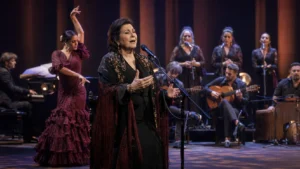
The established generation: Arcángel, Marina Heredia, Israel Fernández and Antonio Reyes
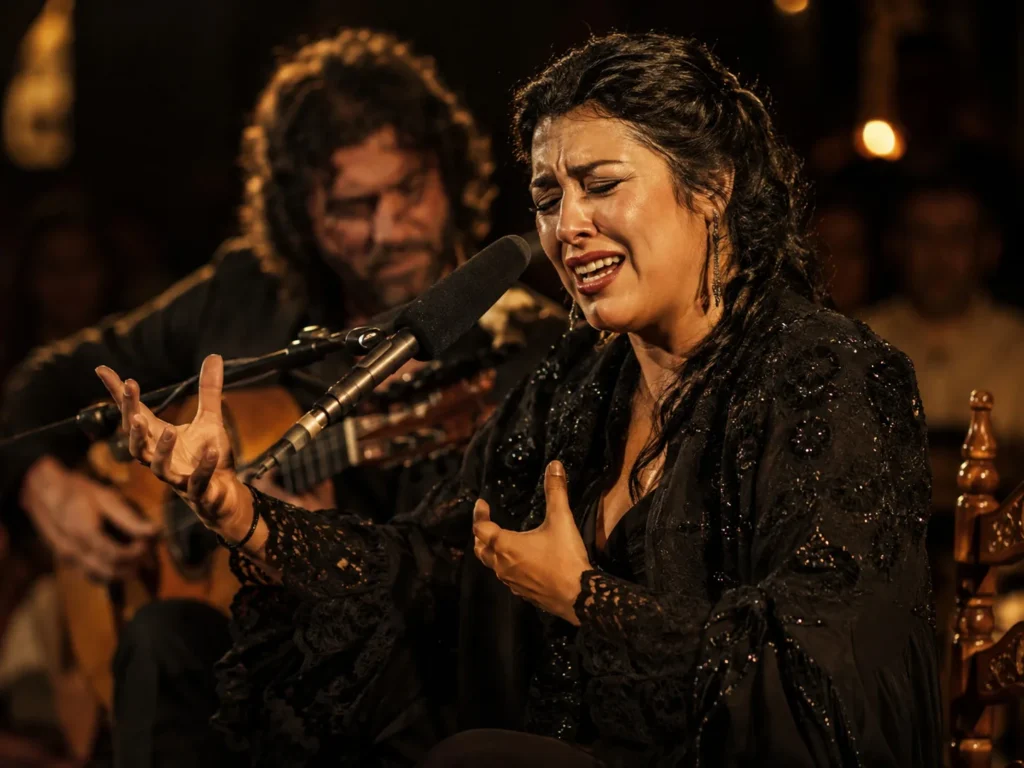
Between the historic masters and the youngest voices is a generation that has spent years defining contemporary flamenco singing. The 2026 Biennial gives it a highly visible place.
Arcángel presents on 17 September at the Teatro Lope de Vega La copla del cante, a Unique Night that revisits the relationship between flamenco and copla through the memory of performers such as Marchena, Caracol, Pepe Pinto, Canalejas and La Paquera de Jerez.
The following day, Antonio Reyes presents Seis cuerdas, seis, also at the Lope de Vega, creating a dialogue between his singing and six guitarists: Rafael Riqueni, Manolo Franco, Diego del Morao, Joni Jiménez, José del Tomate and Nono Reyes.
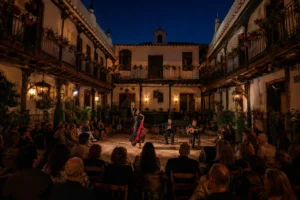
Meanwhile, Israel Fernández brings De oro y marfil to the Patio de la Montería at the Real Alcázar on 14 September, with Diego del Morao and a broader musical ensemble. It is one of the proposals that best represents a way of projecting flamenco roots through a fully contemporary sound language.
Marina Heredia: flamenco singing on a large scale
On 1 October, Marina Heredia performs at the Teatro de la Maestranza with the Royal Seville Symphony Orchestra in ¡En libertad! El camino de los gitanos. The show connects historical memory, Roma identity and large-scale musical creation.
Her presence reveals another dimension of flamenco singing: the voice does not appear only in the singer-and-guitar format. It can coexist with an orchestra, broad dramaturgy and historical research while remaining the expressive centre of the work.