Before the tablao: parties, roadside inns, salons and academies
Flamenco was not born inside one particular type of venue. During the nineteenth century, the forms that would come to be recognised as flamenco developed in very different settings: family gatherings, private parties, roadside inns, taverns, dance salons, academies and theatrical performances.
Andalusian cities such as Seville, Cádiz, Jerez and Málaga already had a vibrant world of popular dance, music and entertainment. The escuela bolera coexisted with dances considered local, Andalusian songs and singing styles that gradually acquired a more distinct flamenco identity.
The decisive step came when these practices began moving beyond occasional settings into an urban entertainment industry. Artists no longer depended solely on someone organising a party: they could be hired, advertised in the press and presented regularly to an audience.
Cafés cantantes: the tablao’s great predecessor
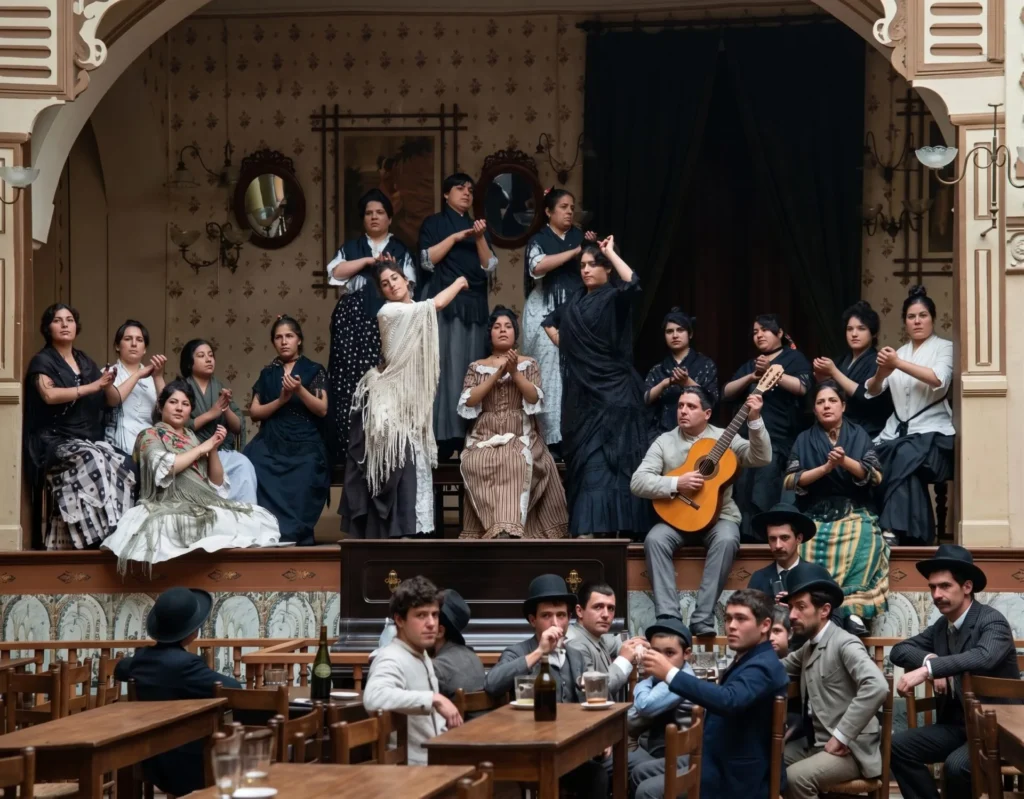
During the second half of the nineteenth century, Spain saw the spread of cafés cantantes, establishments combining drinks with performances. Not all were exclusively devoted to flamenco, but some in Andalusia and Madrid became essential centres for singing, dancing and guitar.
The Andalusian Flamenco Institute cites José Blas Vega’s classic chronology, placing the great era of cafés cantantes approximately between 1847 and 1920. They consolidated professional performance, increased the number of artists, fostered individual schools of singing and gave the guitar an increasingly defined role as essential accompaniment.
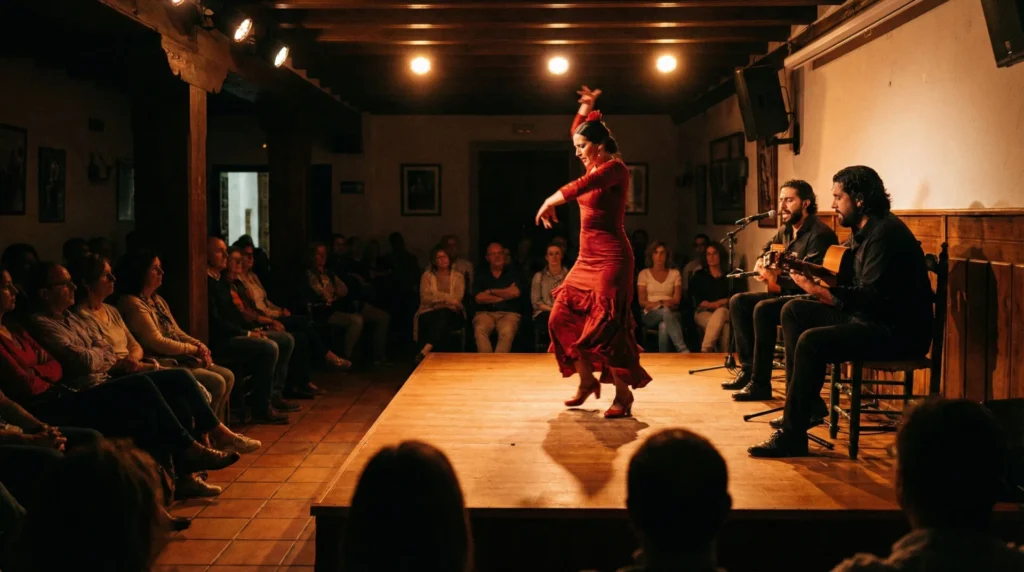
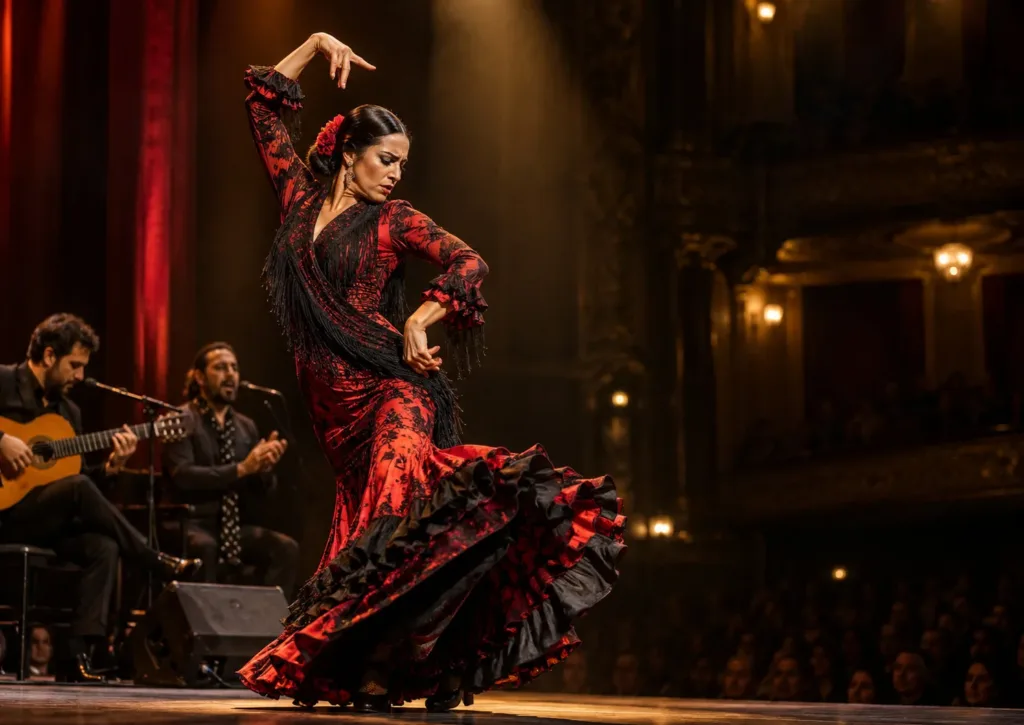
They also developed a working structure that will sound surprisingly familiar to anyone who knows today’s tablaos: promoters, schedules, casts, guest artists, dance ensembles, wages, rivalry between venues and audiences who followed their favourite performers.
In Seville, names such as Silverio Franconetti and Manuel Ojeda ‘El Burrero’ symbolise that transformation. Silverio was both artist and entrepreneur, and his career is closely associated with organising flamenco as a professional performance with an identifiable programme.
To explore this period further, we have separately reconstructed the history of Seville’s cafés cantantes, with their venues, artists, photographs and timelines.