Flamenco BiennialNews / Updates

The Biennial Starts Before 9 September: First Events and Activities

The 2026 Flamenco Biennial starts before its official opening

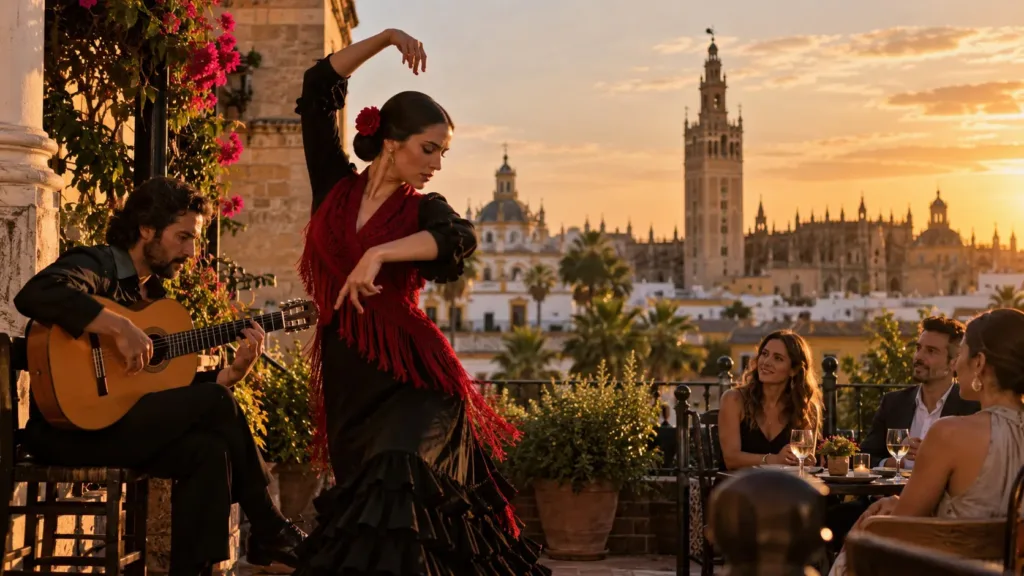
The 24th Seville Flamenco Biennial officially announces its main dates from 9 September to 3 October 2026. However, anyone who waits until the 9th to start following it will already be several days late: the programme linked to this edition actually begins on Wednesday 2 September and from then on it brings an almost daily sequence of exhibitions, free shows in different Seville neighbourhoods and a first film event.

It is the prelude to the Biennial: a week in which flamenco leaves the major theatres and moves into a historic factory, Polígono Sur, San Jerónimo, La Barzola, María Luisa Park and Cartuja. The programme also makes it possible to attend several events without buying a ticket for the main shows.

Between 2 and 8 September, the programme includes La noche azul, La noche de las gitanas, Cuestión de tiempo, the 2nd Macarena Flamenca Festival, the stage tribute to Fosforito Nazareno y Olivares and the first screening in the film series Flamencas. On 9 September, the sung opening proclamation Ecos primitivos will mark the official opening.

Pre-Biennial agenda 2026

  • 2 September: opening of La noche azul, Real Fábrica de Artillería.
  • 3 September, 21:30: La noche de las gitanas, Polígono Sur.
  • 4 September, 21:30: Cuestión de tiempo, Aguilar Brothers, San Jerónimo Monastery.
  • 5 September, 21:30: 2nd Macarena Flamenca Festival, Plaza Virgen del Pilar.
  • 6 September, 21:30: Nazareno y Olivares, tribute to Fosforito, Museum of Arts and Popular Customs.
  • 8 September, 20:30: film series Flamencas, Three Cultures Foundation.
  • 9 September, 20:30: sung opening proclamation Ecos primitivos, Plaza de San Francisco.

The programme may be subject to changes. Check times, access conditions and any reservation requirements on the official websites before travelling.

2 September: La noche azul opens the Biennial one week early

The first unmistakable sign that the 2026 Biennial begins before the 9th will arrive on Wednesday 2 September. That day, the exhibition will open in the Nave de Grabados at the Real Fábrica de Artillería La noche azul. Ópera flamenca in the Carlos Martín Ballester collection.

The exhibition brings together around 150 historic pieces —posters, photographs, gramophone records, manuscripts, advertising and documentation—and adds a selection of recordings digitised for the occasion. Its central theme is the so-called Ópera Flamenca, the period that transformed flamenco’s public scale during the first decades of the 20th century and which forms one of the major historical themes of this 24th edition.

The exhibition reconnects visitors with the memory of figures such as La Niña de los Peines, Manuel Vallejo, Pepe Pinto, Ramón Montoya, Niño Ricardo and Manolo Caracol. It also continues beyond the Biennial and will remain open until 22 November 2026.

We cover it in detail in our dedicated guide to the exhibition.

3 September: La noche de las gitanas in Polígono Sur

On Thursday the 3rd, the programme section begins Flamenco in the Streets, one of the initiatives within Other Gems, the Biennial’s parallel programme designed to take part of the flamenco activity outside conventional performance venues.

The first event will be La noche de las gitanas, at 21:30 in Parque Pepa La Calzona, in Polígono Sur. The show is conceived as a collective portrait of the female and Roma transmission of flamenco, linking family memory, neighbourhood, identity and cultural resistance.

The singers will be Herminia Borja, Mara Rey and Zamara Carrasco; the dance will be performed by Manuela Vargas, with Luis Amador on guitar, Pepe de Pura singing for the dance, Fali El Eléctrico on percussion and Emilio Castañeda on palmas. Artistic direction is by Antonio Amaya El Petete.

The official listing gives an approximate duration of one hour and twenty minutes. The event forms part of the free programme and admission is open until capacity is reached.

4 September: the Aguilar Brothers take over San Jerónimo

On Friday the 4th, also at 21:30, San Jerónimo Monastery will host Cuestión de tiempo, a piece created and performed by the brothers Diego and Hugo Aguilar.

The work explores memory, identity, family heritage and maturity through the body and dance. Rather than telling a conventional story, it builds a journey in five movements—Lembranza, Albor, Confluencia, Soler and Umbral—moving from family origins towards a shared future.

One of the most significant elements is the presence of the artists’ father at the beginning of the piece, used as a symbol of transmission. San Jerónimo Monastery itself adds a heritage dimension to a work in which past and present explicitly enter into dialogue.

This will also be an activity with free admission until capacity is reached.

5 September: Macarena Flamenca pays tribute to José de la Tomasa

On Saturday the 5th, the activity moves to Plaza Virgen del Pilar, in the La Barzola neighbourhood, where the second edition of the Macarena Flamenca Festival will be held. The Biennial’s dedicated listing gives a start time of 21:30.

The festival was launched in 2025 by the Macarena District and aims to establish a permanent flamenco gathering in one of Seville’s districts with the strongest popular and jondo traditions. Its second edition will be dedicated to José de la Tomasa, a key figure in Seville cante and heir to one of its historic flamenco dynasties.

The line-up includes Potito, accompanied by Manuel Herrera; Antonio Reyes, with Nono Reyes; Remedios Reyes, with Julio Romero; and Manuel de la Tomasa, also with Nono Reyes. Dance will be represented by Manuela Amador Carrasco, with Luis Amador on guitar and Emilio Molina and Manuel Tañé on cante.

Beyond the tribute, Macarena Flamenca has a strong neighbourhood focus: bringing cante, toque and baile to an open, everyday and accessible setting. Admission will be free until capacity is reached.

6 September: Fosforito, living memory in María Luisa Park

On Sunday the 6th, at 21:30, Seville’s Museum of Arts and Popular Customs will host Nazareno y Olivares, a stage production devoted to tracing the life and work of Antonio Fernández Díaz, Fosforito.

The choice of protagonist carries particular weight. Fosforito is an essential figure for understanding flamenco in the second half of the 20th century: a cantaor with an exceptionally broad repertoire, a leading figure in the 1956 National Flamenco Art Competition in Córdoba and holder of the Llave de Oro del Cante, awarded in 2005.

The Biennial presents Nazareno y Olivares as an approach to his career through words, music and dance. Participants include Enrique Garcés, Bernardo Miranda, Alejandro Hurtado and Yolanda Osuna, among others.

The venue will be the Museum of Arts and Popular Customs, in Plaza de América in María Luisa Park, another example of how this pre-programme uses heritage sites around the city rather than being confined to theatres. The activity will be free until capacity is reached.

7 September: a pause before the cinema

At the time of publication, the official programme consulted does not list a specific public Biennial activity for Monday 7 September. After four consecutive nights of Flamenco in the Streets, the programme resumes on Tuesday the 8th.

The day can be useful for visiting La noche azul, which will remain open at the Real Fábrica de Artillería, or for planning the main festival days. From the 9th onwards, the number of events increases rapidly and performances overlap across different venues in Seville.

8 September: flamenco comes to the cinema

One day before the official opening, the Biennial will also reach the Three Cultures of the Mediterranean Foundation, on Isla de la Cartuja, with the film series Flamencas.

The programme for this series has changed since the initial announcements. At the time of publication, the official Three Cultures Foundation agenda lists the screening on 8 September at 20:30 of Flamencas, mujeres, fuerza y duende, a documentary directed by Marcos Medina and Jonathan González.

The 98-minute film traces the presence, development and struggle of women within flamenco through the biographies of 60 female singers, guitarists and dancers from different generations, from deeply rooted traditional approaches to fusion languages.

The screening is listed as free. As the access and reservation system may be updated, it is advisable to check availability directly with the Three Cultures Foundation before attending.

9 September: now the 24th Biennial officially begins

After this preliminary week, Wednesday the 9th is the date listed as the festival’s official start. At 20:30, Plaza de San Francisco will host the sung opening proclamation Ecos primitivos. Cante en altura, danza en tierra, directed by Segundo Falcón.

The production will turn the square into an immersive stage: the voices of Segundo Falcón, María Terremoto, Rafael de Utrera, Esperanza Fernández and Pedro El Granaíno will be distributed across different balconies, while Ana Morales will perform the choreographic section in the central space.

This opening proclamation is the true bridge between the preliminary activities and the main programme. The following day, 10 September, will bring El mundo por montera, the major gala of the 24th Biennial at the Real Maestranza bullring, and from the 11th the simultaneous programme of theatres, heritage venues and Noches Únicas will unfold in full.

A preliminary week that is almost entirely free

The appeal of this first week is not only that it takes place before the official opening. It also reveals a side of the Biennial that is especially open to the city.

The performances in Flamenco in the Streets on 3, 4, 5 and 6 September are announced as free until capacity is reached. The film screening on the 8th is also listed as free, although advance booking or collection of an invitation may be required. The exhibition La noche azul has its own programme and it is advisable to check the latest visiting conditions.

This makes the days before 9 September particularly interesting for residents and visitors who want to experience the Biennial without relying solely on tickets for the major shows, many of which are already in strong demand.

Our dedicated guide also brings together the main free events of the entire edition.

What to keep in mind if you plan to attend

The preliminary activities are spread across very different parts of Seville, so it is important not to think of them as if they all took place within a single festival site. Polígono Sur, San Jerónimo, Macarena, María Luisa Park, the Real Fábrica de Artillería and Cartuja all require different journeys.

For free outdoor shows or events with admission until capacity is reached, arriving early is particularly advisable. A free activity does not mean access is guaranteed once the available capacity has been filled.

It is also worth checking the official information on the day of each event. Parallel programming is more susceptible to changes in times, locations or reservation systems than performances with numbered tickets. The film series is a good example: the Three Cultures Foundation has updated the order of the films compared with the first published calendars.

And if you are spending several days in Seville, this preliminary week can be used to combine heritage, public activities and live flamenco before the festival reaches its greatest intensity from the 9th and especially on 10 and 11 September.

Frequently asked questions about the days before the 2026 Biennial

The official dates of the 24th Flamenco Biennial are from 9 September to 3 October 2026, but the activities linked to this edition begin earlier. The exhibition La noche azul opens on 2 September, and between the 3rd and the 8th there are free performances and the first screening in the Biennial’s film series.

Before the official opening, the programme includes La noche azul on the 2nd; La noche de las gitanas on the 3rd; Cuestión de tiempo by the Aguilar Brothers on the 4th; the 2nd Macarena Flamenca Festival on the 5th; Nazareno y Olivares, a tribute to Fosforito, on the 6th; and the first screening in the film series Flamencas on the 8th.

Yes. The four events in Flamenco in the Streets are announced as free, open-access activities until capacity is reached. For that reason, arriving early is recommended, especially at venues with limited capacity.
At the time of publication, the updated Three Cultures Foundation programme lists for 8 September at 20:30 Flamencas, mujeres, fuerza y duende, by Marcos Medina and Jonathan González. Some earlier calendars show a different order of films, so we recommend checking the official event page before attending.

On 9 September, the official opening takes place with the sung proclamation Ecos primitivos. Cante en altura, danza en tierra, directed by Segundo Falcón in Plaza de San Francisco at 20:30. Participants include María Terremoto, Rafael de Utrera, Esperanza Fernández, Pedro El Granaíno and dancer Ana Morales.

The full programme and any updates should be checked on the official Seville Flamenco Biennial website. At Tablaos Flamencos we also maintain a general guide to the 2026 edition and dedicated articles on free activities, Noches Únicas, sold-out tickets and exhibitions.

The Biennial spreads across Seville before the curtain rises

The early start of the 24th Biennial clearly reflects one of the ideas running through this edition: the festival does not want to be limited to a succession of performances inside theatres. Even before the opening proclamation, flamenco will already have moved through a historical exhibition, neighbourhoods with their own identity, heritage spaces and a cinema.

For anyone in Seville during the first week of September, waiting until the 9th means missing a significant part of the experience. The Biennial can already be felt from 2 September and over six days builds an introduction combining memory, baile, cante, tribute, public participation and audiovisual culture.

Then the main programme will arrive. But by then, Seville will already have spent a week inside the Biennial.

Sources and programme updates

To prepare this guide, we compared the general programme and parallel activities of the 24th Biennial with the individual listings for the first events and the updated agenda of the Three Cultures of the Mediterranean Foundation.

Information reviewed on 30 August 2026. Organisers may change times, access conditions or programming.

Book online: the key to securing your seat

In many cities, flamenco tablaos sell out easily, especially on weekends and during peak season. That’s why, if your dates are set, the most important thing is to book online.

Direct recommendation: book online through our website to guarantee your seat and arrive with everything confirmed. If you already have your destination, go straight to your city to see available options and clear recommendations.

Flamenco Sevilla | Tablaos Flamencos

Seville

Flamenco Madrid | Tablaos Flamencos

Madrid

Flamenco Barcelona | Tablaos Flamencos

Barcelona

Flamenco Granada | Tablaos Flamencos

Granada

Flamenco Córdoba | Tablaos Flamencos

Cordoba

Flamenco Málaga | Tablaos Flamencos

Malaga

Flamenco Valencia | Tablaos Flamencos

Valencia

Flamenco Jerez | Tablaos Flamencos

Jerez

Find out more about this with your favorite AI:

Did you like this article? Share it!:

Tags: Flamenco Biennial, Flamenco Biennial 2026, Flamenco events calendar, Flamenco festivals, flamenco in Seville, Otras perlas, Seville, Street flamenco

Article published by:

Related articles

The Blue Night: the Biennial exhibition on the era of Flamenco Opera
Unique Matinees at the 2026 Seville Flamenco Biennial: Programme, Dates and San Luis de los Franceses