Flamenco guides

Flamenco for beginners: a guide to enjoying your first show

Flamenco for beginners: start without worrying about understanding everything

Approaching flamenco for the first time can be as exciting as it is confusing. People talk about palos, compás, cante, toque, baile, duende, llamadas and remates, and it is easy to think you need to know all that vocabulary to enjoy a show. You do not. Flamenco can also be understood through emotion, attention and the relationship created live between the artists.

This guide to flamenco for beginners is designed for anyone entering a tablao for the first time or wanting to understand better what happens on stage. It is not meant to turn a first visit into a theory lesson, but to give you a few simple keys to recognize what you are seeing, listen with greater awareness and enjoy the show without worrying about “doing it right”.

Flamenco para principiantes: guía para disfrutar tu primer espectáculo

Before you begin

Quick answer: if this is your first time seeing flamenco, you do not need to know the palos or understand every lyric. Pay attention to the conversation between singing, guitar and dance, to the compás, the silences and the way the energy on stage changes. The rest comes little by little.

What flamenco is, explained for beginners

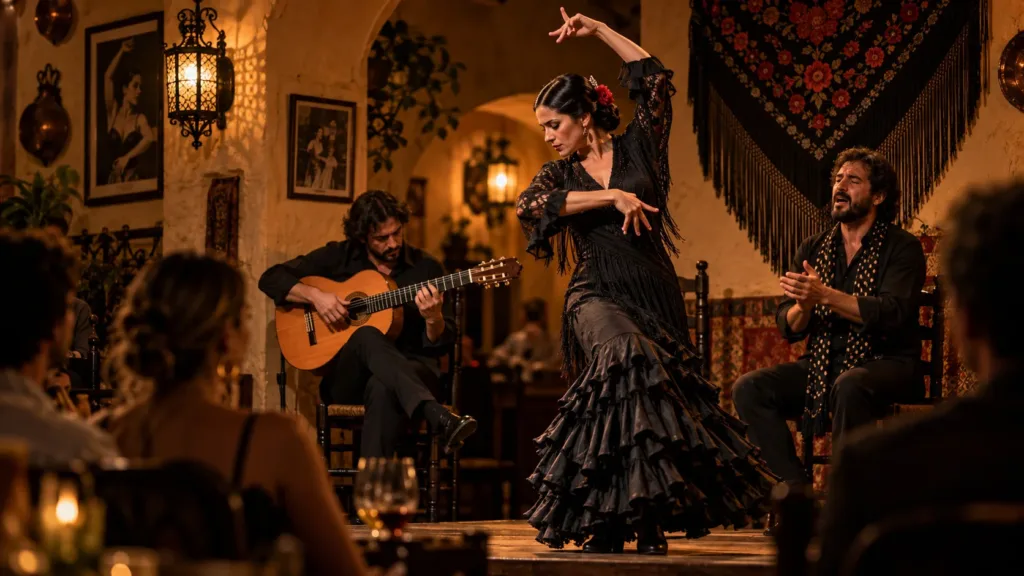
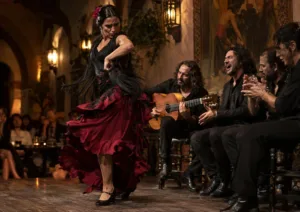
Flamenco is an art form in which several forms of expression interact in real time. Its three most recognizable pillars are cante (singing), the guitar playing (toque) and the dance (baile), but compás, handclaps, silences and communication between the performers are just as important.

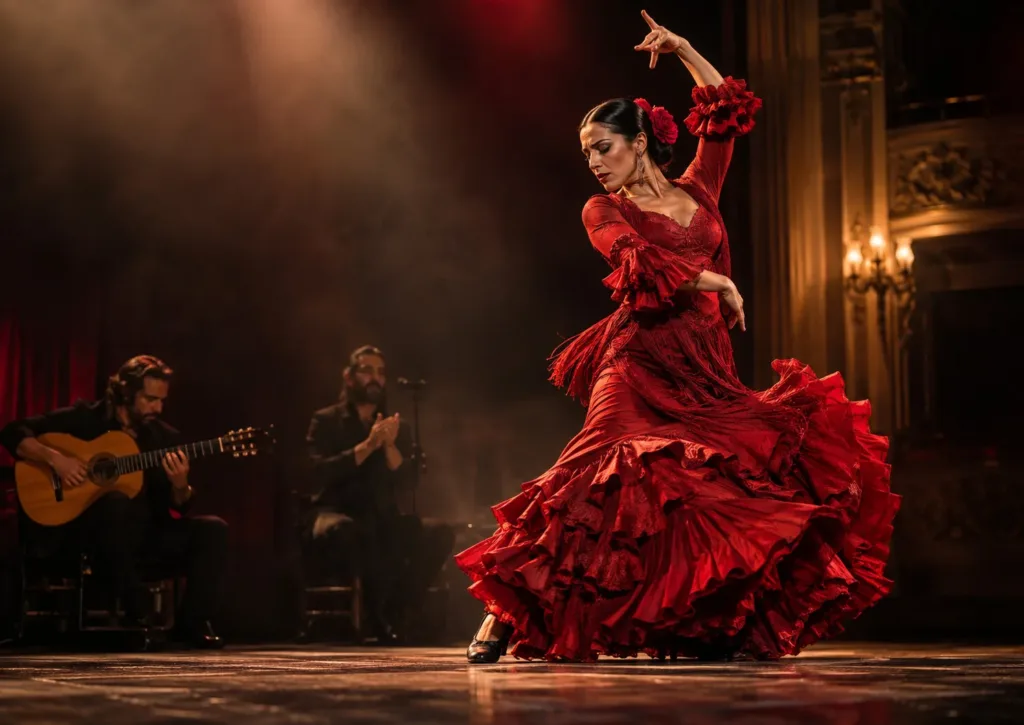
In a good show, you should not think of each artist as doing “their part” in isolation. The guitar listens to the singer, the dancer responds to the singing, the palmas support the rhythm, and everyone reacts to what is happening in that moment. That is why, even within a rehearsed structure, flamenco retains a sense of dialogue and risk that is especially noticeable live.

If you want to explore this further before or after your visit, you can read our guide What is flamenco? Origins, characteristics and essential elements.

Five things worth watching

1. The cante

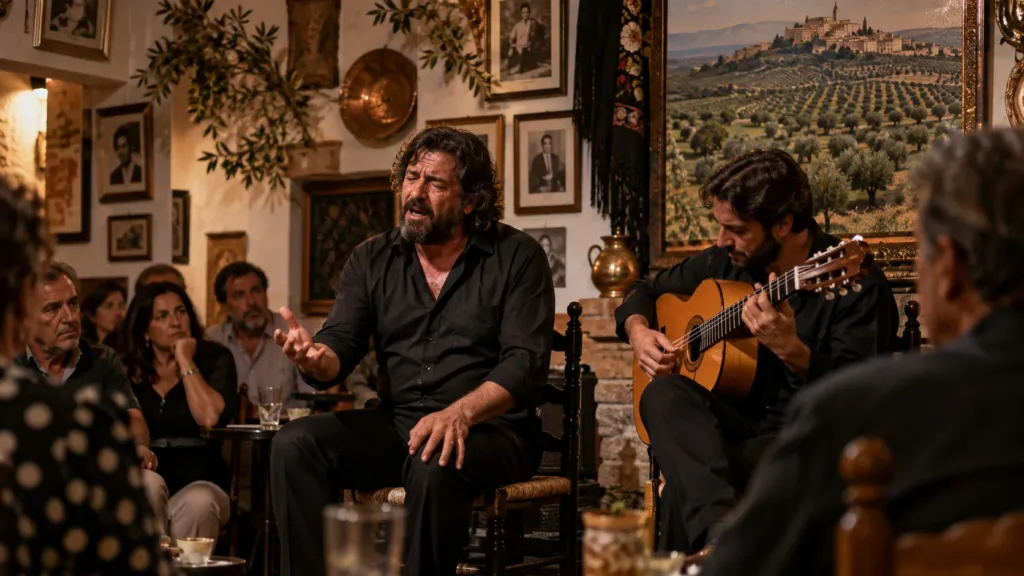
You do not need to understand every word. Listen to the color of the voice, the breathing, the intensity, the pauses and the way the singer shapes each phrase. In many moments, the emotion arrives before the literal meaning of the lyrics.

2. The guitar

The guitar is not merely accompaniment. It can open a piece, dialogue with the singing, mark transitions, support the dance or take its own solo moment. Notice how its intensity changes according to what the other artists are doing.

3. The dance

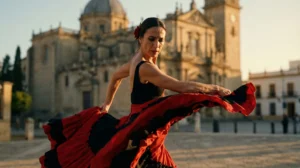
Flamenco dance is not just about fast footwork. Watch the whole body: arms, hands, torso, gaze, movement through space and silences. Footwork is a rhythmic and expressive tool, not a speed competition.

4. The compás

Compás is the rhythmic organization on which many flamenco styles are built. At first, you do not need to count it. It is enough to sense that there is a shared pulse and that the artists know exactly where to meet, accelerate, stop or finish together.

5. Communication

This may be the most useful key for a beginner. Watch the artists looking at one another. You will see gestures, glances, breaths and signals that help guide the number. Once you begin to notice that conversation, the show stops feeling like a sequence of separate performances and starts to reveal its internal logic.

If you want to go deeper, in Flamenco styles (palos) you can explore the different styles and their characteristics.

Essential flamenco vocabulary for beginners

You do not need to memorize a dictionary before entering a tablao, but these words appear often and will help you find your bearings:

  • Cante: the vocal expression of flamenco.
  • Toque: the playing of flamenco guitar.
  • Baile: the bodily and rhythmic expression of flamenco.
  • Palo: one of the forms or styles of flamenco, each with its own musical and expressive characteristics.
  • Compás: the rhythmic structure that organizes many palos.
  • Palmas: rhythmic accompaniment made with the hands. Different types of handclaps can have different sounds and functions.
  • Jaleo: expressions of encouragement that arise within the flamenco setting, including calls of support to the artists.
  • Duende: a concept that is difficult to reduce to a technical definition; it is often used to describe a special artistic intensity. If you want to explore it further, see what flamenco duende is.
  • Tablao: a venue dedicated to regular flamenco performances.

To look up other terms as you learn, you can use our Flamenco dictionary.

Flamenco styles you can start to recognize

One common mistake when starting out is trying to memorize dozens of palos. It is much more useful to become familiar with a few names and, above all, listen to how the character of the music changes.

Alegrías

As the name suggests, they often have a bright and lively character. They are a good example for beginning to observe how dance, singing and guitar work within a vibrant rhythmic structure.

Soleá

It can help you discover a more measured, solemn and profound side of flamenco. Here it is especially interesting to pay attention to the silences, the weight of the singing and the way the dance manages intensity.

Tangos

Their pulse is often easier to follow for an ear not yet accustomed to flamenco rhythms. They can be a very accessible gateway to flamenco’s rhythmic sense.

Bulerías

They are among the styles most associated with speed, rhythmic play, interaction and a festive atmosphere. Do not try to count the compás on your first listen if it distracts you: watch how all the artists seem to know when to enter and when to finish.

Seguiriya

It has an intense and dramatic character. Listening to it quickly shows that flamenco is not a single mood and that much of its richness lies in the contrast between styles.

These are only a few examples. You may hear several palos in the same show, and there is no need to identify them all in order to enjoy them.

How to watch flamenco dance without knowing the technique

If you have never seen flamenco dance up close, it is natural for the footwork to capture all your attention. But there is much more. Watch how the posture changes, how the arms and hands are used, how a movement is prepared and what happens just before a finish.

Silence matters too. A dancer can create as much tension by standing still as by executing a rapid sequence of footwork. The relationship between stillness and explosion is one of the most interesting things to observe from close range.

When the dance enters into dialogue with the guitar or the singing, try not to watch only the dancer. Notice the musicians’ reactions as well. That exchange contains much of the experience of live flamenco.

How to listen to cante if you do not understand the lyrics

Not speaking Spanish, not knowing the accent or not understanding a complete lyric does not prevent you from connecting with the cante. Flamenco singing uses timbres, attacks, repetitions and silences that communicate much more than the literal information in the words.

You can listen for three things: the emotion in the voice, the guitar’s response and the reaction of the other artists. Often, a glance or a handclap will tell you that something musically important has just happened even if you cannot explain it.

Over time you will recognize lyrics, styles and forms. On a first visit, the priority should be attentive listening, not analyzing every phrase.

What to expect when you enter a flamenco tablao

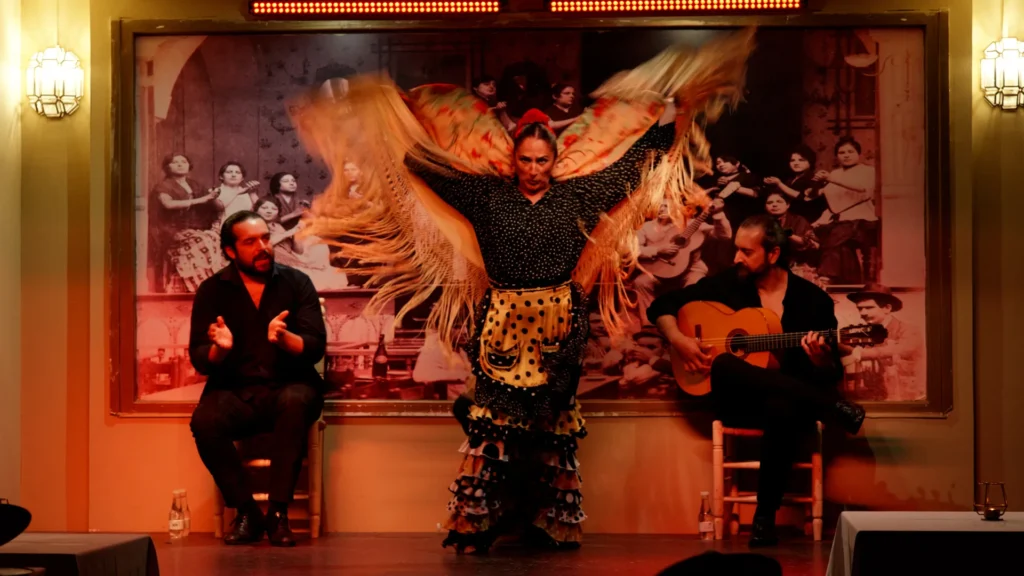
A tablao is one of the most direct ways to approach flamenco because it reduces the distance between stage and audience. The closeness lets you hear breathing, footwork, palmas and the natural sound of the guitar in a way that greatly changes how the show is perceived.

Not all tablaos offer the same format. Room size, number of artists, duration, schedules and the option to book show-only or combine it with food all vary. To compare options, you can browse our selection of flamenco tablaos and also browse by cities.

The order of the show does not have to be identical in every venue either. There may be singing, guitar, solo or group dance numbers and different endings. The important thing for a beginner is not to expect a plot-driven narrative like a conventional play. The thread is usually musical, rhythmic and emotional.

Tips for enjoying your first flamenco show

Arrive with time to spare

Arriving a few minutes early helps you settle in, understand the room and avoid interruptions once the performance has started. If you have a reservation, check the venue’s specific instructions.

Do not try to clap the compás if you do not know it

Applauding at the end of a number is always easy. Clapping along during a piece is different: palmas are part of the rhythmic language, and clapping out of time can interfere with the artists. If you are not sure, listen.

You do not need to shout “olé”

Jaleo arises naturally when someone knows the moment and feels the need to respond. As a first-time spectator, you do not have to imitate it. Enjoying the show quietly is also a way of taking part.

Avoid watching through your phone screen

Part of a tablao’s value lies in its closeness and concentration. Before taking photos or videos, check the venue’s rules. In our guide to photos and videos during a flamenco show we explain what you should keep in mind.

Dress normally

You do not need flamenco clothing or special attire. Most venues accept normal travel or going-out clothes, although it is always worth checking the establishment’s conditions. You can read more about this in what to wear to a flamenco tablao.

Book before you arrive

If you already know the day you want to attend, booking online avoids unnecessary trips and lets you check exactly which option you are buying. Our page How to book explains the process.

Show only or flamenco with dinner?

For a first time, the choice depends more on your travel plans than on your level of knowledge. If you want to focus completely on what happens on stage, a show-only option is usually the most direct choice. If you prefer to make the visit a longer evening out, some tablaos allow you to combine the performance with dinner, tapas or a drink.

Always check exactly what each ticket includes. A different price may correspond to seating, a drink, a menu or other services. The important thing is that the artistic experience does not become secondary if your main aim is to discover flamenco.

How long does a flamenco show last?

There is no universal duration. Many shows are designed to fit easily into an afternoon or evening of travel, but each tablao organizes its sessions differently. If you are planning dinner, a night visit or onward travel afterwards, check the exact schedule before booking.

In our guide How long does a flamenco show last and what is the best time to go? we explain in more detail how to plan it.

Common mistakes when you are starting out

  • Thinking that the faster the footwork, the better the dance. Quality also lies in control, musicality, intention and the relationship with the rest of the group.
  • Expecting every show to be the same. Live flamenco depends on the artists, the repertoire and the interaction of each performance.
  • Believing you need to understand every palo. You can learn to recognize them little by little. Your first experience is not an exam.
  • Confusing “authentic” with a particular style of decoration. A venue’s aesthetics alone do not guarantee artistic quality. We recommend reading how to tell whether a flamenco show is authentic.
  • Spending too much time recording. Besides the fact that each venue may have its own rules, watching the show through your phone means you miss part of the live interaction.
  • Forcing yourself to react like someone who has listened to flamenco for years. There is no required way to enjoy it. Paying attention is enough.

A simple way to keep learning flamenco after your first visit

If the show makes you curious, do not try to take in all of flamenco at once. Choose one element that caught your attention and follow that path. If the singing impressed you, explore the palos you heard. If it was the dance, watch again how it changes from one style to another. If it was the guitar, pay attention to how it accompanies and how its language changes when it plays alone.

Then go and see live flamenco again. The second experience is often different from the first because you begin to recognize signals that previously passed unnoticed. With each visit, technical vocabulary stops being a list of words and starts connecting with specific sounds, movements and sensations.

The aim is not to become an expert quickly, but to develop more attentive listening. That is probably the best way to begin.

Frequently asked questions about flamenco for beginners

No. Knowledge helps you identify details, but the experience also works through emotion, rhythm and communication between the artists. You can go for the first time without having studied any palo.

No. Understanding the lyrics can add nuance, but the cante also communicates through the voice, intensity, pauses and its relationship with the guitar and dance.

If you do not know the compás, it is better to listen. Flamenco palmas are part of the music and are not the same as free applause from the audience. You can always applaud at the end of each number.

No. Jaleo is not an obligation for the spectator. If you do not know when it arises naturally, simply enjoy the moment without worrying about joining in.

It depends on the rules of each tablao. Some allow photography at certain times and others restrict mobile phone use. Always check the venue’s instructions and avoid flash during the performance.

In general, flamenco clothing or a special dress code is not required. Normal clothes suitable for an evening out are usually enough, unless the venue states a specific requirement.

There is no single best one. Tangos can be accessible because of their pulse, while alegrías, soleá, bulerías and seguiriya reveal very different characters. The most useful thing is to listen to several and notice what catches your attention.

Yes. The fact that a venue welcomes tourists does not by itself determine the quality of the show. What matters is the artistic proposal, the level of the performers and respect for flamenco as a performing art.

Your first experience: less theory, more attention

Flamenco becomes easier to understand the more you listen to it and see it live. For a first visit, just remember a few ideas: singing, guitar and dance are in dialogue; compás organizes much of what happens; speed is not the same as quality; silence is also part of the show; and you do not need to prove that you know flamenco in order to enjoy it.

If you are planning your first experience, compare the available flamenco tablaos, choose the city and format that best fit your trip and book in advance once you know the date. Then put the screen away, listen and let the stage do the rest.

Book online: the key to securing your seat

In many cities, flamenco tablaos sell out easily, especially on weekends and during peak season. That’s why, if your dates are set, the most important thing is to book online.

Direct recommendation: book online through our website to guarantee your seat and arrive with everything confirmed. If you already have your destination, go straight to your city to see available options and clear recommendations.

Flamenco Sevilla | Tablaos Flamencos

Seville

Flamenco Madrid | Tablaos Flamencos

Madrid

Flamenco Barcelona | Tablaos Flamencos

Barcelona

Flamenco Granada | Tablaos Flamencos

Granada

Flamenco Córdoba | Tablaos Flamencos

Cordoba

Flamenco Málaga | Tablaos Flamencos

Malaga

Flamenco Valencia | Tablaos Flamencos

Valencia

Flamenco Jerez | Tablaos Flamencos

Jerez

Find out more about this with your favorite AI:

Did you like this article? Share it!:

Tags: Flamenco guide, flamenco show, Flamenco styles, Flamenco tablao, Flamenco tips

Article published by:

Related articles

Why every live flamenco show is different