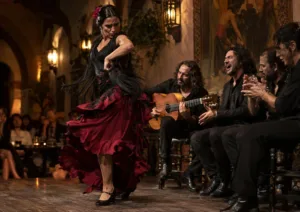
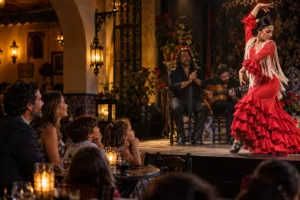
Flamenco styles you can start to recognize
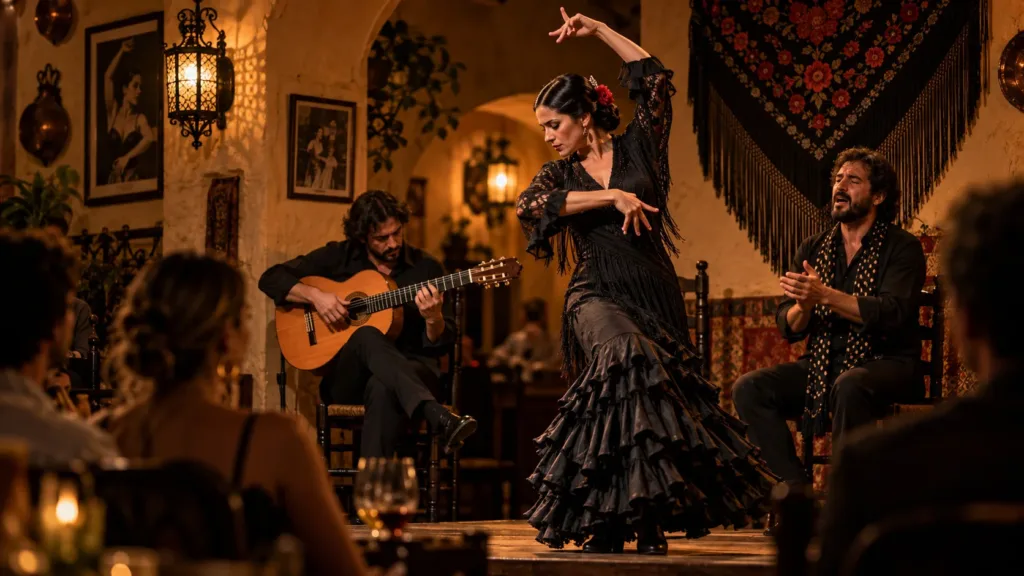
One common mistake when starting out is trying to memorize dozens of palos. It is much more useful to become familiar with a few names and, above all, listen to how the character of the music changes.
Alegrías
As the name suggests, they often have a bright and lively character. They are a good example for beginning to observe how dance, singing and guitar work within a vibrant rhythmic structure.
Soleá
It can help you discover a more measured, solemn and profound side of flamenco. Here it is especially interesting to pay attention to the silences, the weight of the singing and the way the dance manages intensity.
Tangos
Their pulse is often easier to follow for an ear not yet accustomed to flamenco rhythms. They can be a very accessible gateway to flamenco’s rhythmic sense.
Bulerías
They are among the styles most associated with speed, rhythmic play, interaction and a festive atmosphere. Do not try to count the compás on your first listen if it distracts you: watch how all the artists seem to know when to enter and when to finish.
Seguiriya
It has an intense and dramatic character. Listening to it quickly shows that flamenco is not a single mood and that much of its richness lies in the contrast between styles.
These are only a few examples. You may hear several palos in the same show, and there is no need to identify them all in order to enjoy them.