Where the tradition of the fin de fiesta comes from
There is no specific date or creator to whom the invention of the flamenco fin de fiesta can be attributed.
The name itself, fin de fiesta belongs to general theatrical language and has historically been used for numbers or pieces placed at the end of a performance. Within flamenco, the term acquired a specific meaning: the collective closing number of the performance.
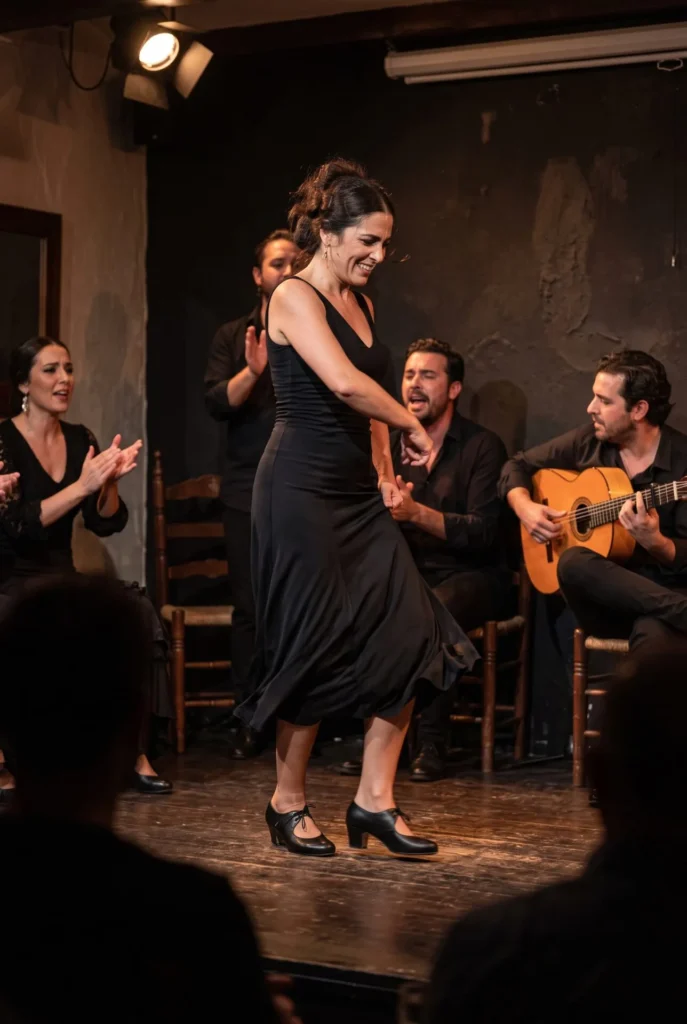
Its logic connects very naturally with an older dimension of flamenco: fiesta and gathering. Before and after its professionalisation, flamenco was not simply a succession of pieces performed in front of a silent audience. At family gatherings, juergas, roadside inns, patios, peñas and other settings, singing, playing, dancing, clapping and jaleo could all form part of the same shared situation.
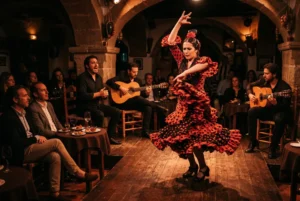
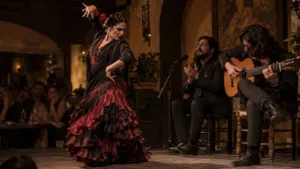
When flamenco became a professional stage art, that collective logic could be transferred to the stage and turned into a finale. For a few minutes, the fin de fiesta allows the audience to see something closer to festive interaction between artists than to a completely self-contained individual number.
It is therefore more sensible to speak of a stage tradition that developed from flamenco’s collective practices than to search for a supposed first night on which someone ‘invented’ the fin de fiesta.