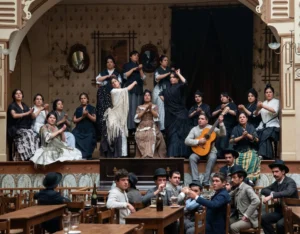
Andalusia: a meeting place of cultures
Understanding why flamenco could emerge in Andalusia requires looking beyond the musical genre to the region’s history itself.
Over the centuries, Andalusia received populations, religions, languages and traditions from very different origins. The memory of ancient Tartessian and Iberian cultures was joined by Mediterranean colonisation, Phoenician and Carthaginian presence, Romanisation, the long centuries of al-Andalus, Sephardic Jewish communities, the transformations following the Christian conquest and, from the 15th century, the settlement of Gitano groups in the peninsula.
One crucial element, sometimes omitted from simplified accounts, must also be added: Andalusia looked towards the Atlantic too. For centuries, Cádiz and Seville were major gateways to the Americas. People, rhythms, dances, lyrics and music travelled in both directions. This relationship left particularly visible traces in the so-called cantes de ida y vuelta (songs of the round trip), such as guajira, milonga and rumba, and probably influenced other processes of musical transformation.
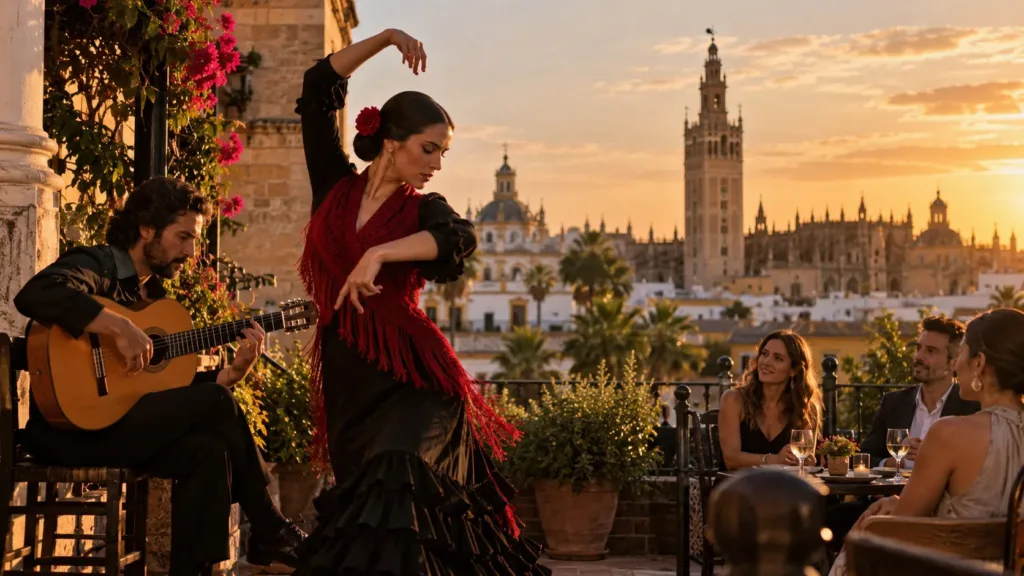
Seville and Cádiz also attracted European travellers, merchants, sailors, artists and writers. During the Romantic period, the image of Andalusia became an object of international fascination. Travellers in the 18th and 19th centuries left some of the earliest written descriptions of festivities, dances and settings that now help reconstruct flamenco’s documentary prehistory.
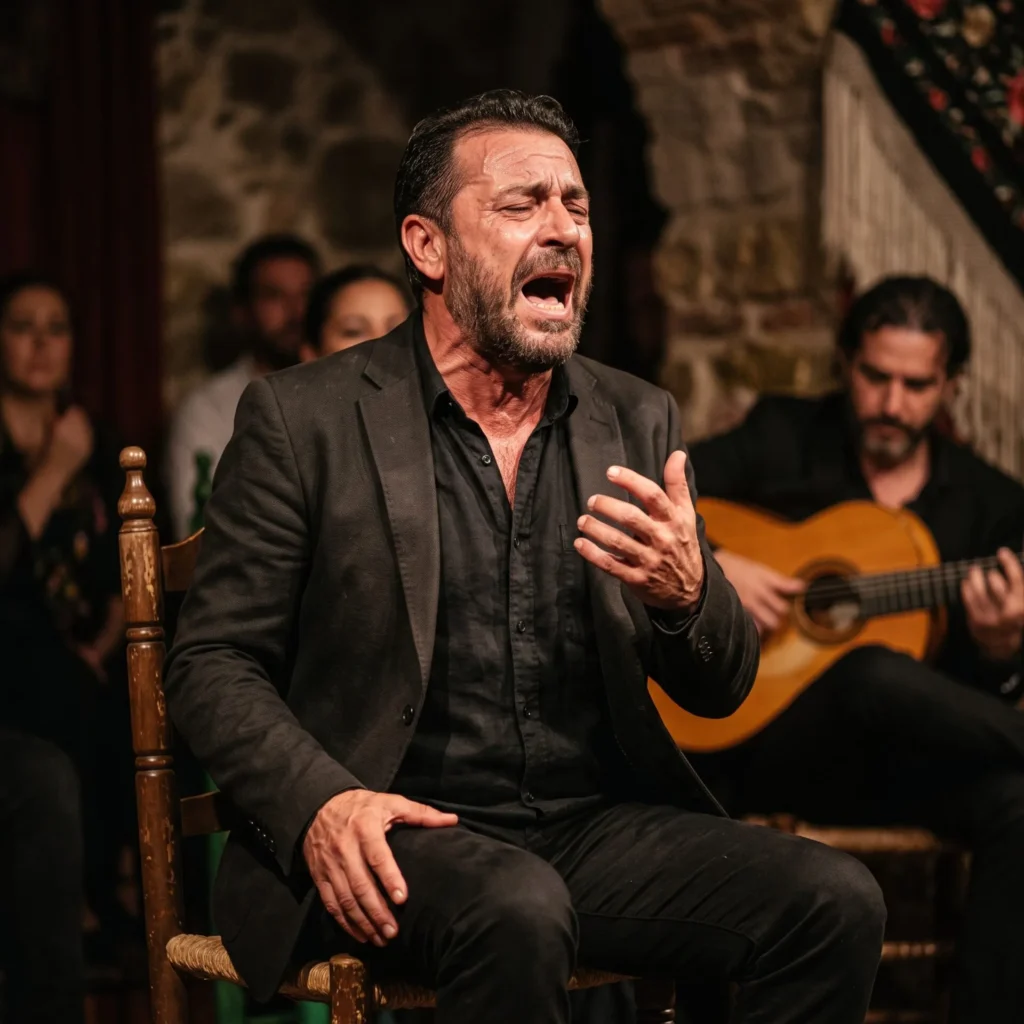
This context makes it meaningful to speak of cultural intermingling, while avoiding an overly simple conclusion: that each civilisation contributed a specific piece that was later assembled to create flamenco. Cultural history does not work like a recipe. Rather than a mechanical sum of influences, flamenco should be understood as an Andalusian creation arising from historical processes of coexistence, appropriation, reinterpretation and transformation.