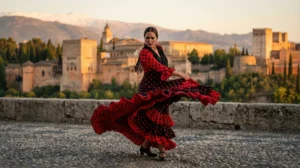
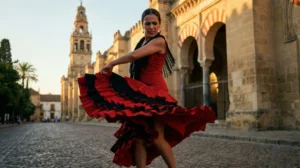
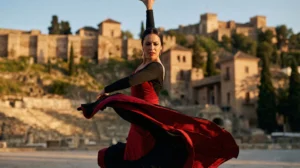
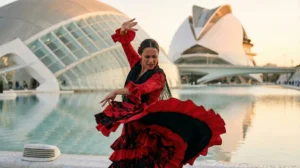
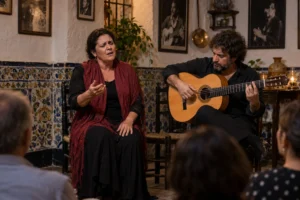
Flamenco clubs

Andalusian Flamenco Club Circuit 2026: 225 Free Recitals Across Andalusia

225 free recitals to explore flamenco Andalusia

The Andalusian Flamenco Club Circuit 2026 brings flamenco to all eight provinces with an official programme of 225 cante, dance and guitar performances. At least 470 artists will take part across a network of flamenco clubs stretching from the provincial capitals to towns where the professional cultural programme is usually far more limited.

Most events take place between September and November, although Seville and Jaén began their series in June, Almería in August and Granada in the middle of that same month. Admission is free until capacity is reached, making the circuit one of the year’s biggest opportunities to experience live flamenco without buying a ticket.

This guide brings together the announced figures, dates, tributes and locations, explains how to check each province’s programme and offers practical advice for attending the recitals.

Quick answer: the 2026 Andalusian Flamenco Club Circuit features 225 free recitals across all eight provinces of Andalusia, with at least 470 artists. The programme includes 181 cante performances, 31 dance performances and 13 guitar recitals. The provincial series run from 6 June to 28 November, with the largest concentration between September and November. Admission is free until capacity is reached, and times should be checked in the Andalusian Cultural Agenda or directly with the organising flamenco club.

2026 Andalusian Flamenco Club Circuit: key facts

Item Figure or official information
Total number of performances 225 recitals
Participating artists At least 470
Cante recitals 181
Dance performances 31
Guitar recitals 13
Provinces Almería, Cádiz, Córdoba, Granada, Huelva, Jaén, Málaga and Seville
Overall period From 6 June to 28 November 2026, depending on the province
Price Free admission until capacity is reached
Federated flamenco clubs in Andalusia 329
Specific investment in the circuit €250,000

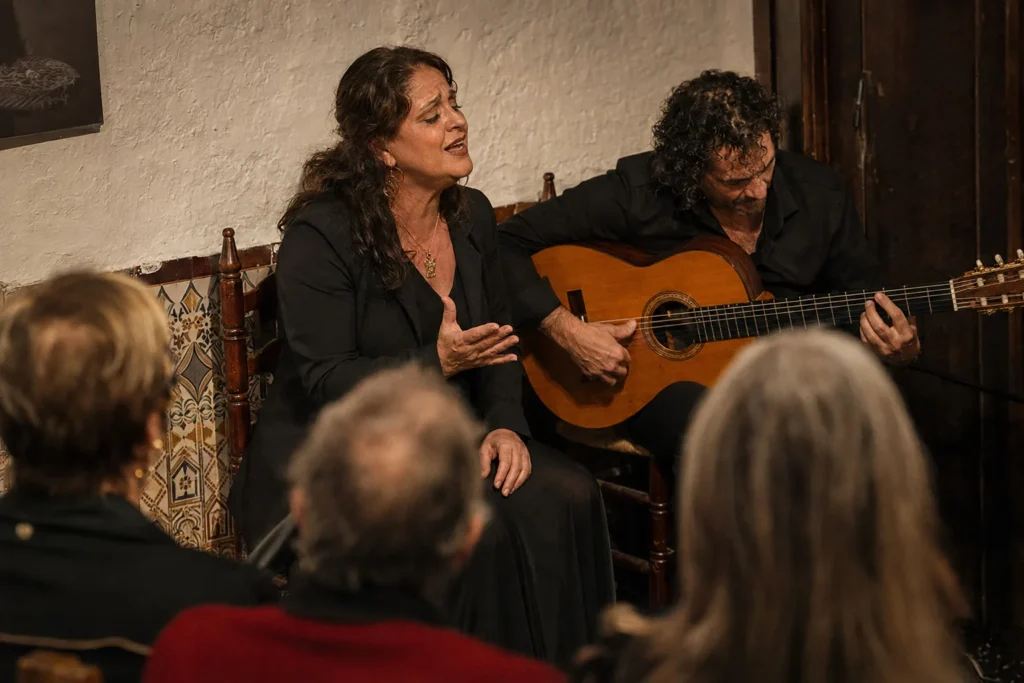
The figures clearly show the scale of the programme. This is not a festival concentrated in a single city or a succession of large theatre productions, but a network of intimate recitals that uses flamenco club premises as spaces for performance, attentive listening and community.

Cante accounts for most of the programme, but dance and guitar also have their own place. This combination allows audiences to enjoy everything from voice-centred recitals to performances in which the body, compás or instrument takes the lead.

What is the Andalusian Flamenco Club Circuit?

The Andalusian Flamenco Club Circuit is a programme promoted by the Andalusian Agency of Cultural Institutions and the Andalusian Flamenco Institute, in partnership with the provincial federations of flamenco clubs. Its purpose is to programme professional cante, dance and guitar performances in flamenco associations throughout Andalusia.

The model has two dimensions. For audiences, it creates an extensive calendar of free, local flamenco. For artists, it opens a professional circuit that allows them to perform in a wide variety of towns and connect with aficionados accustomed to listening to flamenco attentively.

The programme is not decided through an informal selection process. In 2026, a public call for artists was launched and nearly 300 proposals were received. This catalogue provided the basis for the provincial federations to assemble their respective programmes, combining established figures with young performers beginning to consolidate their careers.

The circuit also falls within the framework of the Flamenco Law and the Strategic Plan approved by the Regional Government of Andalusia in May 2026. This framework recognises flamenco clubs as key agents in preserving, promoting and passing on flamenco heritage.

If you would like more artistic context before attending, our guide to what flamenco is, its origins and its essential elements explains how cante, guitar, dance and compás relate to one another.

Programme by province: dates, recitals and disciplines

Each provincial federation organises its own calendar within the shared programme. There is therefore no single starting date or general timetable. The following table summarises the official information released for each area.

Province Series dates Announced performances Breakdown
Seville 6 June–30 October 56 53 cante, 2 dance and 1 guitar
Málaga 5 September–28 November 35 21 cante, 8 dance and 6 guitar or other instrumental performances
Cádiz 5 September–21 November 33 22 cante and 11 dance
Jaén 6 June–11 July and 12 September–28 November 30 27 cante, 1 dance and 2 guitar
Córdoba 6–28 November 30 26 cante, 1 dance and 3 guitar
Granada 15 August–21 November 15 9 cante and 6 dance
Huelva 5 September–21 November 14 12 cante, 1 dance and 1 guitar
Almería 1 August–15 November 11 11 cante

Note on the figures: the organisers report an overall total of 225 performances, and the breakdown by discipline—181 cante, 31 dance and 13 guitar—also totals 225. However, the provincial subtotals included in the presentation information add up to 224. This suggests that one performance has yet to be reflected or that one breakdown has not been updated. We retain the official overall figure of 225 and recommend checking the updated provincial calendar before planning your visit.

Seville: 56 performances and a tribute to El Lebrijano

Seville has the largest provincial programme: 56 performances in 41 towns. The series began on 6 June and runs until 30 October. Twelve recitals took place during June, and the programme resumed with particular intensity in September and October.

The Seville edition marks 50 years since the release of Persecución, the landmark album by Juan Peña “El Lebrijano”. The programme reaches the provincial capital and towns including Lebrija, Alcalá de Guadaíra, Mairena del Alcor, Morón de la Frontera, Écija, Dos Hermanas, Coria del Río, Tomares, Arahal, Paradas, San José de la Rinconada and Las Cabezas de San Juan, among many others.

Anyone wishing to combine one of these recitals with a regular programme can consult our selection of flamenco shows in Seville. These are different experiences: a flamenco club offers a one-off event within the circuit, while a tablao allows you to book a performance for a specific date.

Málaga: 35 performances in 30 towns

The province of Málaga holds its circuit from 5 September to 28 November with 35 performances: 21 cante, eight dance and six guitar or other instrumental performances. The recitals reach 30 towns, including Málaga, Antequera, Marbella, Mijas, Nerja, Vélez-Málaga, Álora, Coín, Cártama, Benalmádena, Manilva and several municipalities in the Antequera area.

The series pays tribute to flamenco scholar and collector Luis Soler, whose research, archival and dissemination work has helped preserve an essential part of flamenco’s recorded and documentary memory.

To round out a stay in the capital or on the Costa del Sol, you can also see where to enjoy flamenco in Málaga during the rest of the week.

Cádiz: 33 recitals dedicated to María Vargas

Cádiz programmes 33 performances between 5 September and 21 November: 22 cante and 11 dance. The series is dedicated to the singer from Sanlúcar María Vargas Fernández and visits 22 locations, including Cádiz, Jerez, Sanlúcar de Barrameda, Chiclana, Chipiona, San Fernando, El Puerto de Santa María, Arcos, Conil, Barbate, Ubrique, Algeciras, La Línea, Los Barrios and Puerto Real, as well as Ceuta.

The eleven dance performances give Cádiz particular weight in this discipline. Jerez is one of the notable stops on the route and can be combined with the regular programme of flamenco in Jerez.

Jaén: two phases and the A la Verde Oliva series

Jaén was one of the provinces to start early. The first phase, the traditional A la Verde Olivaseries, ran from 6 June to 11 July. The second begins on 12 September and ends on 28 November.

A total of 30 performances in 28 townsare announced: 27 cante, one dance and two guitar. The programme visits Jaén, Linares, Úbeda, Baeza, Andújar, Martos, Bailén, Jódar, Porcuna, Torredonjimeno, Mancha Real, Torreperogil and many other towns across the province.

If you visit the capital, our flamenco in Jaén page offers options to complete your trip.

Córdoba: 30 performances concentrated in November

Córdoba concentrates its programme into a short period, from 6 to 28 November. There will be 30 performances—26 cante, one dance and three guitar—spread across 28 locations, from the provincial capital to Montilla, Lucena, Cabra, Baena, Priego de Córdoba, Palma del Río, Pozoblanco, Peñarroya, Montoro and Aguilar de la Frontera.

The edition is dedicated to Antonio González del Moral, recognised for his career and his contribution to flamenco through photography and coverage in specialist media.

Those spending several days in the province can complement the circuit with the available programme of flamenco in Córdoba.

Granada: 15 events between August and November

The Granada circuit began on 15 August and ends on 21 November. It includes 15 performances, nine cante and six dance, in as many locations: Granada, Motril, Loja, Montefrío, Huétor Vega, Huétor Tájar, Peligros, Íllora, Salobreña, Maracena, Ogíjares and other municipalities.

The programme pays tribute to Antonio Campos Muñoz. The balance between cante and dance is more even than in other provinces and offers a good opportunity to discover choreographic proposals in the intimate atmosphere of a flamenco club.

Our guide to flamenco in Granada allows you to compare this one-off calendar with shows that run regularly.

Huelva: 14 recitals in 12 towns

Huelva holds its programme from 5 September to 21 November. It includes 14 performances: twelve cante, one dance and one guitar. The recitals reach Almonte, Calañas, El Campillo, Huelva, Lepe, Moguer, Paterna del Campo, Paymogo, Punta Umbría, Santa Bárbara de las Casas, Valverde del Camino and Villanueva de las Cruces.

The calendar features voices from different generations and a guitar recital, showing how a relatively compact network can connect the capital, the coast, El Andévalo and the Mining Basin.

You can also check the flamenco in Huelva programme for other dates.

Almería: eleven cante recitals

Almería began its circuit on 1 August and will close it on 15 November. The province programmes eleven performances, all cante, at flamenco clubs in Carboneras, Tabernas, Adra, Pechina, El Ejido, Huércal de Almería, Almería and Viator.

The Almería edition pays tribute to guitarist Pepe Habichuela, a key figure for understanding the evolution of accompaniment and contemporary flamenco guitar. Although the provincial programme consists of cante recitals, the dedication underlines the inseparable dialogue between voice and guitar.

Cante, dance and guitar: how the circuit is divided

The announced overall figure is divided into 181 cante performances, 31 dance performances and 13 guitar recitals. Cante accounts for roughly four out of every five events, a proportion consistent with the history of many flamenco clubs, where voice-and-guitar recitals have traditionally held a central place.

This does not mean that every concert has the same structure. A cante recital may bring together a lead singer and guitarist and, depending on the format, handclapping or other accompaniment. Each artist chooses different palos, lyrics and styles, so two apparently similar evenings can offer very different experiences.

The 31 dance performances feature proposals adapted to more intimate spaces than a large theatre. In a flamenco club, proximity makes it easier to perceive the footwork, breathing, silences and communication with the singer and guitarist.

Guitar takes centre stage at thirteen events. These recitals are particularly interesting for hearing the instrument outside its accompanying role, appreciating the construction of falsetas and discovering performers who engage with both tradition and contemporary idioms.

This coexistence of disciplines shows why flamenco should not be reduced to dance alone. Cante, guitar, compás and movement form a shared language, even when each recital chooses to highlight a different part of it.

Are all the recitals free? How admission works

Official information about the circuit states that admission to the recitals is free until capacity is reached. There is no ticket to purchase, but free admission does not guarantee a place.

Flamenco clubs usually have limited capacity, and some performances may attract far more demand than the venue can accommodate. Practical arrangements—opening time, distribution of invitations, admission order or the need to confirm attendance—may vary. We therefore recommend checking the official listing and contacting the flamenco club when the procedure is not clearly explained.

To avoid problems:

  • Check the date and time on the day of the recital. The programme is subject to change.
  • Arrive early. “Until capacity is reached” means that admission closes once the permitted capacity has been reached.
  • Check whether a reservation or invitation is required. Admission remains free even if the organisation allocates places in advance.
  • Confirm the exact address. Some flamenco clubs have similar names or hold activities away from their usual premises.
  • Respect the association-based nature of the venue. A flamenco club does not operate exactly like a commercial theatre: it is a cultural association supported by members and aficionados.

If you are looking for more free activities on those same dates, you can also consult our guide to free activities at the 2026 Seville Flamenco Biennial.

Where to find the full programme, artists and times

The main reference is the Andalusian Cultural Agenda, where the regional government publishes province-specific pages with dates, flamenco clubs, locations and artists. The circuit’s launch announcement links to the official provincial programme finder.

The calendar is extensive and may be corrected. For this reason, this guide summarises the overall structure rather than reproducing all 225 listings as though they were fixed. For a specific date, follow these steps:

  1. Open the official programme by province.
  2. Select the province and find the town.
  3. Check the artist, flamenco club, date and time.
  4. Check whether the listing provides admission instructions.
  5. If any information is missing, consult the flamenco club or provincial federation’s channels.

The Cultural Agenda itself warns that the programme is subject to change. Checking shortly before departure is especially important if you plan to travel between towns.

Tributes that shape the 2026 edition

In addition to distributing performances, several federations have dedicated their programme to figures or anniversaries connected with flamenco memory:

  • Seville: 50 years of Persecución, the album by Juan Peña “El Lebrijano”.
  • Almería: a tribute to guitar master Pepe Habichuela.
  • Cádiz: dedicated to María Vargas Fernández, the singer from Sanlúcar.
  • Granada: a programme dedicated to Antonio Campos Muñoz.
  • Málaga: recognition of flamenco scholar and collector Luis Soler.
  • Córdoba: a tribute to Antonio González del Moral for his work in photography and promoting flamenco.

These dedications broaden the circuit’s meaning. It not only programmes the flamenco being made today; it also highlights those who have left works, documents, images, research or performance styles that help us understand the present.

The choice of Persecución is particularly significant. Released in 1976 with lyrics by Félix Grande, El Lebrijano’s album turned the historical memory of the Roma people into a conceptual work of enormous impact. Remembering it half a century later links the recital calendar to one of the essential recordings of contemporary flamenco.

Why flamenco clubs are essential to flamenco

Andalusia currently has 329 federated flamenco clubs: 14 in Almería, 50 in Cádiz, 42 in Córdoba, 25 in Granada, 21 in Huelva, 45 in Jaén, 52 in Málaga and 80 in Seville. This network explains how a public programme can reach dozens of towns without relying solely on theatres or large festivals.

A flamenco club is an association formed around a shared passion for flamenco. Its activities may include recitals, talks, competitions, tributes, exhibitions, classes, members’ meetings and initiatives aimed at passing the art on to new generations. Each organisation has its own history and character; some have maintained a regular programme for decades, while others work in small towns where they are one of the main cultural hubs.

The value of the circuit lies in activating this social infrastructure. The artist does not arrive in an indifferent venue, but performs for an audience that understands the language of flamenco, listens attentively and has an ongoing relationship with the organisation. For young performers, appearing before these aficionados can be a formative experience and a path to recognition within the sector.

The programme also encourages generational renewal. Alongside the main circuit, flamenco clubs have hosted provincial rounds of the Andalusian Young Flamenco Artists Circuit, organised with the federations and the Andalusian Youth Institute to create opportunities and reach new audiences.

Public investment and artist selection

The specific consolidated investment for the 2026 Andalusian Flamenco Club Circuit is €250,000, 20% more than the amount allocated to the programme in 2019. When the Andalusian Young Flamenco Artists Circuit and the call for grants to support associations are included, the announced funding for flamenco clubs reaches €330,000.

To take part, artists or their representatives had to submit a proposal through a public call. An advisory committee assessed aspects such as artistic quality, track record, interest, future potential and suitability for the circuit’s format. The resulting selection gave the federations a pool of nearly 300 proposals.

This procedure helps explain the mix of established names and emerging artists. The circuit is not only a showcase for well-known figures: it also provides paid performances and professional visibility for performers building their careers.

How to plan a route to see free flamenco across Andalusia

The circuit’s reach makes it possible to build a short break around one or several recitals. The best strategy is not to try to cover the entire programme, but to cross-reference three variables: province, available dates and distance between towns.

If you want the greatest variety

Seville, Málaga and Cádiz have the largest number of events. They are good choices for finding several performances in the same week and combining them with cultural visits, gastronomy and other shows.

If you are especially interested in cante

Every province offers cante, but it has particular weight in Seville, Jaén, Córdoba and Almería. The latter dedicates all eleven of its performances to the vocal discipline.

If you prefer dance

Cádiz announces eleven performances and Málaga eight; Granada programmes six within a total calendar of fifteen events. These are the three provinces with the highest proportional presence of dance in the published provincial breakdown.

If you want to hear guitar

Málaga offers six guitar or other instrumental performances, Córdoba three, Jaén two, Seville one and Huelva one. Check the artist’s listing, as the format may be a solo recital, an instrumental proposal or a larger ensemble.

If you only have one specific date

Use the official calendar as your starting point and broaden your search to nearby towns. A performance thirty or forty minutes away may be a better fit than waiting for an event in the provincial capital.

If the circuit does not coincide with your trip, consult our guide to flamenco by city. There you can find regularly scheduled shows with advance booking in different Spanish destinations.

A different way to experience flamenco in 2026

The Andalusian Flamenco Club Circuit offers something that does not always appear on the major bills: the chance to hear professional flamenco within a cultural network built by aficionados. The proximity, size of the venues and diversity of towns change the relationship between stage and audience.

For those who already know flamenco, the circuit is an opportunity to follow particular performers, discover voices and compare provincial atmospheres. For first-time visitors, it can be a free gateway to the art, provided they understand that a flamenco club has its own codes and that silence, punctuality and respect for the performance are part of the experience.

The 225 announced performances make the 2026 edition a broad map of contemporary Andalusian flamenco: predominantly cante-focused, but open to dance and guitar; attentive to new generations while remaining connected to foundational names from its history.

Frequently asked questions about the 2026 Andalusian Flamenco Club Circuit

The officially announced overall figure is 225 performances of cante, dance and guitar across the eight provinces of Andalusia.

Yes. The official programme states that admission is free until capacity is reached. Some flamenco clubs may organise invitations or attendance confirmations, so it is advisable to check each listing.

The complete calendar runs from 6 June to 28 November 2026, although dates vary by province. Most recitals are concentrated between September and November.

The circuit reaches Almería, Cádiz, Córdoba, Granada, Huelva, Jaén, Málaga and Seville, with recitals in the capitals and many other towns.

The organisers announce 181 cante performances, 31 dance performances and 13 guitar recitals. At least 470 artists will take part in total.

The main source is the Andalusian Cultural Agenda. The official presentation page links to each province’s programme. It is also advisable to check the host flamenco club’s channels.

The circuit’s recitals are advertised as free until capacity is reached. Even so, check the admission conditions for the specific event, as arrangements may vary according to the organisation and venue.

Yes. The provincial calendars warn that dates, times or artists are subject to change. Always confirm the information shortly before travelling.

Seville leads the provincial breakdown with 56 performances, followed by Málaga with 35, Cádiz with 33, and Jaén and Córdoba with 30 each.

The overall figure and breakdown by discipline published by the organisers total 225, but the provincial subtotals released in the presentation add up to 224. There is probably an update discrepancy in one of the breakdowns. The Andalusian Cultural Agenda should be used as the reference for the current programme.

Book online: the key to securing your seat

In many cities, flamenco tablaos sell out easily, especially on weekends and during peak season. That’s why, if your dates are set, the most important thing is to book online.

Direct recommendation: book online through our website to guarantee your seat and arrive with everything confirmed. If you already have your destination, go straight to your city to see available options and clear recommendations.

Flamenco Sevilla | Tablaos Flamencos

Seville

Flamenco Madrid | Tablaos Flamencos

Madrid

Flamenco Barcelona | Tablaos Flamencos

Barcelona

Flamenco Granada | Tablaos Flamencos

Granada

Flamenco Córdoba | Tablaos Flamencos

Cordoba

Flamenco Málaga | Tablaos Flamencos

Malaga

Flamenco Valencia | Tablaos Flamencos

Valencia

Flamenco Jerez | Tablaos Flamencos

Jerez

Find out more about this with your favorite AI:

Did you like this article? Share it!:

Tags: Andalusian flamenco, Andalusian Flamenco Club Circuit, festivales flamencos, flamenco clubs, flamenco dance, flamenco singing, free flamenco

Article published by:

Related articles