Flamenco guides

What are flamenco palos? A beginner’s guide to understanding them

What are flamenco palos and why are they the key to understanding flamenco?

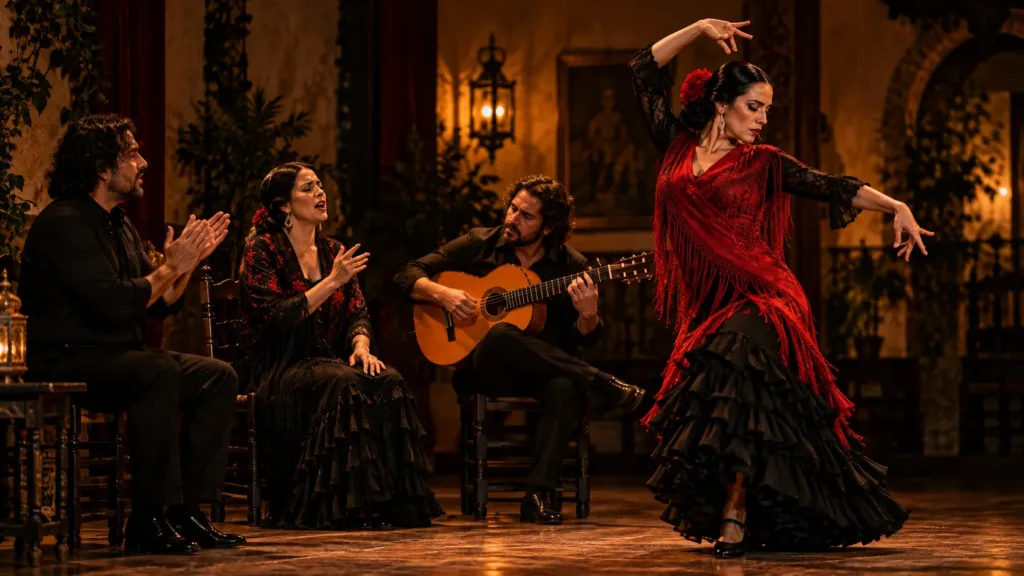
If you have ever heard people talk about soleá, bulerías, tangos, alegrías or seguiriyas and wondered what they have in common, the answer lies in one of flamenco’s fundamental ideas: the palos. A palo is a musical form within flamenco, with recognizable features of rhythm, structure, character, melody and tradition. It is not simply one particular song, but a shared framework that allows the singer, guitarist and dancer to know which musical language they are working in.

Understanding what flamenco palos are does not mean memorizing dozens of names. To begin, it is enough to learn to hear a few basic differences: whether the compás is binary, ternary or based on twelve beats; whether the singing unfolds freely or over a marked pulse; whether the character is festive, solemn or dramatic; and how singing, guitar, dance and palmas interact. That way of listening turns a performance that once seemed hard to decipher into an increasingly recognizable musical conversation.

Before you begin

Quick answer: flamenco palos are the different musical forms or styles that organize the flamenco repertoire. Each palo is recognized by a combination of compás, structure, character, melody, tonality and tradition. Soleá, bulerías, tangos, alegrías and seguiriya are different palos, even though some share the same rhythmic foundation.

What defines a flamenco palo

A palo is not defined by a single element. In practice, we recognize each flamenco form through a combination of several characteristics. Some are very obvious to a trained ear, while others take time to distinguish.

The compás and how it is accented

Compás is one of the most important clues. Some palos are built on twelve-beat cycles, others on binary or four-beat meters, others on ternary rhythms, and there are also free-rhythm cantes. But sharing the same number of beats does not mean sounding the same: the placement of accents, the speed and the phrasing completely change the musical feel.

Melody and harmony

Flamenco uses different harmonic colors. The so-called flamenco or Phrygian mode is one of the most characteristic, although major and minor tonalities also appear. The guitar quickly places the listener within that sound world.

The structure of the cante

Each palo has customary ways of organizing lyrics, tercios, guitar entries and endings. That architecture can vary from one performer to another, but it retains enough common features for the artists to understand one another on stage.

Expressive character

Some palos are associated with a festive atmosphere, while others have a solemn, intimate or dramatic expression. These labels should not be turned into rigid rules, but they help beginners distinguish families and sensations.

Tradition and origin

Some palos are historically linked to particular places, social contexts, occupations, celebrations or cultural exchanges. Geography therefore also helps explain the repertoire: Cádiz, Jerez, Seville, Málaga, Granada, Huelva and the mining areas of eastern Andalusia and southeastern Spain have developed their own accents and forms.

Palo, style and song: they are not exactly the same thing

In informal conversation these words are sometimes used as synonyms, but it is useful to distinguish them. The palo is the general musical form: soleá, for example. Within that palo there may be geographical, historical or personal variants that are usually called styles. And within a specific performance, artists interpret lyrics, falsetas, llamadas, escobillas or endings that belong to that structure.

So saying “this is a bulería” does not identify one unique composition. It means the artists are working within the language of bulería. The lyrics, tempo, guitar, dance and even duration may change, but the shared rules still make the palo recognizable.

How many flamenco palos are there?

There is no completely fixed number because the classification depends on where the line is drawn between a palo, a variant, a local style or a flamenco-adapted form. Educational repertoires often refer to more than fifty forms, and many of them also contain their own variants.

That abundance should not be intimidating. A spectator can fully enjoy flamenco while knowing only a few palos. The goal of a beginner’s guide is not to learn them all, but to understand the logic that connects them.

If you want to explore the repertoire in an organized way, our page Flamenco palos brings together the individual guides dedicated to each one.

How palos are grouped by compás

One of the most useful ways to start organizing flamenco is to look at its meter. It is not the only possible classification, but it is one of the most practical for learning how to listen.

Twelve-beat palos or mixed-meter compás

This large group includes essential forms such as soleá, alegrías, bulerías and seguiriya. They may share a twelve-pulse cycle, but they do not place accents in the same way or use the same tempo. The feel of a measured soleá is very different from the agility of a bulería.

Binary or four-beat palos

The tangos, tientos, farruca, rumba and taranto are based on binary or four-beat structures. For many beginners, this pulse is easier to follow because it is closer to rhythmic patterns common in other forms of popular music.

Ternary forms

Around the fandangos and some traditional forms that entered flamenco, we find three-beat meters. The fandangos de Huelva are a very recognizable example. Verdiales also help you hear that ternary feel, although their relationship between folklore and flamenco has its own particularities.

Free-rhythm cantes

Not all flamenco is built on a regular pulse that a listener could mark with palmas. Palos such as taranta, malagueña and granaína can unfold with great rhythmic freedom. In these forms, the guitar accompanies the singer flexibly instead of imposing a constant metric grid.

This classification shows something important: flamenco is not “one rhythm.” It is a very broad musical system in which very different meters, tempos and degrees of freedom coexist.

Families of palos that help you find your bearings

Besides compás, it is useful to think in terms of families. There is no single family tree that is universally accepted, but these groupings help explain historical and musical affinities.

The soleá family

Soleá is one of flamenco’s great central forms. Around it we find relationships with soleá por bulerías and with bulería, which shares the twelve-beat foundation while transforming it into a much faster and more flexible language.

The cantiñas

Alegrías belong to the world of the cantiñas, together with forms such as mirabrás, romeras and caracoles. They are especially associated with Cádiz and with a bright, rhythmic character.

Tangos and tientos

They share a four-beat metric base, but tiento usually unfolds in a slower and more serious way, while tango moves with greater liveliness. Listening to them one after the other is a very useful exercise for understanding how character changes while the underlying base remains related.

Fandangos and related forms

Fandango has generated a huge universe of local variants and evolved forms. This territory includes fandangos de Huelva and, in other developments, malagueñas and granaínas, as well as connections with the cantes of Levante.

Mining cantes and cantes from Levante

Taranta, taranto, minera and cartagenera belong to a repertoire closely linked to mining areas and southeastern Spain. Here, free styles coexist with others that adopt a compás for stage and dance development.

Unaccompanied cantes

Toná, martinete and debla can be performed without guitar. The voice is left almost bare and the expressive weight falls on the cante, sometimes with rhythmic support connected to its traditional context.

Cantes de ida y vuelta

Guajiras, milongas, colombianas and rumbas recall the musical exchanges between Spain and the Americas. They are a good reminder that flamenco never developed as an isolated repertoire.

Five flamenco palos to start recognizing

You do not need to start with the most complex ones. These five let you hear very clear contrasts.

1. Tangos: a gateway to compás

Tangos have a four-beat pulse and a generally rhythmic character. They are useful for beginners because they make the relationship between palmas, guitar, cante and dance easy to perceive. Listen for where the weight of the rhythm falls and how the artists play over an apparently simple base.

2. Soleá: learning to hear the space

Soleá shows the depth of the twelve-beat compás very clearly at a more measured tempo. Silence, waiting and tension are essential here. Do not try to count from the first moment: listen to how the guitar prepares the cante and how each phrase seems to settle at particular points in the cycle.

3. Alegrías: recognizing a bright character

Alegrías belong to the world of the cantiñas. They also use a twelve-beat cycle, but their character, speed and melodic language create a very different feel from soleá. They are especially useful for understanding that two palos can share a rhythmic architecture and still have unmistakable identities.

4. Bulerías: play, speed and communication

Bulería is one of the forms in which the interaction between artists is most obvious. The compás can seem difficult at first because the rhythm is fast and the accents are handled with great flexibility. Instead of becoming obsessed with counting to twelve, watch the llamadas, remates and the way the whole group knows when to enter and when to close.

5. Seguiriya: intensity and another way of feeling twelve beats

Seguiriya has a traditionally dramatic character and a different accent pattern within the world of mixed-meter compases. Comparing it with soleá and bulerías is one of the best exercises for understanding that “twelve beats” alone does not define a palo’s identity.

How to recognize a palo during a performance

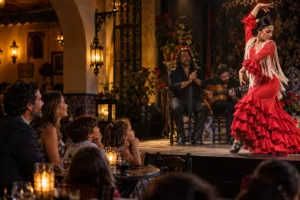
When you are in a tablao, do not turn the experience into an exam. Recognition comes more naturally through repeated exposure than through effort.

First, listen for the pulse

Ask yourself whether you hear a regular, easy-to-follow rhythm, a more complex cycle or a free interpretation. That first distinction already narrows the possibilities considerably.

Then observe the character

Does the piece feel festive, restrained, solemn or dramatic? Character alone does not identify the palo, but combined with the compás it gives useful clues.

Listen to the guitar before the cante

Introductions and falsetas often establish the harmonic and rhythmic language. With practice, the guitar becomes one of the best guides to recognizing what is coming.

Watch how the artists communicate

The dancer’s llamadas, the entries of the cante, the remates and the palmas reveal the structure. Even if you cannot name it yet, you will begin to notice that certain signals repeat.

Do you need to know how to count the compás?

Not in order to enjoy flamenco. Counting can be a useful study tool, especially for dance, guitar or palmas, but a spectator does not need to do it constantly. In fact, trying to count before you know the pattern can distract you from the music.

A good progression is first to feel the pulse, then recognize endings and only later count if you want to go deeper. With repeated listening, some patterns eventually begin to feel natural.

If you are starting completely from scratch, our guide to flamenco for beginners also explains what to watch and listen for in singing, guitar and dance on a first visit.

Why the same palo can sound very different

Recognizing a palo does not mean expecting every interpretation of it to sound the same. That variety is precisely one of flamenco’s great strengths.

  • The tempo can change. The same rhythmic language can support different speeds depending on the cante, the dance and the artistic approach.
  • There are local and personal variants. Certain styles are associated with places, schools or performers who left behind recognizable melodic forms.
  • Cante, guitar playing and dance do not always occupy the same space. A piece designed to showcase the singing may be constructed differently from one centered on dance.
  • The guitar changes the color. Falsetas, positions, tonalities and accompaniment resources can greatly change how an interpretation is perceived.
  • Live flamenco involves decisions and interaction. The artists react to one another, and the development of a piece can vary from one performance to the next.

This flexibility explains why learning a palo is not about memorizing a recording. It is about recognizing an identity that can take many forms.

How to learn flamenco palos without memorizing a list

The most effective approach is to combine listening, comparison and repetition. You can begin with a simple route.

1. Choose two very different palos

For example, tangos and soleá. Listen to several interpretations of each before adding new names. Once you can distinguish their overall feel, add another.

2. Compare palos that share a foundation

Then listen to soleá, alegrías and bulerías. Knowing that they can move within twelve-beat cycles will help you focus on differences in accent, tempo and character.

3. Add a free-rhythm cante

A taranta or a malagueña will let you hear what happens when the regular pulse you expected disappears.

4. Go back to live flamenco

Recordings are useful, but a tablao lets you see how the compás is built through the body, the palmas, the guitar and the performers’ glances. Recognizing a palo live after studying it produces a very rapid leap in understanding.

5. Use the individual guides as references, not as a test

When a form catches your attention, look up its history, compás and examples. Our collection of flamenco palos is designed precisely to help you progress in that way.

You can also use the Flamenco dictionary for terms such as compás, tercio, toque, jaleo or palo, and our guide What is flamenco? to place these forms within the wider world of singing, dance and guitar.

Frequently asked questions about flamenco palos

It is a musical form within flamenco defined by a combination of compás, structure, melody, harmony, character and tradition. A palo is not one specific song, but the framework within which many different interpretations can exist.

There is no completely fixed number because some classifications separate variants that others consider styles within the same palo. As a general guide, people speak of more than fifty forms, many with local and personal variants.

It depends on the listener, but tangos are often a good entry point because of their four-beat pulse. Alegrías, soleá and bulerías also help you learn to distinguish very different characters.

They share a twelve-beat cyclical foundation within the family of mixed-meter compases, but the speed, phrasing, accents and character change. That is why they sound and feel very different.

No. Some have a highly developed dance tradition, while others are centered mainly on singing. There are also free-rhythm or unaccompanied cantes whose logic does not follow the usual structure of stage dance.

No. Tonás, martinetes and deblas belong to the world of unaccompanied cantes and can be performed without guitar. In other palos, the guitar is an essential part of the dialogue with singing and dance.

No. Knowing them helps you identify nuances, but flamenco can be enjoyed through emotion, sound and communication between the artists. Learning the palos is a way to go deeper afterwards, not a requirement for attending a show.

In our Flamenco palos section we bring together individual guides to each form, with history, compás, characteristics and examples to train your ear.

Understanding the palos changes the way you listen to flamenco

Learning what flamenco palos are does more than give names to what you hear. It helps you understand why a guitar accompanies in a particular way, why certain palmas fit one moment and not another, why a dancer prepares a llamada before an ending, or why two pieces can convey opposite emotions even if they share part of their rhythmic structure.

You do not need to master the entire repertoire. Start with five names, listen to their differences and return to them several times. Then visit the individual guides to Flamenco palos and expand the map little by little. When you return to a live performance, you will discover that what once seemed like improvisation without rules begins to reveal a precise, flexible and deeply musical architecture.

Book online: the key to securing your seat

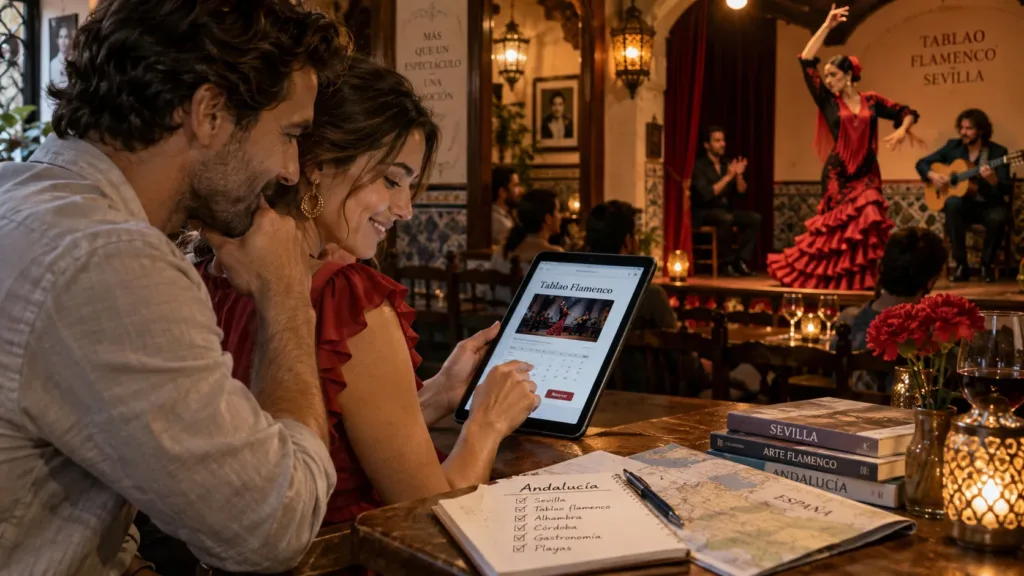
In many cities, flamenco tablaos sell out easily, especially on weekends and during peak season. That’s why, if your dates are set, the most important thing is to book online.

Direct recommendation: book online through our website to guarantee your seat and arrive with everything confirmed. If you already have your destination, go straight to your city to see available options and clear recommendations.

Flamenco Sevilla | Tablaos Flamencos

Seville

Flamenco Madrid | Tablaos Flamencos

Madrid

Flamenco Barcelona | Tablaos Flamencos

Barcelona

Flamenco Granada | Tablaos Flamencos

Granada

Flamenco Córdoba | Tablaos Flamencos

Cordoba

Flamenco Málaga | Tablaos Flamencos

Malaga

Flamenco Valencia | Tablaos Flamencos

Valencia

Flamenco Jerez | Tablaos Flamencos

Jerez

Find out more about this with your favorite AI:

Did you like this article? Share it!:

Tags: Flamenco dance, Flamenco guide, Flamenco singing, Flamenco styles, What is flamenco

Article published by:

Related articles

Flamenco with children: how to choose a family-friendly show
How far in advance should you book a flamenco tablao?