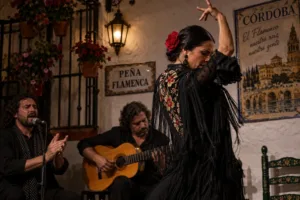
Flamenco clubs

Andalusian Flamenco Club Circuit in Granada 2026: dates, artists and free performances

15 free performances across Granada’s flamenco clubs

The Andalusian Flamenco Club Circuit in Granada 2026 brings together 15 free performances from 15 August to 21 November, spread across 15 flamenco clubs and towns in the province. The programme combines 9 flamenco singing recitals and 6 dance performances, a particularly interesting balance for anyone who wants to discover flamenco in venues directly connected with the local afición.

The circuit began in Montejícar with Sara Carnero and continued on 5 September in Beas de Granada with David de Jacoba. From 18 September, 13 dates remain, with stops in Huétor Vega, Peligros, Íllora, Montefrío, Motril, Cúllar Vega, Salobreña, Lentejí, Maracena, Ogíjares, Loja, Huétor Tájar and Granada city.

All performances are announced with free admission until capacity is reached. In this guide you will find the full schedule, artists, host clubs, towns and practical recommendations for planning your visit.

Quick answer

The Andalusian Flamenco Club Circuit in Granada 2026 runs from 15 August to 21 November with 15 performances: 9 singing recitals and 6 dance shows. The programme visits 15 flamenco clubs in 15 towns and is dedicated to Antonio Campos Muñoz. Admission is free until capacity is reached, and the organisers warn that the schedule may be subject to change.

Essential information

  • Dates: 15 August–21 November 2026.
  • Performances: 15.
  • Singing: 9 recitals.
  • Dance: 6 performances.
  • Participating clubs: 15.
  • Towns: 15.
  • Price: free admission until capacity is reached.
  • Dedicated to: Antonio Campos Muñoz.
  • Organised by: Andalusian Flamenco Institute and the Provincial Federation of Granada Flamenco Clubs.

The Andalusian Flamenco Club Circuit in Granada at a glance

Item 2026 programme
Total 15 performances
Singing 9
Dance 6
Flamenco clubs 15
Towns 15
First date 15 August
Last date 21 November
Admission Free until capacity is reached

A small but very well-balanced programme

Granada is not the province with the largest number of performances in the Andalusian Flamenco Club Circuit, but it does have one distinctive feature: dance accounts for 6 of the 15 dates. That represents 40% of the provincial programme.

Across Andalusia as a whole, the 2026 edition includes 225 performances, 31 of them dance. Dance therefore has a clearly greater weight in Granada than the regional average. For flamenco fans, it is an unusual opportunity to see choreographic work in the close atmosphere of a peña, alongside a selection of nine singing recitals.

The programme contains no dates dedicated primarily to guitar, although guitar will naturally be present as accompaniment in many performances.

Full schedule for the Andalusian Flamenco Club Circuit in Granada 2026

  • 15 August. Sara Carnero, dance. Peña Flamenca San Marcos, Montejícar.
  • 5 September. David de Jacoba, singing. Peña Flamenca La Cepa II, Beas de Granada.
  • 18 September. Filo de los Patios, singing. Peña La Parra Flamenca, Huétor Vega.
  • 19 September. Jesús Castilla, singing. Peña Amantes del Flamenco, Peligros.
  • 2 October. Caracolillo de Cádiz, singing. Peña Flamenca Ilurquense, Íllora.
  • 2 October. Churumbaque Hijo, singing. Peña Flamenca Manuel Ávila, Montefrío.
  • 3 October. Carmen Camacho, dance. Peña Flamenca La Maroma, Motril.
  • 9 October. Fátima Navarro, dance. Peña Flamenca Frasquito Yerbabuena, Cúllar Vega.

Full schedule: October to November

  • 10 October. Miguel de Tena, singing. Peña Flamenca La Trilla, Salobreña.
  • 16 October. Niño de Peñaflor, singing. Peña Flamenca Antonio Alaminos Sánchez – El Cantor, Lentejí.
  • 23 October. Cristina Aldón, dance. Peña Flamenca Solera y Caña, Maracena.
  • 24 October. Jasiel Nahin, dance. Peña Flamenca Eva Garrido “La Yerbabuena”, Ogíjares.
  • 7 November. Carmen Carmona, singing. Peña Flamenca La Alcazaba, Loja.
  • 21 November. Mari Ángeles Fernández, singing. Peña Flamenca Juan Pinilla, Huétor Tájar.
  • 21 November. Rosario Toledo, dance. Peña Flamenca La Platería, Granada city.

The official programme is published as subject to change, so it is advisable to check the page for each performance or the host club’s channels before travelling.

September: the circuit enters its main phase

After Sara Carnero’s performance in Montejícar and David de Jacoba’s in Beas de Granada, the circuit resumes on 18 September with Filo de los Patios at Peña La Parra Flamenca in Huétor Vega.

One day later, on 19 September, Jesús Castilla will perform at Peña Amantes del Flamenco in Peligros. These are two consecutive dates in towns in the Granada metropolitan area, making them easy to combine with a stay in the city.

The programme then enters a much busier phase: October accounts for more than half of all the provincial performances.

Two singers to open the autumn

Filo de los Patios and Jesús Castilla are two artists with experience on the circuit of flamenco clubs and competitions. In Jesús Castilla’s case, the Andalusian Cultural Agenda highlights his participation in competitions in Plasencia, Alcalá de Guadaíra, Vejer, Lo Ferro and Leganés.

For anyone looking for a recital focused on singing, these are the first available dates after the August and early-September opening. As with the rest of the circuit, admission is free until capacity is reached.

October: eight performances in four weeks

October is the central month of the Granada circuit. On the 2nd there are two simultaneous singing recitals: Caracolillo de Cádiz in Íllora and Churumbaque Hijo in Montefrío. On 3 October, Carmen Camacho brings flamenco dance to Motril.

The following week offers two very different events: Fátima Navarro dances on 9 October in Cúllar Vega, and Miguel de Tena sings on the 10th in Salobreña. On 16 October, Niño de Peñaflor brings singing to Lentejí.

The month ends with two dance performances: Cristina Aldón on 23 October in Maracena and Jasiel Nahin on the 24th in Ogíjares.

Which October dates may be most interesting

There is no single must-see event: it depends on whether you are looking for singing or dance and where you are staying. For fans of singing, Miguel de Tena in Salobreña is one of the most established names on the bill. For those who want to see dance, the circuit links several performances in Motril, Cúllar Vega, Maracena and Ogíjares.

October is also a good month to turn your visit into a short route through the province. The schedule moves from the Costa Tropical to the Vega and metropolitan area, as well as inland towns such as Íllora and Montefrío.

November: three performances and the finale at La Platería

November has only three dates, but the finale has particular appeal. On 7 November Carmen Carmona performs at Peña Flamenca La Alcazaba in Loja.

On 21 November the final two events take place: Mari Ángeles Fernández sings at Peña Flamenca Juan Pinilla in Huétor Tájar and Rosario Toledo dances at Peña Flamenca La Platería in Granada.

Because the two performances fall on the same day in different towns, you will need to choose between them, so check the times before planning your trip.

Rosario Toledo at La Platería, the circuit finale in Granada city

The final day brings the circuit to one of Granada’s most emblematic flamenco institutions: La Platería. Rosario Toledo will perform there, closing a provincial edition in which dance plays an especially prominent role.

For visitors staying in Granada city, it is also the easiest date to include in a city break. If your trip does not coincide with 21 November, you can consult our guide to flamenco in Granada to discover regular shows and options that can be booked in advance.

Granada, the province where dance has the greatest weight in the circuit

The balance between disciplines sets Granada apart from the other provinces. Of its 15 performances, 6 are dance shows: Sara Carnero, Carmen Camacho, Fátima Navarro, Cristina Aldón, Jasiel Nahin and Rosario Toledo.

This makes it possible to follow very different choreographic proposals in spaces more commonly associated with singing recitals. The peña format brings the audience close to the artist and changes the way dance is perceived compared with a large theatre: less distance, greater attention to detail and a more direct relationship with compás and accompaniment.

Singing, with nine dates, remains the majority discipline, but the presence of dance makes Granada’s programme one of the most balanced of the 2026 edition.

The nine flamenco singing recitals

The singing line-up includes David de Jacoba, Filo de los Patios, Jesús Castilla, Caracolillo de Cádiz, Churumbaque Hijo, Miguel de Tena, Niño de Peñaflor, Carmen Carmona and Mari Ángeles Fernández.

The programme combines artists with long professional careers and voices closely linked to flamenco clubs and competitions. That balance reflects one of the goals of the regional programme: to combine recognised artists with other names for whom these associations provide a stable platform.

The result is not a conventional festival, but a series of recitals spread across the province and organised through the flamenco association network.

15 flamenco clubs and 15 towns

The circuit visits Montejícar, Beas de Granada, Huétor Vega, Peligros, Íllora, Montefrío, Motril, Cúllar Vega, Salobreña, Lentejí, Maracena, Ogíjares, Loja, Huétor Tájar and Granada.

Its geographical spread is a key part of the programme. Rather than gathering the artists on one stage, the circuit brings performances to flamenco-club venues and connects the provincial capital with towns in the Vega, metropolitan area, western Granada, Costa Tropical and other inland areas.

For anyone travelling specifically to a performance, this dispersion makes it essential to check the address, time and access conditions for each club.

Granada’s flamenco-club network within Andalusia

The 2026 Andalusian Flamenco Club Circuit is supported by a network of 329 federated flamenco clubs across Andalusia. Granada has 25 organisations within that network, and 15 of them take part in this provincial programme.

Across the region, the circuit includes 225 performances and at least 470 artists. The Andalusian Regional Government has announced an investment of €250,000 in the programme, which is organised through the provincial federations and the Andalusian Flamenco Institute.

You can find more context, compare provinces and check the overall figures in our guide to the Andalusian Flamenco Club Circuit 2026.

An edition dedicated to Antonio Campos Muñoz

Granada’s 2026 programme is dedicated to Antonio Campos Muñoz, a flamenco singer closely connected with the Vega of Granada and the province’s flamenco scene.

Campos began his artistic career as a guitarist, accompanying singers and working in academies and flamenco clubs before developing his career as a singer. His journey is closely connected with the kind of spaces that sustain this circuit: associations of enthusiasts where flamenco is listened to, shared and passed on at close quarters.

The dedication adds a local dimension to a programme that already has a clearly Granada identity through its artists and towns.

Why flamenco clubs matter to flamenco

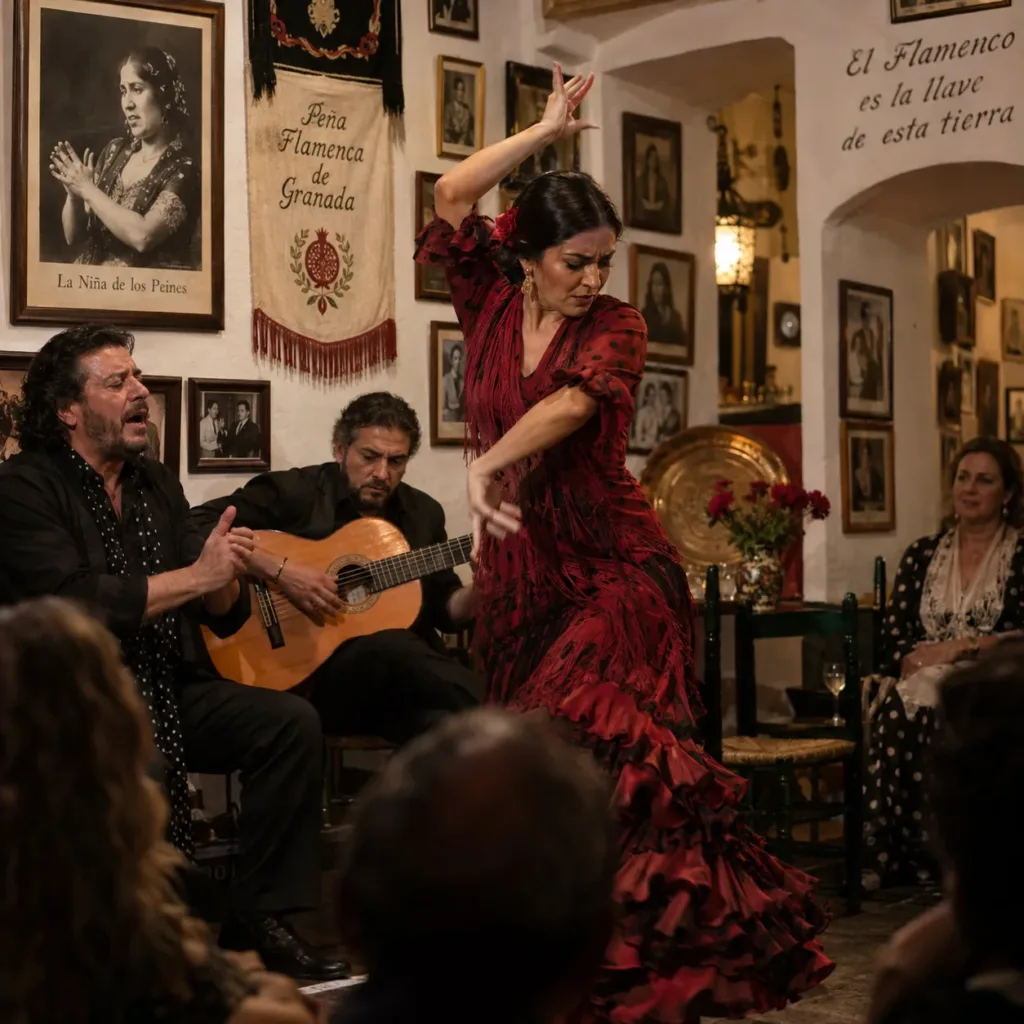
Flamenco clubs do not operate like commercial theatres or tablaos with daily programming. They are cultural associations rooted in the flamenco community and, in many towns, are among the main venues for maintaining a calendar of recitals, talks, competitions and educational activities.

The Andalusian Flamenco Club Circuit uses this network to bring artists to towns that do not always have major performing-arts programmes. At the same time, it allows visitors and new fans to experience an atmosphere different from that of major festivals.

To understand contemporary flamenco in Andalusia, visiting a peña and visiting a tablao are complementary experiences.

How can you attend the free recitals?

The Andalusian Cultural Agenda states that admission is free until capacity is reached. This means there is no paid ticket, but free admission should not be interpreted as a guaranteed place.

Each flamenco club has its own capacity and organisation. Some may open their doors well in advance, use invitations or announce the final starting time through their social channels and usual communication channels.

If you need to travel from Granada city, the coast or another province, confirm the information on the day of the performance.

Practical tips before you go

  • Check that the date has not changed.
  • Confirm the time directly with the club or in the official agenda.
  • Check the exact address of the club or venue where the recital will take place.
  • Arrive early, especially at clubs with limited capacity.
  • If there are two performances on the same day, allow for travel time.
  • During the recital, avoid conversations, phone calls and unnecessary movement.

Peña and tablao: two different ways to experience flamenco

The circuit is ideal for anyone looking for a specific recital and wanting to get closer to the local flamenco community. Its main limitation is the schedule: each club hosts a single date and not all of them publish every access detail far in advance.

A tablao, by contrast, offers a more regular programme and can be booked in advance. If you visit Granada on a date without a circuit event, you can use our selection of tablaos and flamenco shows in Granada.

The best option depends on your trip: a peña if you can coincide with a specific date and want to experience the association atmosphere; a tablao if you want to secure a performance within a fixed itinerary.

An opportunity to explore beyond Granada city

One of the strengths of this programme is that it invites you to discover flamenco beyond the most obvious tourist circuits. Motril, Salobreña, Loja, Montefrío, Íllora and Huétor Tájar make it possible to combine an excursion through the province with a free recital.

Travelling by car gives you more flexibility to follow several dates, but you do not need to plan a complete route. Choosing just one performance near where you are staying is enough to discover how a peña works and enjoy a form of flamenco different from the major stages.

Where to confirm the schedule and possible changes

The main reference is the Andalusian Cultural Agenda, where the Andalusian Agency of Cultural Institutions maintains the provincial page listing all 15 performances. The page itself notes that the programme is subject to change.

It is also advisable to check the channels of the Provincial Federation of Granada Flamenco Clubs and each host club. This is especially important for starting times, possible invitation reservations and any venue changes.

Who organises the Granada circuit

The programme is organised through the Andalusian Agency of Cultural Institutions and the Andalusian Flamenco Institute, in collaboration with the Provincial Federation of Granada Flamenco Clubs.

The artists come from a public call open to flamenco singing, dance and guitar. Nearly 300 proposals formed the catalogue used by the provincial federations to shape their respective programmes.

In Granada, the final result brings together 15 artists and 15 flamenco clubs, with an especially balanced distribution between singing and dance.

Frequently asked questions about the Andalusian Flamenco Club Circuit in Granada 2026

The provincial programme includes 15 performances: 9 singing recitals and 6 dance performances, spread across 15 flamenco clubs in 15 towns.

It runs from 15 August to 21 November 2026. The first events took place in Montejícar and Beas de Granada, with most of the programme concentrated in September and October.

Yes. The Andalusian Cultural Agenda announces free admission until capacity is reached. It is advisable to confirm the time and specific access conditions with each flamenco club.

The six dance performances feature Sara Carnero, Carmen Camacho, Fátima Navarro, Cristina Aldón, Jasiel Nahin and Rosario Toledo.

The singing line-up includes David de Jacoba, Filo de los Patios, Jesús Castilla, Caracolillo de Cádiz, Churumbaque Hijo, Miguel de Tena, Niño de Peñaflor, Carmen Carmona and Mari Ángeles Fernández.

Yes. On 21 November Rosario Toledo performs at Peña Flamenca La Platería in Granada, on the closing day of the provincial circuit.

Granada’s programme is dedicated to Antonio Campos Muñoz, a flamenco singer closely connected with the province and its flamenco community.

Yes. The organisers explicitly state that the programme is subject to change. Before travelling, check the date, time, venue and access conditions in the official agenda or with the host flamenco club.

Book online: the key to securing your seat

In many cities, flamenco tablaos sell out easily, especially on weekends and during peak season. That’s why, if your dates are set, the most important thing is to book online.

Direct recommendation: book online through our website to guarantee your seat and arrive with everything confirmed. If you already have your destination, go straight to your city to see available options and clear recommendations.

Flamenco Sevilla | Tablaos Flamencos

Seville

Flamenco Madrid | Tablaos Flamencos

Madrid

Flamenco Barcelona | Tablaos Flamencos

Barcelona

Flamenco Granada | Tablaos Flamencos

Granada

Flamenco Córdoba | Tablaos Flamencos

Cordoba

Flamenco Málaga | Tablaos Flamencos

Malaga

Flamenco Valencia | Tablaos Flamencos

Valencia

Flamenco Jerez | Tablaos Flamencos

Jerez

Find out more about this with your favorite AI:

Did you like this article? Share it!:

Tags: Andalusian Flamenco Club Circuit, flamenco clubs, Flamenco dance, Flamenco singing, free flamenco

Article published by:

Related articles

Andalusian Flamenco Club Circuit in Córdoba 2026: schedule, artists and free recitals