Flamenco by city

Saetas in Seville: a quick guide to understand them during Holy Week

Saetas in Seville: a quick guide to understand them and experience them during Holy Week

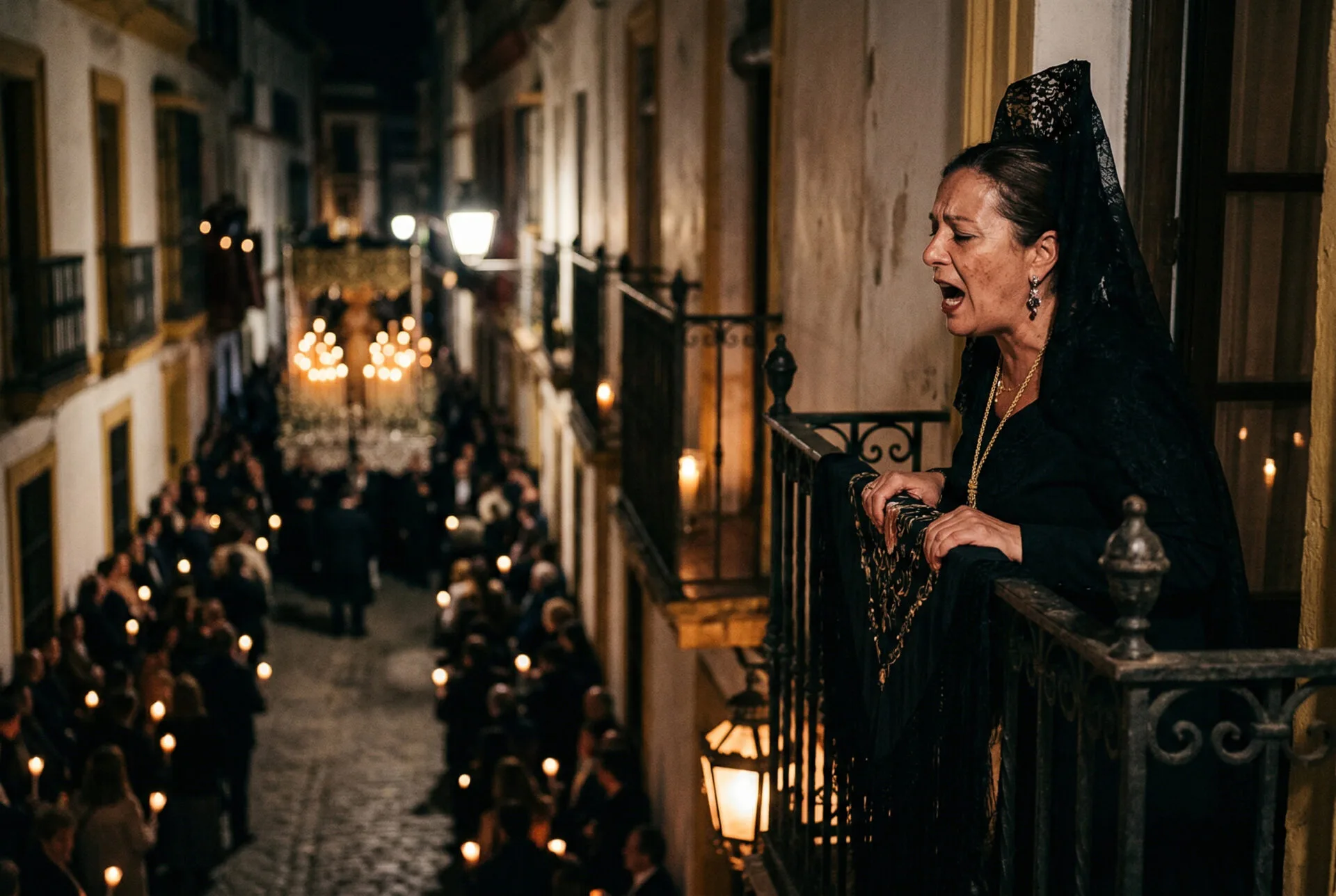
If you’re in Seville during Holy Week, there’s a moment that can stop you in your tracks when you least expect it: a saeta. You don’t need to “know flamenco” or know the story of a brotherhood to feel it. Suddenly the street falls silent, someone sings from a balcony or at street level, and the emotion rises as if the air itself changes.

In this guide I explain what saetas in Seville are, why they move people so much, and how to experience them well without turning it into a lesson. Because a saeta, when it happens, isn’t something you chase in a hurry: you receive it.

Saetas en Sevilla: guía rápida para entenderlas y vivirlas en Semana Santa

Quick answer (decide in 30 seconds): A saeta is an a cappella chant sung in the street during Holy Week, usually as a procession passes by. It has no fixed schedule: it appears when there’s silence, emotion, and someone is moved to sing. To experience it well: stay still, put your phone away, and let the moment happen. And if you want to end the night without improvising, flamenco in a tablao afterwards fits perfectly.

What a saeta is (easy explanation)

A saeta is an a cappella chant (no instruments) sung in the street during Holy Week, addressed to the images that pass by in procession. It’s not “background music”: it’s a moment of pure voice—direct and deeply emotional.

What matters most isn’t the technical definition: it’s the feeling. A saeta is sung to stop time. That’s why, when it appears, the silence around it isn’t accidental: it’s part of the moment.

Why it’s so moving (even if you’re not religious)

Many people, even if they’re not religious, can feel deeply moved by a saeta. It usually happens for three simple reasons: because it’s pure voice, because it happens within a space of real silence, and because the singer gives something of themselves—and you can feel it.

In Seville, there’s also a culture of listening. When a saeta begins, the city changes pace: it’s not “just another activity”, it’s a living scene.

When saetas are sung in Seville

There’s no fixed schedule. A saeta appears when the conditions come together: the procession is close, there’s silence, there’s emotion… and someone is moved to sing. Still, they tend to appear late afternoon/evening and at night, in streets where the procession moves more slowly or stops.

Key idea: it’s not a controllable plan. It’s a moment you encounter.

How to experience a saeta without ruining it

If you want to experience it well, you don’t need to do anything special: you need respect and presence. Stay still, don’t talk (not even softly), put your phone away, and let the moment happen. In a narrow street, any gesture is more noticeable than you think.

Sometimes you won’t “hear it perfectly”. That’s fine: a saeta isn’t judged like a concert. It’s experienced as a moment.

Saeta and flamenco: a quick connection (no fuss)

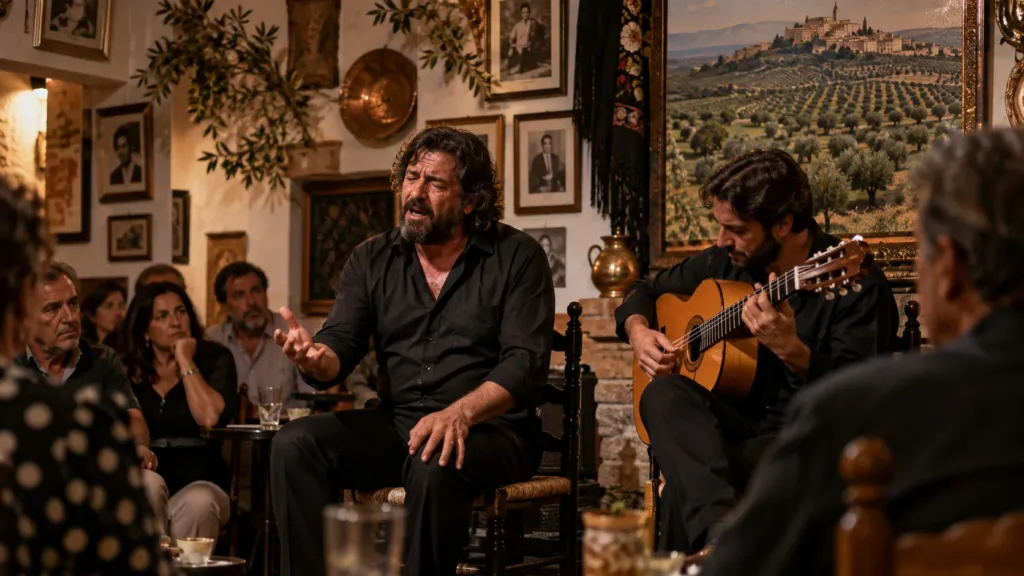
The saeta is a traditional religious chant performed during Holy Week and, over time, it has become one of flamenco’s forms. It’s one of the few flamenco forms with no accompaniment—no dance and no guitar—only voice, making it a very solemn chant. In Seville you’ll find saeteros with impressive vocal control. More than classifying it, what’s useful is understanding that it is pure singing, in the street, at the most intense moment of Seville’s calendar.

How to combine saetas + flamenco in your night

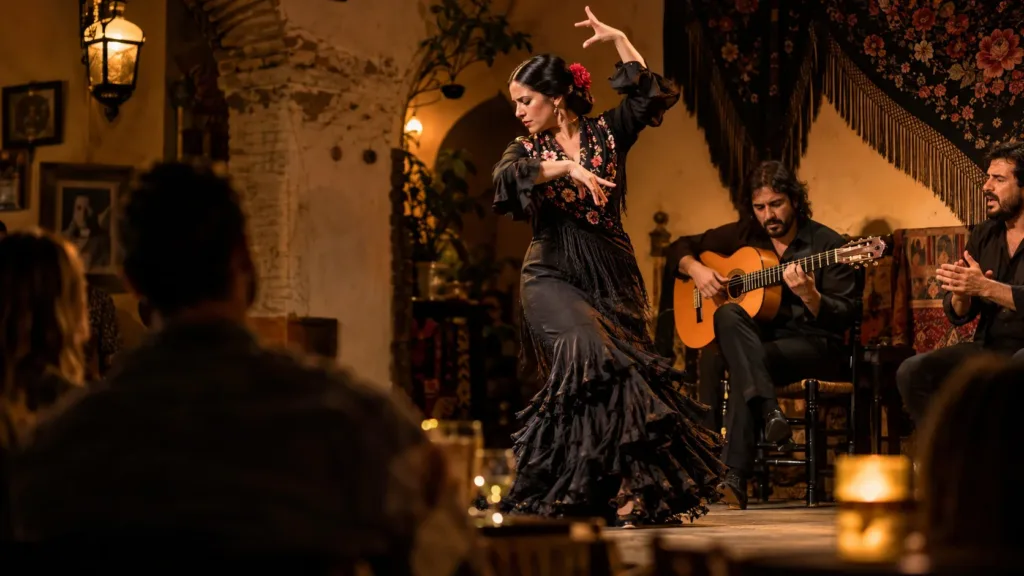
If you’re traveling, there’s a plan that usually “works”: street and emotion (if a saeta happens, perfect), and then flamenco in a tablao to end the night with a concentrated show, close to the stage and without the friction of crowds.

If you want the cluster summary to choose a format (tapas, dinner or private), you have it here:
flamenco in Seville during Holy Week.

Recommended options and online booking

To end the night during Holy Week without improvising, here are clear options to book online:

Flamenco with tapas

Light and social plan for traveling without hassle.

Flamenco with dinner

Complete evening: dinner and show in the same plan.

Private show

Exclusive experience for couples, events or groups.

FAQs

An a cappella chant sung in the street during Holy Week, addressed to the procession, experienced in silence and with strong emotion.

There are no fixed times: they usually happen as a procession passes and silence and emotion come together. That’s why it’s best to experience it calmly, without rushing.

Sometimes yes; but to truly experience it, it’s best to put your phone away. Silence and presence are part of the moment.

For many travelers, flamenco in a tablao afterwards fits perfectly: a focused, comfortable and special ending to the night.

On the cluster page you have the summary and direct links to book online: flamenco in Seville during Holy Week.

Book online: the key to securing your seat

In many cities, flamenco tablaos sell out easily, especially on weekends and during peak season. That’s why, if your dates are set, the most important thing is to book online.

Direct recommendation: book online through our website to guarantee your seat and arrive with everything confirmed. If you already have your destination, go straight to your city to see available options and clear recommendations.

Flamenco Sevilla | Tablaos Flamencos

Seville

Flamenco Madrid | Tablaos Flamencos

Madrid

Flamenco Barcelona | Tablaos Flamencos

Barcelona

Flamenco Granada | Tablaos Flamencos

Granada

Flamenco Córdoba | Tablaos Flamencos

Cordoba

Flamenco Málaga | Tablaos Flamencos

Malaga

Flamenco Valencia | Tablaos Flamencos

Valencia

Flamenco Jerez | Tablaos Flamencos

Jerez

Find out more about this with your favorite AI:

Did you like this article? Share it!:

Tags: flamenco seville, flamenco singing, holy week seville, saetas seville, seville holy week, seville traditions

Article published by:

Related articles

Best time to see flamenco in Seville during Holy Week
Flamenco in Jerez during the Feria del Caballo: where to experience it beyond the casetas