How long a flamenco show lasts (and why it varies)
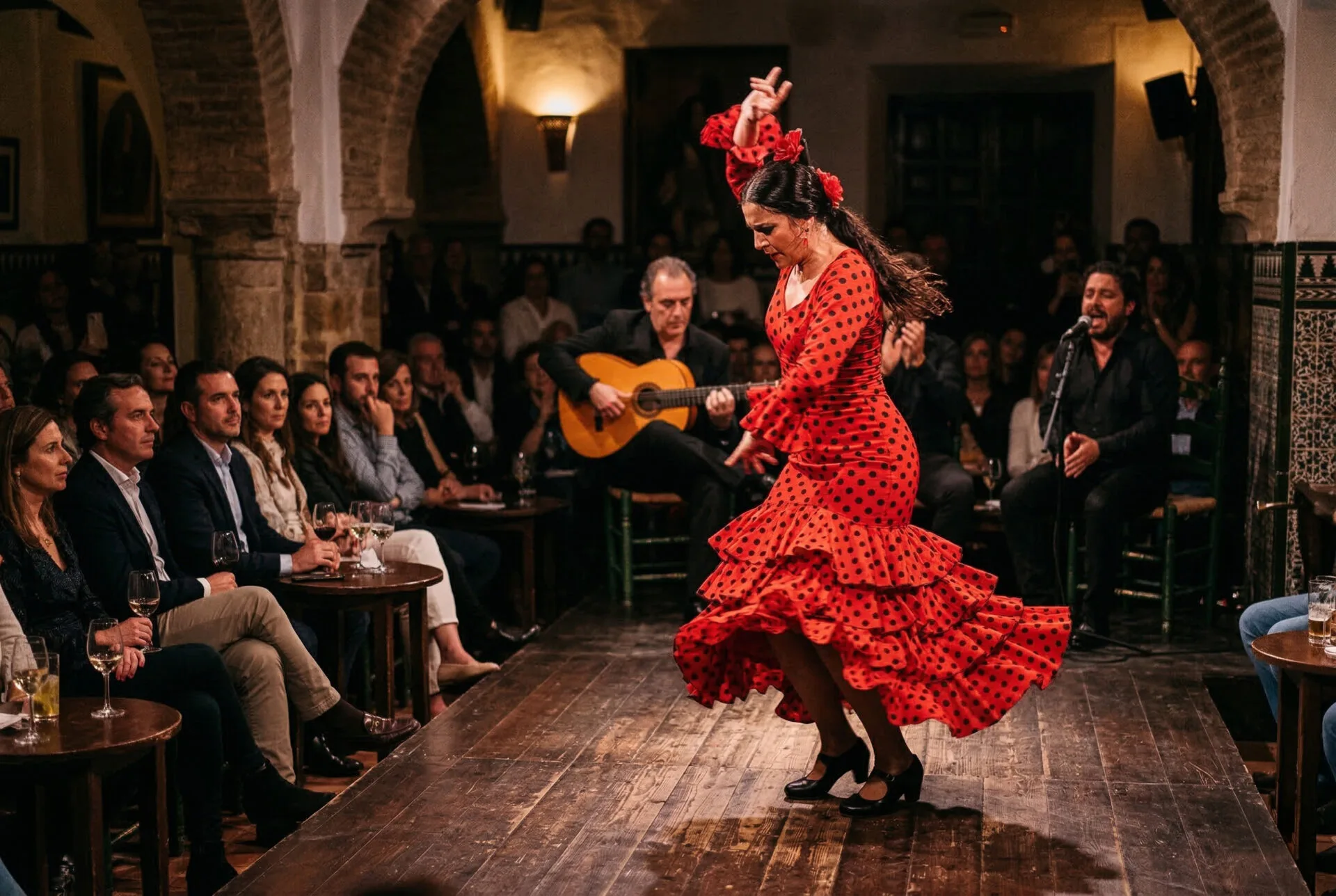
When someone asks how long a flamenco show lasts, they almost always mean the “pure” show duration: the time of singing, guitar and dance from start to finish. In practice, the most common range is roughly 60 to 75 minutes, because it’s a format that delivers intensity without losing pace. That said, some venues schedule slightly shorter shows (for example, close to one hour) and others go longer (when the program is larger or the approach is different). That’s why you’ll see variations depending on the venue.
What makes the duration change? Mainly the format of the session and how it’s structured: whether there are more changes of “cuadro”, whether the room builds a first part that feels more direct and a second part that feels more emotional, or whether the goal is a longer experience. It also depends on whether the show is designed for a very broad audience (where a clear, compact rhythm is prioritized) or for people looking for a slightly longer journey. The important thing is that, whatever the exact duration, a tablao is enjoyed best when your attention is 100% on the performance.
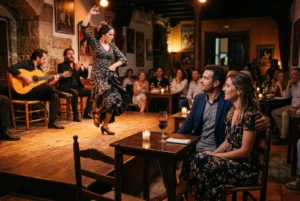
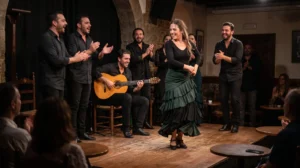
A detail that helps you frame it: in a tablao, being so close to the stage means one well-lived hour can feel more intense than two hours in a large venue. It’s common to leave thinking “it flew by” when the atmosphere supports it and you’re fully focused on the show.
The real total time of the full experience
This is where many people miscalculate their day. One thing is the show’s duration, and another is the real time it takes in your schedule. To enjoy it without stress, the smartest move is to plan for a window of about 1.5 to 2 hours. Why? Because on top of the show you have entry, getting seated, and leaving without rushing (especially when the venue is full).
What affects your final feeling most isn’t “whether it lasted 65 or 75 minutes”, but how you arrived: if you arrive running with your pulse high, it’s harder to get into the mood. If you arrive with time to spare, sit calmly, disconnect your phone and let yourself look at the stage with quiet attention, you enjoy it much more. Flamenco has silences, breaths and details that disappear if your mind is still out on the street.
So as a practical rule, try to be in the area 20–30 minutes early. It’s not about queueing for the sake of it: it’s about arriving with time, orienting yourself, using the restroom if needed, and starting the show with a clear head. And if your day is tight, choose a time that gives you that buffer without turning it into anxiety.
What’s the best time to go (depending on your plan)
There isn’t one perfect time for everyone. There’s a perfect time for your day. The best time is the one that lets you enter calmly, watch with energy, and leave without feeling like you have to rush to the next thing. That said, there are patterns that work very well.
Earlier sessions are often a great choice if you want a simpler, more organized experience: they fit well with dinner afterwards, with a sightseeing day that ends early, or with a rest plan. They also tend to work best if you’re up early the next day or traveling with kids, because you reduce “accumulated tiredness” and avoid finishing the show half-asleep.
Night sessions make sense when you want the show to be the centerpiece of the evening or you feel like a bit more atmosphere. Many people prefer them because the city feels like it’s “in night mode”, you’re in night mode too, and everything matches. The key is that your energy has to match: if you’re exhausted after walking all day, a very late session can be less enjoyable than you imagine.
In short: choose early if you want clarity and rest; choose night if you want atmosphere and an evening finale. And in both cases, choose the time that lets you arrive with a buffer—because that’s what truly changes how you experience it.
How to plan before and after without ruining the show
The typical mistake isn’t choosing the wrong time, but fitting it badly into your day. Ideally, flamenco should be a “clean” moment: not arriving straight from a sprint and not leaving in a sprint to the next plan. If you can, avoid tight plans immediately beforehand. Give yourself a breather, even a short one, to arrive calmly. That mental shift makes the show land better.
If you’re going to dinner, two approaches usually work well. One is to eat before with enough time to digest and arrive relaxed. The other is to eat after as a finale. Eating before works if it gives you stability and prevents distractions; eating after works if you want the show to be the most important thing and not be constrained by kitchen hours. The best option, again, is the one that avoids rushing.
A tip that improves the experience immediately: arrive with your phone “mentally off”. No need to be dramatic, but it helps to enter show mode. In a tablao, the beauty is being present: hands, feet, expressions, silences. If you’re checking messages or thinking “what’s next”, the show rolls over you and leaves less of a mark.
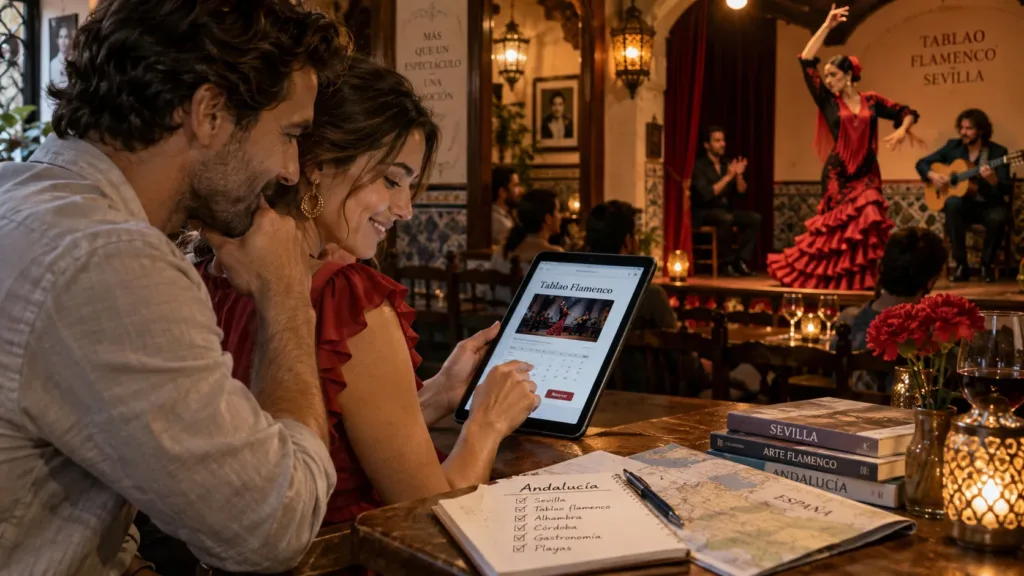
And one important planning note: tablaos often sell out. If you know the day you want to go, the best move is to book online in advance to secure seats and avoid last-minute improvisation (especially in high season and weekends). Leaving it to “we’ll see” is the fastest way to lose the time slot that suited you.
Seasons, jet lag and energy: the factor almost nobody checks
The same time can feel different depending on the season. In summer, for example, heat makes the body “wake up” later and the “night mood” arrive later too. In winter, many people prefer slightly earlier times because the day fades sooner. This isn’t a rigid rule, but it’s a useful pattern: choose times that match how the city feels in that season and, above all, how you feel.
If you’re arriving with jet lag, your best time is usually the one that matches your real energy window, not your romantic idea of “flamenco night”. It’s very common to land on day one with big plans and be exhausted by show time. If that’s you, an early session on the first day can be an excellent move. There will be nights to go later once your body is adapted.
And if you’ve walked a lot (which is normal while traveling), remember this: flamenco is enjoyed when your body is comfortable. It’s not just “watching”, it’s receiving. If you can, slow down a little beforehand, hydrate, sit for ten minutes, and you’ll notice how your ability to focus changes.
If you’re going with kids: best times and what makes it work
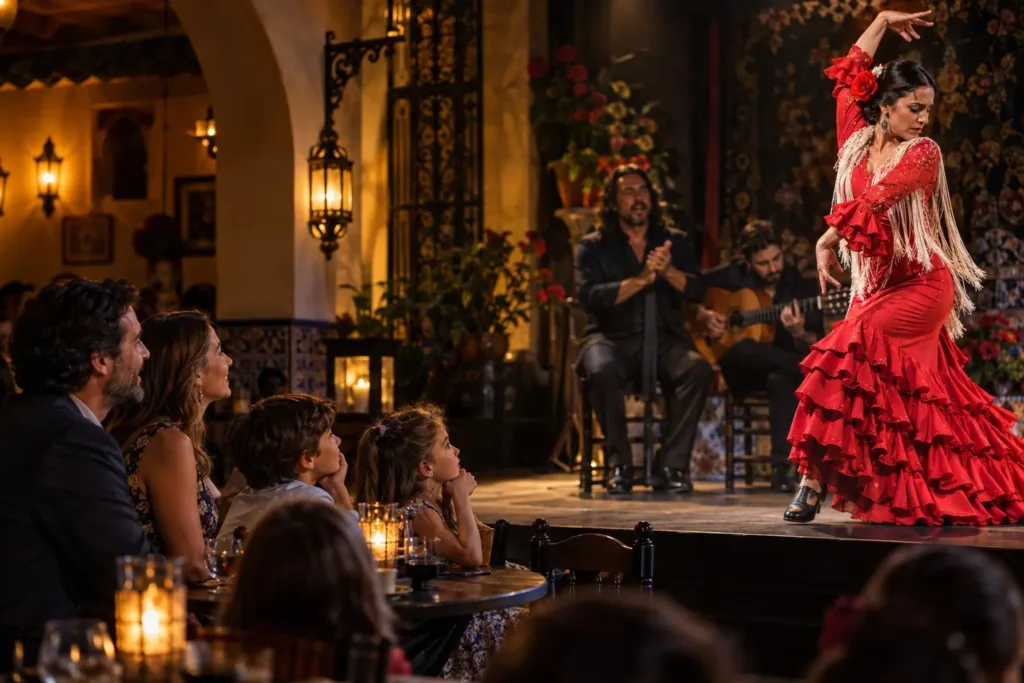
A very common question is whether flamenco is a “kid-friendly plan”. In general, it can be, but what makes the difference is the time and the child’s profile (patience, sensitivity to sound, energy). For families, what usually works best are earlier sessions, because you reduce tiredness and avoid the child hitting their limit right when the show is at its most exciting.
It also helps to frame it as something special and short: explain beforehand that it’s a performance, there will be moments of silence, and it’s important to respect them. No need to turn it into a class—just set the scene. A tablao is intimate: a restless child is more noticeable than in a large theater, so choosing the right time is half the success.
And one practical nuance: some venues may set a minimum age or recommendations. So if you’re traveling as a family, it’s worth checking that information before booking. And if you’re unsure, your best bet is usually an early session with enough buffer to enter and leave without stress. The goal is a beautiful experience, not a battle.
Common timing mistakes (and how to avoid them)
The first mistake is choosing a session purely because it fits your calendar, without thinking about your real energy that day. If the show falls right after a long excursion, a train ride, or a full day of nonstop walking, you’ll likely arrive with “a full head”. If that happens, change the order: slow down beforehand or choose a time that lets you rest a bit.
The second mistake is not leaving a buffer. Arriving at the last minute puts you in stress mode, and stress is flamenco’s enemy. The difference between arriving 2 minutes early and 25 minutes early is huge. With a buffer, you sit, breathe, and enter. Without it, you arrive with your heart racing and it takes time to connect.
The third mistake is scheduling something important immediately afterwards. If you have to run to another reservation or a taxi when it ends, you’ll watch the ending under pressure. And in flamenco, the ending matters: closes, final accents, that feeling of “this is it”. If you can, leave the after part open. Let the show end and allow yourself to stay with what you felt.
And the fourth mistake, very common: leaving the booking to the last minute. If the time you want sells out (it happens a lot), you’re forced to choose what’s left, not what suited you. If you already know the day, book online and lock it in. It’s one of those small decisions that saves you problems.