Flamenco by city

Where to See Authentic Flamenco in Seville: How to Choose a Good Show

How to find authentic flamenco in Seville without falling for clichés

Search for where to see authentic flamenco in Seville may seem simple until dozens of venues, schedules and similar promises appear. The word “authentic” is used so often that, on its own, it no longer helps you choose. Nor is it enough for a venue to be in Triana, have only a few tables or describe itself as “non-touristy”.

Authenticity is easier to recognise in what happens on stage: live music and dance, artists listening to one another, command of the compás, room for improvisation and a venue that lets you appreciate every nuance. This guide explains how to identify those signs before booking and suggests several experiences in Seville according to what you truly want to enjoy.

Quick answer: to see authentic flamenco in Seville, look for a live show where singing, guitar and dance interact; make sure the listing explains the format, duration and what the ticket includes; and choose the venue for its proximity, atmosphere and visibility, not only for the neighbourhood or the word “authentic”. A professional tablao can be just as genuine as a peña: the key lies in the artistic quality and in how the performance is experienced.

What “authentic flamenco” really means

Flamenco is not a fixed scene repeated identically every night. It is an artistic language in which singing, guitar playing, dance and compás interact in real time. There may be a planned structure—an order of palos, entrances, solos and endings—but within it there is listening, response and decision-making that belong to that particular moment.

An authentic show therefore does not have to be improvised from beginning to end or lack production. Professionalism, thoughtful lighting, good organisation and ticket sales do not make flamenco less genuine. On the contrary, they can create the conditions for the ensemble to work with concentration and for the audience to listen properly.

Authenticity does not depend on understanding every palo either. A first-time visitor can recognise several signs: the guitar accompanies the singer rather than merely playing in the background; the handclaps sustain the compás; the dance responds to the accents; the artists look at one another and give each other space; and silences carry as much weight as the most spectacular moments.

It is also important to distinguish between authenticity and spontaneity. A performance that arises at a private gathering may be spontaneous and valuable, but it is not something a traveller can book. A tablao offers something different: regular access to professional artists and an experience designed to be seen and heard. It does not recreate a family celebration; it presents live stage flamenco. Judging it for what it is prevents mistaken expectations.

UNESCO inscribed flamenco on the Representative List of the Intangible Cultural Heritage of Humanity in 2010. This recognition reminds us that it is a living tradition, transmitted and recreated by communities and artists, not a frozen postcard. Tradition and contemporary creation can coexist as long as knowledge of the flamenco language is preserved.

Tablao, peña, theatre or bar: what to expect

In Seville, flamenco can be found in many different kinds of venues. No single format has a monopoly on authenticity; each offers a different relationship between artists, audience, schedule and stage.

Flamenco tablao

It is the most reliable option for visitors spending only a few days in the city. Tablaos generally offer regular performances, advance booking and an ensemble combining singing, guitar and dance. Their main advantage is proximity to the stage: even when the venue is not small, its design aims to let the audience feel the footwork and breathing and follow the dialogue within the ensemble.

A tablao welcomes both local and international visitors. That describes its audience, not the quality of its art. What matters is that the performance is live, that skilled artists take part and that the show is not reduced to secondary entertainment.

Flamenco peña

Peñas are associations connected with flamenco appreciation, promotion and community life. They may present recitals of enormous interest and offer an atmosphere closely linked to the local community. However, their schedules tend to be more irregular, some activities are intended for members and practical information may not be available far in advance.

If an event open to the public coincides with your stay, it can be a wonderful experience. If you have only one free evening, a tablao with a confirmed schedule is easier to plan.

Theatre and festival

Theatres allow larger-scale productions, complex stage designs and bigger companies. The distance from the artist may be greater, but that does not make the production less authentic. It is simply a different scale. Festivals such as the Bienal show just how far flamenco can engage with drama, contemporary dance and musical creation without losing its foundations.

Bar or informal performance

Coming across a spontaneous moment in a bar can be unforgettable, but it should not be your main plan if you need certainty. Sometimes the music is merely background entertainment, visibility is limited or the performance does not include a complete ensemble. Before going, check whether an actual flamenco show is advertised, who is taking part and whether there is a confirmed time.

If you already know that you want a tablao and your question is whether to choose the show alone, an intimate venue, a private performance, dinner or tapas, also read our guide on how to choose a flamenco experience in Seville. This article addresses a different question: how to recognise the quality and authenticity of the experience.

Seven signs of a good flamenco show

1. Singing, guitar and dance are presented as an ensemble

Not every show needs the same number of performers, but a clear listing should explain which disciplines are included. In the classic tablao format, the relationship between singing, guitar and dance lets you appreciate flamenco as a shared language. Handclaps and jaleos are not decoration: they sustain the pulse and accompany changes in intensity.

2. The music is live

Live guitar and singing allow the accompaniment to adapt to the female or male dancer. If an offer speaks vaguely of a “flamenco atmosphere” but does not make clear whether artists perform live, ask for more information. A recording may occasionally form part of a contemporary creation, but it should not be confused with the flamenco ensemble expected by someone booking a tablao.

3. Every performance has room to take on a life of its own

A good show may be structured and rehearsed without becoming mechanical. The choice of a lyric, the length of a llamada, a falseta or the dancer’s response can change the performance. This variation can be felt in the artists’ attention: they are not executing isolated pieces but accompanying and challenging one another within the compás.
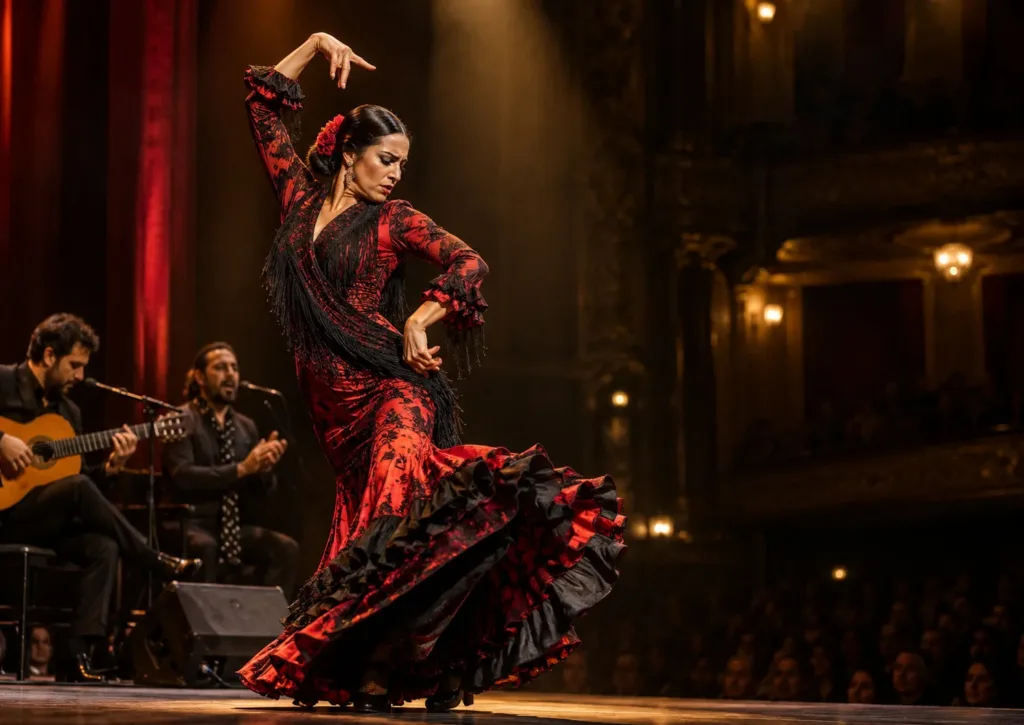
4. The venue supports attentive listening and good visibility

A small capacity can help you notice details, but it is not an automatic guarantee. The arrangement of the tables, stage height, acoustics and rules during the performance also matter. A larger, well-designed room may offer a better experience than a cramped venue with poor visibility.

Where different seating areas are available, check what changes between them. If observing the footwork is important to you, a front-facing or nearby seat may justify the difference. If your priority is the singing and guitar, a slightly more distant area with good sound can also work well.

5. The ticket information is transparent

A serious operator explains the approximate duration, start time, recommended arrival time and whether the ticket includes a drink, tapas or dinner. It should also clearly distinguish dining time from performance time. Knowing what you are buying does not determine the art, but it prevents poorly framed expectations from spoiling the experience.

6. The programme relies on professional artists

Ensembles may rotate, as is common in tablaos. This rotation is not a negative sign: it keeps the programme alive and brings together performers with different careers. If you are travelling to see a particular star, confirm the cast for your date. If you want an introduction to flamenco, assess the quality of the ensemble rather than only the presence of a famous name.

7. The show is the focus of the evening

Food, architecture and location can enrich the outing, but during the performance the stage must take centre stage. Notice how the venue describes its own experience: does it discuss the artists and format, or only the décor and food? A good tablao can explain both without turning flamenco into background entertainment.

Five myths that do not help you choose “real” flamenco

“If there are tourists, it is not authentic”

Making a venue accessible to travellers does not make the performance fake. Seville has presented its music and dance in professional public settings for centuries. A tablao can serve an international audience while respecting the compás, hiring good artists and offering a living performance.

“Only Triana has real flamenco”

Triana has an essential flamenco history and deserves to be explored with that heritage in mind. But talent does not stop at the bridge. The historic centre, Santa Cruz, the Encarnación area and other neighbourhoods are home to serious venues. A postcode is no substitute for assessing the show.

“The smaller the venue, the better”

Intimacy helps you perceive details, but size is only one variable. The proportions of the stage, acoustics, layout and audience behaviour also matter. A well-designed medium-sized venue can offer genuine proximity; a tiny room may be uncomfortable or have poor sightlines.

“Dinner makes flamenco less pure”

Not necessarily. The difference lies in how the service is organised. When food is served before or after the show, or movement is minimised during the central moments, both parts can be enjoyed. If you are very sensitive to noise or want complete concentration, choose the show only. If you want a full evening out, a dining option can work without detracting from the artistic quality.

“The highest price guarantees the best show”

The price may reflect the seating area, duration, number of artists, drinks or food. By itself, it does not measure emotion or artistry. Compare what each ticket includes and decide what you value. The best choice is the one that aligns the show, visibility, schedule and budget.

Where to see authentic flamenco in Seville according to the kind of experience

There is no single “best” tablao for everyone. These four current options illustrate different profiles without turning the guide into a ranking. Programmes, schedules and ticket types can change, so check the listing for your chosen date before booking.

Casa Inquieta: historic architecture and an intimate experience

Tablao Flamenco Casa Inquieta is housed in a 19th-century palatial residence on Calle Zaragoza, right in the city centre. Its show brings together singing, guitar and dance in the Patio Magnolio and emphasises proximity to the ensemble. It is especially suitable if you want a characterful Sevillian setting, a direct performance and the option to complete the evening with Andalusian food.

El Jardín de Murillo: flamenco beside Santa Cruz

Tablao Flamenco El Jardín de Murillo is next to the Murillo Gardens, a short walk from the Real Alcázar and the Santa Cruz district. It presents a live format featuring singing, guitar and dance, designed so that the audience can observe the artists’ work at close range. It is convenient for adding the show to a day in the historic centre and offers both performance-focused tickets and options with food.

Las Setas: flamenco tradition in a contemporary setting

Tablao Flamenco Las Setas is inside Metropol Parasol in Plaza de la Encarnación. Its concept shows that modern aesthetics are not incompatible with flamenco: it combines a large ensemble, a longer duration than many performances and several seating, cocktail and tapas options. It may suit you if you value an immersive production, a highly recognisable location and an evening with several components.

La Cantaora: café cantante atmosphere and dining options

Tablao Flamenco La Cantaora, near Plaza Nueva, draws inspiration from the atmosphere of the old cafés cantantes. Its concept emphasises improvisation in an intimate room, with options ranging from a show with a cocktail to tapas or dinner. It is a suitable alternative if you are drawn to a classic atmosphere and want to choose how much of the evening revolves around food.

These recommendations do not mean that they are the only valid options. On our page of flamenco shows in Seville you can compare availability, locations and ticket types for your date.

City centre, Santa Cruz or Triana: does the area matter?

The area matters when planning your evening, but it is not a certificate of authenticity. Choosing the right neighbourhood can save travel time and help you arrive calmly—two factors that really do improve the experience.

Historic centre and Plaza Nueva

This is a convenient option if you are staying near the Cathedral, El Arenal or the shopping streets. You can combine a walk, dinner and the show without relying on transport. Casa Inquieta and La Cantaora are examples of central venues with distinct personalities.

Santa Cruz and the Alcázar area

This area lets you round off an afternoon of sightseeing with a performance within walking distance. El Jardín de Murillo is especially easy to include after visiting the Alcázar, Cathedral or old Jewish quarter. Its main advantage is logistical; quality should be judged by the same criteria as in any other neighbourhood.

La Encarnación and Las Setas

Plaza de la Encarnación connects contemporary Seville with the historic centre. It is a good choice if you want to combine the viewpoint, a walk, tapas and a show within a small area. The Las Setas tablao also offers a more modern visual concept.

Triana

Triana is essential for understanding part of Seville flamenco’s social and artistic history. Walking its streets, visiting the Altozano and crossing the bridge provides context, but the neighbourhood’s historical value should be separated from the commercial promise of any particular venue. Read our guide to flamenco in Triana to discover options and plan your visit.

The practical rule is simple: choose an area that fits your itinerary and then assess the artistic content, visibility and format. Rushing from the other side of the city adds less to the experience than choosing a well-programmed venue that you can reach in good time.

What to check before booking a show

A two-minute review can prevent almost every disappointment. Before paying, check the following:

  • Exact date and time: some venues offer several performances, and ticket types may vary between them.
  • Duration: helps you plan dinner, transport and other visits without leaving before the end.
  • Disciplines and number of artists: look for information about singing, guitar, dance and the ensemble format.
  • Seating area: check whether the ticket is general, preferred or front row, and whether seats are assigned in order of arrival.
  • What is included: distinguish between the show only, a drink, tapas or a full dinner.
  • Timing of service: if silence matters greatly to you, find out whether food is served before, during or after the performance.
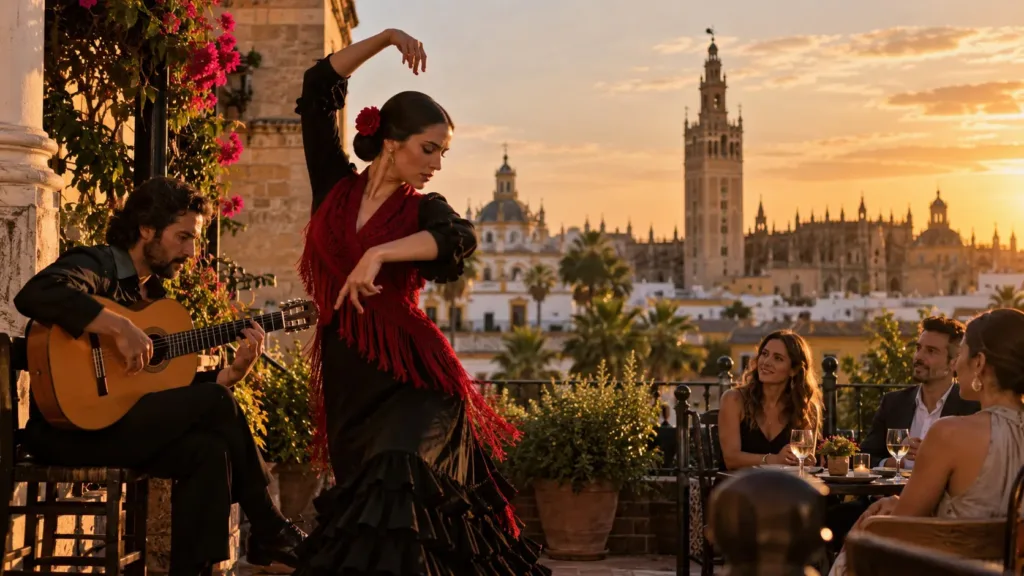
  • Arrival time: many tablaos recommend arriving 15 to 20 minutes early. Confirm the specific instruction on your ticket.
  • Accessibility and children: check the specific conditions if you need step-free access, wheelchair space or are travelling with children.
  • Purchase conditions: read the rules on changes and cancellations before completing the booking.

At weekends, on public holidays and during periods of high demand, booking in advance gives you a better choice of time and seating area. You do not always need to decide months ahead, but waiting until you reach the door limits your options and may leave you without a seat.

If it is your first time, you do not need to choose the most comprehensive ticket. Prioritise a convenient time, good visibility and a format that allows you to concentrate. If you already know flamenco, you may want to compare the cast, the number of artists or a longer production. And if the evening is a celebration, the food and surroundings may matter as much as proximity to the stage.

On the how to book page, you will find the purchase process and practical information for receiving and presenting your tickets.

30-second checklist for choosing

  1. Are there live singing, guitar and dance?
  2. Does the listing explain the duration, artists and ticket type?
  3. Will you be able to see and hear well from your area?
  4. Does the food service suit the way you want to enjoy the show?
  5. Does the location allow you to arrive with time to spare?
  6. Do you know the access and purchase conditions?

If the answers are clear, you are assessing the show using useful criteria. Labels such as “pure”, “local” or “authentic” may describe an intention, but they never replace this information.

The best choice is the one that lets you truly listen

Seeing good flamenco in Seville does not require finding a secret venue or proving any prior knowledge. It requires choosing a production where the artists work live, the venue respects the performance and the information is transparent. The rest depends on your trip: you may prefer a palatial residence, the surroundings of Santa Cruz, contemporary architecture or the atmosphere of a café cantante.

Do not confuse authenticity with discomfort, improvised logistics or the absence of visitors. Professional flamenco is also a living tradition. When singing, guitar and dance share the compás and attention, emotion needs no password.

Compare the options available for your date, review the format and book the one that best suits how you want to experience the evening.

Frequently asked questions about authentic flamenco in Seville

Look for live music and dance, singing and guitar, interaction between the artists, clear information about the ensemble and a venue that gives the performance centre stage. The neighbourhood, venue size or number of tourists are not enough to measure authenticity.

Yes. The audience’s origin does not determine artistic quality. Many tablaos work with professional performers and offer living performances to an international audience. Assess the format, artists, listening conditions, visibility and transparent ticket information.

There is no universal answer. Triana provides an essential historical context, while the centre, Santa Cruz and the Encarnación area bring together very different professional venues. Choose first for quality and format, then for the area that best fits your itinerary.

Both can offer authentic flamenco. A peña is generally linked to a community of enthusiasts and has a more irregular programme. A tablao offers regular performances, professional artists and advance booking, making it more practical for a short visit.

If you want maximum concentration, the show-only option is generally the most direct. If you want a complete evening, dinner or tapas can work very well when the service is organised to respect the performance. Check when the food is served and what the ticket includes.
Duration varies according to the venue and production. Many performances last around an hour, while others approach 75 or 90 minutes. Always check the listing for your date and allow the arrival time recommended by the tablao.

It is advisable, especially at weekends, on public holidays and during high season. Booking ahead lets you choose the time and ticket type and prevents you travelling to the venue only to find no availability. If your date is fixed, do not rely on tickets being available at the door.

It depends on each venue’s conditions and the children’s ages. An early performance with a clear duration is usually easier for families. Check the children’s policy, applicable price and access rules before buying.

Book online: the key to securing your seat

In many cities, flamenco tablaos sell out easily, especially on weekends and during peak season. That’s why, if your dates are set, the most important thing is to book online.

Direct recommendation: book online through our website to guarantee your seat and arrive with everything confirmed. If you already have your destination, go straight to your city to see available options and clear recommendations.

Flamenco Sevilla | Tablaos Flamencos

Seville

Flamenco Madrid | Tablaos Flamencos

Madrid

Flamenco Barcelona | Tablaos Flamencos

Barcelona

Flamenco Granada | Tablaos Flamencos

Granada

Flamenco Córdoba | Tablaos Flamencos

Cordoba

Flamenco Málaga | Tablaos Flamencos

Malaga

Flamenco Valencia | Tablaos Flamencos

Valencia

Flamenco Jerez | Tablaos Flamencos

Jerez

Find out more about this with your favorite AI:

Did you like this article? Share it!:

Tags: flamenco en Sevilla, flamenco tablaos in Seville, how to choose flamenco in Seville

Article published by:

Related articles

Flamenco in Ayamonte: flamenco tradition and where to enjoy it